
Researched & checked — 31 Oct 2026
Tirupati and Tirumala: Darshan Booking, Costs and the Journey Up the Hill, Explained
NEW Published 31 October 2026
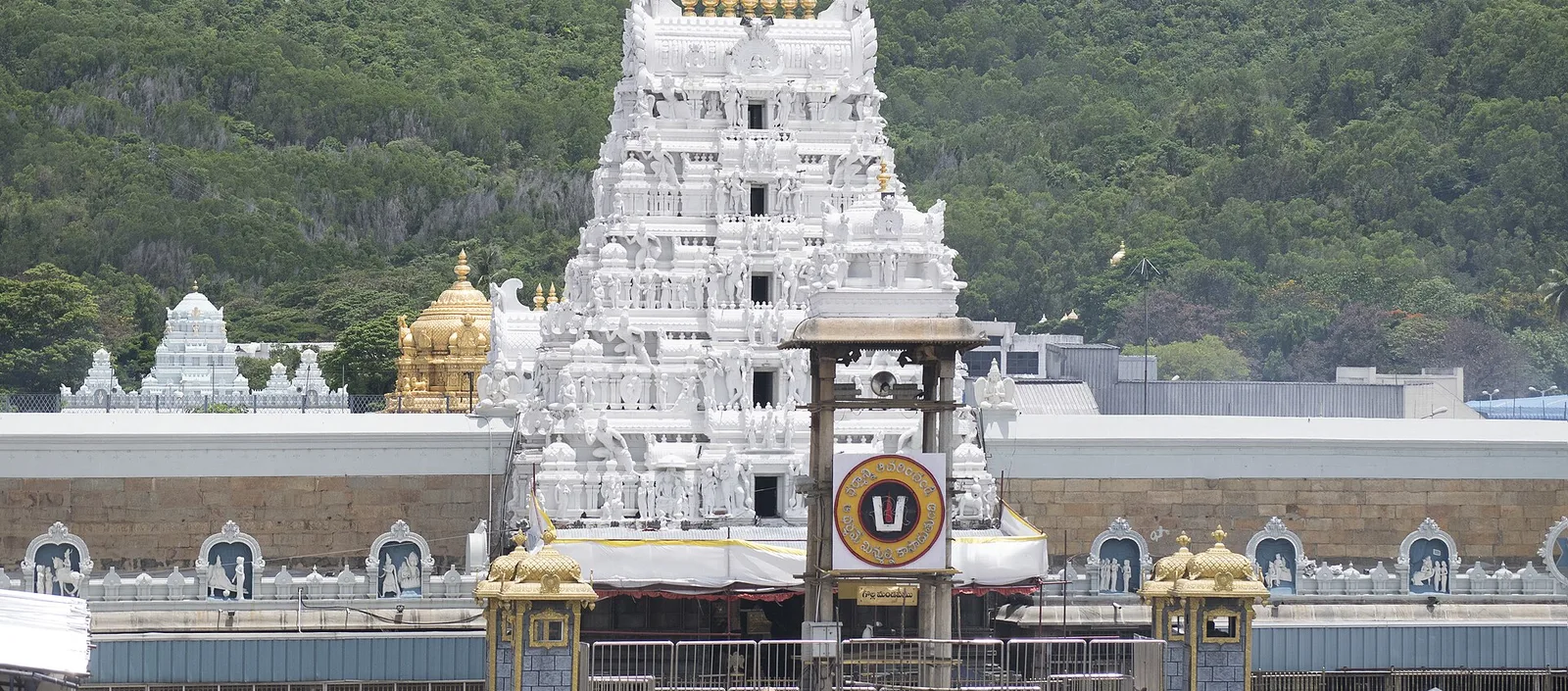
One pilgrimage, two towns and a booking system that rewards whoever reads TTD's own release calendar: the free darshan, the ₹300 Special Entry ticket released online on an announced day each month, the two stone footpaths up the hill, and the dress code TTD prints in a single sentence.
Sarva Darshan at Tirumala is free — you wait in the Vaikuntam Queue Complex, allotted about 18 hours a day on normal days and 20 hours on peak days, with free food, drinks and medical care while you wait. The bookable shortcut is the Special Entry Darshan (Seeghra Darshan) at ₹300, sold only online at ttdevasthanams.ap.gov.in in a monthly quota whose release day TTD announces in advance — for January 2027, the ₹300 quota opened on 24 October 2026 at 10 AM, and TTD accommodation for Tirumala and Tirupati the same day at 3 PM. You can also walk up: Alipiri (about 7.8 km, roughly three hours) or Srivari Mettu (about 2.1 km, roughly an hour and a half), with free luggage transport and a walkers' token system. Dress is traditional, in TTD's own words: dhoti or pyjamas with upper cloth for men; saree or half-saree with blouse, or churidar with pyjama and upper cloth, for women.
SECTION 01Two Towns, One Pilgrimage: Tirupati Below, Tirumala Above
Get the geography right first, because half the confusion in Tirupati bookings comes from treating the two names as one place. Tirupati is the city on the plain — railway station, bus station, most hotels, and the free-token counters. Tirumala is the temple town on top of the hill, built around a single shrine: the Sri Venkateswara temple, administered by TTD You arrive in Tirupati, then climb — by bus or on foot — to Tirumala, where every darshan queue in this guide operates.
The scale is worth absorbing. TTD's own darshan page puts the flow at more than 60,000 to 80,000 pilgrims a day, and its daily bulletins recorded 83,252, 90,292 and 91,296 darshans on three October days sampled for this guide. A system that size runs on categories, quotas and slots. Learn TTD's names for them, and the hill becomes legible; ignore them, and you are buying whatever a tout chooses to call a ticket.
SECTION 02The Free Darshan: Sarva Darshan and the SSD Tokens
The darshan at the heart of Tirumala costs nothing. Sarva Darshan — TTD translates the name itself as "darshan for all" — is the free darshan, in which pilgrims wait in the compartments of the Vaikuntam Queue Complex, the inter-connected halls through which the queue moves towards the main temple. Its timings differ by day, set by the weekly temple programme: about 18 hours are allotted on normal days, 20 hours on peak days — there is no fixed opening hour to memorise.
The wait is long but serviced. TTD lists what it provides inside the complex: annaprasadam — food — free of cost; milk, coffee and tea free at every three-hour interval; free medical facilities, toilets and RO-filtered water, and devotional programmes on closed-circuit television. TTD answers the wait question daily: its bulletins report the approximate darshan time for Sarvadarshanam without SSD tokens — on the three October 2026 days sampled, 6–8 hours, 8–10 hours and, on the busiest, 18 hours. Layered over the open queue sit the SSD tokens — Slotted Sarva Darshan: free tokens giving the same darshan a reporting slot, issued at TTD counters in Tirupati on proof of identity — the system TTD's "(without SSD Tokens)" line presupposes, consistently reported, though the counter list sits on booking-side pages that could not be read directly. Take a token first if you can.
SECTION 03Special Entry Darshan: The ₹300 Ticket and the Other Booked Routes
The paid route most pilgrims use is the one TTD built for speed. Special Entry Darshan — Seeghra Darshan — was introduced on 21 September 2009, in TTD's words, "to provide quick Darshan to the Pilgrims", with advance booking following in August 2014. The price is TTD's own headline: its releases call it the Rs. 300 Special Entry Darshan. It is a per-person, time-slotted ticket: book a date and slot online, report at your allotted time, and take a shorter line than the open compartments.
Around that ticket, TTD's release calendar (Section 04) names the other booked routes. The Arjitha Sevas — Suprabhatham, Thomala, Archana, Ashtadala Pada Padmaradhana — are allotted for the most sought-after by an electronic dip: register online in a stated window, then pay in a second window if allotted. Kalyanotsavam, Unjal Seva, Arjitha Brahmotsavam and Sahasradeepalankara Seva release as direct quotas, as do virtual seva tickets, Anga Pradakshina tokens and Srivani Trust darshan tickets. The Srivani donation is widely carried at ₹10,000 per person in reports of TTD's own announcements; this guide prints it as currently reported, not read from the portal (see the checking note). The same calendar carries a separate quota of free special darshan tokens for senior citizens, differently abled and chronically ill devotees — for a family member who qualifies, that quota is their route. And TTD repeats one warning in release after release: book only through ttdevasthanams.ap.gov.in — a booking that does not exist inside your own account there does not exist at the gate.
SECTION 04How Booking Actually Works: The Monthly Release Calendar
TTD does not drip-feed its tickets. It releases each future month's quotas in a single announced sequence, category by category, on named days at named hours, published in advance as an official press release. The January 2027 release, announced on 17 October 2026, shows the machine: 19 October, 10 AM: the Arjitha Seva electronic dip (registration to 21 October, 10 AM; payment 21–23 October to noon). 22 October, 10 AM: Kalyanotsavam, Unjal Seva, Arjitha Brahmotsavam and Sahasradeepalankara Seva; 3 PM, virtual seva and its darshan slots. 23 October, 10 AM: Anga Pradakshina tokens; 11 AM: Srivani Trust tickets; 3 PM: the senior citizens', differently abled and chronically ill devotees' quota. 24 October, 10 AM: the Rs. 300 Special Entry Darshan; 3 PM: accommodation in Tirumala and Tirupati.
Three lessons fall out of that calendar. First, the lead time is roughly two to three months. Second, each category has its own moment — miss the dip's registration window and nothing reopens it; darshan and accommodation are separate releases, five hours apart. Third, there is no permanent release date to memorise: TTD announces each month's schedule afresh, and makes in-month releases when days open up — on 7 October 2026 it released ₹300 tickets for six specific October dates. Watch TTD's news releases for your month's calendar, and be logged in before the hour, not at it.
SECTION 05Walking Up: Alipiri and Srivari Mettu
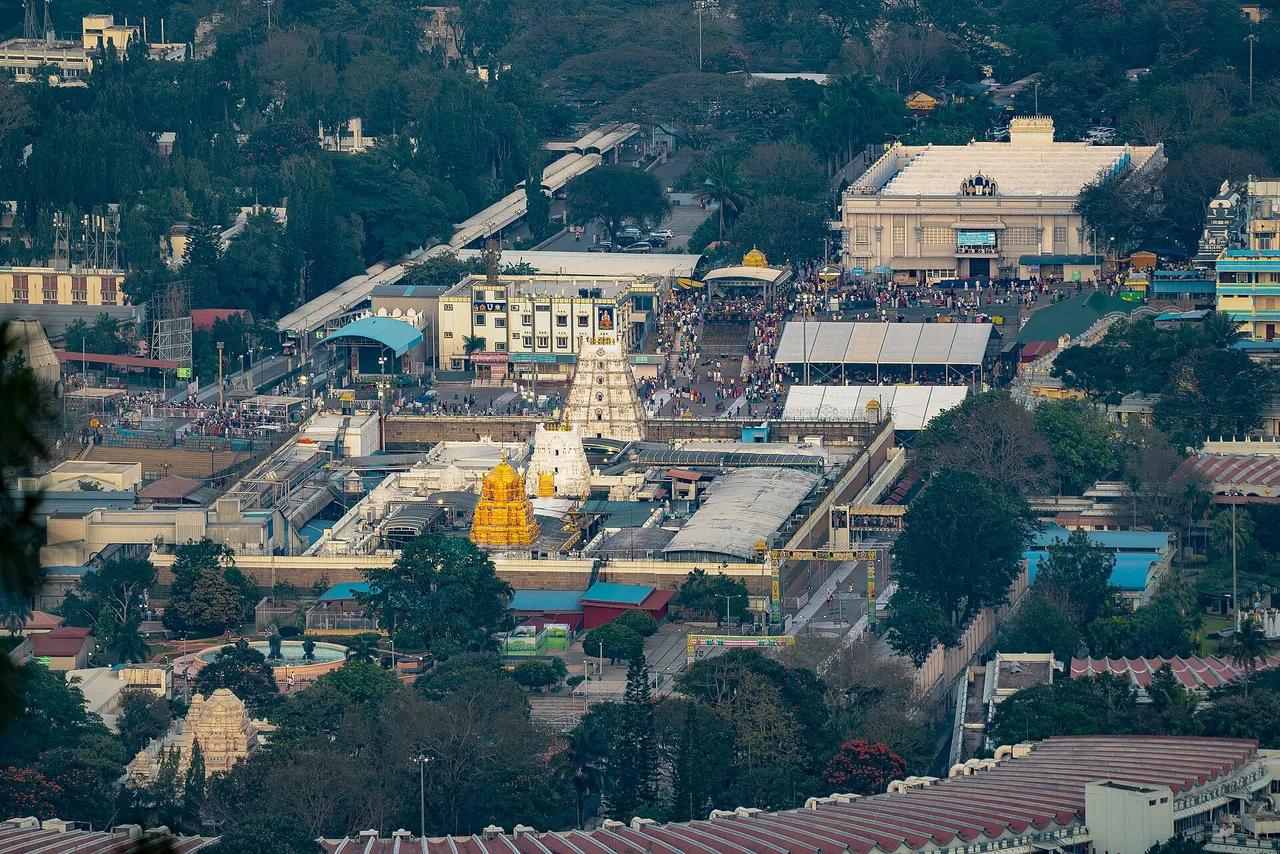
For many pilgrims the climb is not transport but the point — a vow fulfilled on foot. TTD maintains two well-laid stone footpaths, the sopanamargas, and its travel page measures both. Alipiri, the commonly used path, is about 7.80 kilometres and takes approximately three hours. Srivari Mettu is the short cut: about 2.10 kilometres, about one hour and thirty minutes. (TTD's older on-foot page describes Alipiri as about 11 km; the sources file records the difference. Plan by the three hours, not the kilometres.)
The paths are serviced like the queue. Walkers get free transport of luggage — deposit it at the foot of the hills and collect it at the top (the travel page names the GNC counter for Alipiri and the MBC counter for Srivari Mettu; the on-foot page names the Central Reception Office counter) — plus drinking water, toilets, rest shelters, medical assistance (the on-foot page says twenty-four-hour), patrols, canteens and religious broadcasts. Free TTD buses and APSRTC buses connect Tirupati railway station and the bus stations with both trailheads, and APSRTC's free buses from the railway station to Alipiri run every thirty minutes. A token facility for pedestrians arriving through Gali Gopuram or Srivari Mettu, with biometric counters on the footpaths, facilitates free darshan, free accommodation and free food facilities at Tirumala — the walkers' arrangement, long known as Divya Darshan.
Two cautions complete the section. TTD's footpath pages publish no fixed opening hours; and after leopard incidents on the Alipiri route, entry has been controlled in daylight windows that tighten and relax with wildlife alerts — reported patterns have walkers starting freely in the morning, with supervised group movement later; the rule on any day is the one at the gate. Start early, and obey the security staff.
SECTION 06Getting to Tirupati, and Riding Up the Ghat Road
Most pilgrims reach Tirupati by train or by bus, and the official arrangements are built around two arrival points: Tirupati railway station and the Central Bus Station. For the ride up, APSRTC, the state transport corporation, runs the hill service as a pilgrim service in its own right: its official pilgrim-services page lists buses from the Central Bus Station, Tirupati, to Lord Venkateswara Swamy, Tirumala, every five minutes, over a 27-kilometre route. On the fare: APSRTC's page prints fares by service type, but they could not be reconciled with the corporation's current ghat-road tariff in this pass, so no bus fare is quoted here — it is shown at the stand and on the ticket; the five-minute-frequency state bus is the fact your plan needs. The same page covers the temples around Tirupati — Tiruchanur, Srinivasa Mangapuram, Sri Kalahasti. The road climbs from Alipiri, where vehicles are checked at the toll plaza.
SECTION 07On the Hill: Dress Code, Phones and the Laddu
TTD states its dress code on one short page, and it repays quoting exactly. The code was introduced in 2013 for Arjitha Seva pilgrims, and has since been extended to VIP break darshan and to general pilgrims who go for the Rs. 300 darshan. In TTD's own words: "For men the dress code is dhoti or pyjamas with upper cloth. For women the preferred dress code is saree or half-saree with blouse or churidar with pyjama and upper cloth." Dress that way from the start of the day — the code is enforced at the queue entrances.
The second rule surprises more visitors than any other: mobile phones and cameras are not permitted inside the temple, and gadgets must be deposited before you enter the queue system — TTD runs free deposit counters and lockers around the queue entrances and pilgrim complexes for exactly this. That position rests on TTD's widely published temple rules and its own deposit reporting; the dedicated rules page sat behind the script-driven portal, so the counters on the ground are final. Plan to be without your phone for the whole darshan.
And then there is the laddu, the prasadam pilgrims carry home across India. In TTD's telling: darshan carries a laddu with it, and additional laddus are sold at the laddu counters at Tirumala. TTD has publicly identified ₹50 as the price of an additional regular laddu — printed here as TTD-stated but flagged, from the trust's public clarifications as reported, not a tariff page read directly; the counter display is the final word. One myth is worth killing: there is no genuine service that takes a standalone online laddu order and delivers it to your home — TTD has publicly rejected such claims. Buy at Tirumala, from TTD counters.
SECTION 08Staying Over: TTD Accommodation in Tirumala and Tirupati
TTD is also the hill's biggest landlord, and its rooms are booked the way its darshan is: through the official portal, in the monthly quota release — for January 2027, accommodation in Tirumala and Tirupati released on 24 October at 3 PM, five hours after the same month's ₹300 darshan quota, as its own separate event. A darshan booking reserves no room, just as a room reserves no darshan. On prices, this guide declines to invent: TTD's room tariffs live inside the booking portal, unreadable directly in this pass, and the figures circulating outside it — from ₹100 rooms upward — could not be verified against a TTD tariff page, so no TTD room tariff is printed here. TTD's text does support that the stock exists in both towns and releases monthly online — and that walkers are linked by the biometric token system to free accommodation facilities at Tirumala.
SECTION 09Putting It Together: A Calm Tirupati Plan
The visit reduces to four decisions, in this order. First, the month: quotas release roughly two to three months ahead on a staggered calendar announced by press release — so follow TTD's news page for your month's calendar. Second, the darshan: the ₹300 Special Entry if dates are fixed; free Sarva Darshan, with an SSD token if you can get one, if your schedule can absorb a long, serviced wait; the footpaths if the vow is in you, starting early. Third, the base: Tirumala, or Tirupati for choice, riding APSRTC's five-minute service up. Fourth, the day itself: traditional dress on, phone deposited, ticket and identity proof on paper.
Two cautions close the guide, both from TTD's own behaviour. Festival periods rewrite the hill: during the Navaratri Brahmotsavam window in October 2026, TTD cancelled VIP break and privileged darshans outright for ten days and released extra ₹300 tickets for specific dates mid-month — so a festival visit is planned from TTD's releases for those weeks, not from this guide's general pattern. And everything here was true as TTD published it in October 2026; the trust revises quotas and rules by release. The last step of every Tirupati plan is the same as the first: read what TTD published most recently, and book where TTD tells you to book — on its own portal, and nowhere else.
FAQFrequently Asked Questions
How much does darshan at Tirumala cost?
Sarva Darshan is free — "darshan for all", through the Vaikuntam Queue Complex, allotted about 18 hours on normal days and 20 on peak days, with free food, milk, coffee, tea and medical care during the wait. The bookable Special Entry Darshan (Seeghra Darshan) costs ₹300 per person. Sevas and Srivani Trust darshan are separate categories, and walkers are facilitated to free darshan.
When are TTD tickets released, and how far ahead should I book?
TTD releases each month's quotas in an announced sequence, roughly two to three months ahead. For January 2027, announced on 17 October 2026: the Arjitha Seva dip opened 19 October at 10 AM, other seva quotas followed on 22 October, Srivani Trust tickets and the senior citizens'/differently abled quota on 23 October, the ₹300 Special Entry Darshan on 24 October at 10 AM, and accommodation the same day at 3 PM. There is no permanent release date — watch TTD's news page, and book only at ttdevasthanams.ap.gov.in.
Can I walk to Tirumala, and how long does the climb take?
Yes — two stone footpaths (sopanamargas): from Alipiri, about 7.8 km and approximately three hours; from Srivari Mettu, about 2.1 km and about an hour and a half. Walkers get free luggage transport, water, toilets, shelters, medical assistance and patrols, free buses to both trailheads, and a token-and-biometric system facilitating free darshan, accommodation and food at the top. TTD publishes no fixed opening hours, and entry has been controlled in daylight windows after leopard incidents — start early and follow the gate staff.
What is the dress code, and can I carry my mobile phone?
TTD's dress code, in its own words: for men, "dhoti or pyjamas with upper cloth"; for women, "saree or half-saree with blouse or churidar with pyjama and upper cloth" — introduced in 2013 for Arjitha Seva pilgrims and since extended to VIP break darshan and Rs. 300 darshan pilgrims. Mobile phones and cameras are not permitted inside the temple: deposit them at TTD's free counters before entering the queue, and carry ticket and identity proof on paper. The electronics rule is TTD's widely published position; its rules page could not be read directly when checked, so the counters on the ground are the final word.
What does the Tirupati laddu cost, and can I order it online?
Darshan carries a laddu with it, and additional laddus are sold at TTD's laddu counters at Tirumala. TTD has publicly identified ₹50 as the price of an additional regular laddu; flagged here as TTD-stated through its public clarifications rather than read from a tariff page, so the counter display governs. There is no genuine standalone online laddu ordering or home-delivery service; TTD has publicly rejected such claims.
Official references and checking status
Every changeable fact in this guide was checked on 31 October 2026 against the official sources listed below, and the accompanying sources file records which page supports which claim. The limits are stated where they occur: TTD's booking portal (ttdevasthanams.ap.gov.in) is script-driven and returned no readable text, so the Srivani donation, the ₹50 laddu price and the electronics rule are printed as TTD's public positions as reported, flagged in the text; APSRTC's printed fares conflict with its current tariff and are not quoted; and no TTD room tariff is printed because none could be read. TTD's two footpath pages disagree on the Alipiri distance (7.8 km on the travel page, about 11 km on the on-foot page); the guide uses the travel page's figure, and the sources file records the discrepancy. Confirm quotas, prices and timings on the official portal before you travel.
- TTD (official) — Sarva Darshan: free darshan, queue complex, hours and facilities
- TTD (official) — Special Entry Darshan (Seeghra Darshan)
- TTD (official) — the traditional dress code and who it applies to
- TTD (official) — Tirupati to Tirumala: footpaths, distances, luggage, trailhead buses
- TTD (official) — Tirumala on foot: walkers' tokens and path facilities
- TTD News (official) — January 2027 darshan, seva and accommodation quota release schedule, 17 October 2026
- TTD News (official) — October 2026 releases and daily darshan bulletins
- APSRTC (official) — pilgrim services, Tirupati region: bus station to Tirumala services and frequency (read via the page's indexed text; the page would not load directly when checked, and its printed fares are not quoted)
Photos: the Sri Venkateswara temple front at Tirumala, its white gopuram and golden vimana against the green hill, by Nikhil B, via Wikimedia Commons, licensed under CC BY-SA 4.0; Tirumala seen from above, from the Srivari Padalu side, by Phanidharvaranasi, via Wikimedia Commons, licensed under CC BY-SA 4.0. The licences require this credit.
General information only. This guide is based on official sources publicly available and checked on the date shown on this page. Visa rules change, and consular and USCIS officers decide every case on its own facts — nothing here is a confirmation or a guarantee for your individual case, and this is not legal advice. Always confirm the current requirement on the official page linked in this guide before you act, and consider a qualified immigration attorney for your specific situation.