
Researched & checked — 30 Oct 2026
Kochi and Alleppey: Fort Kochi, the Backwaters and the Houseboat Decision
NEW Published 30 October 2026
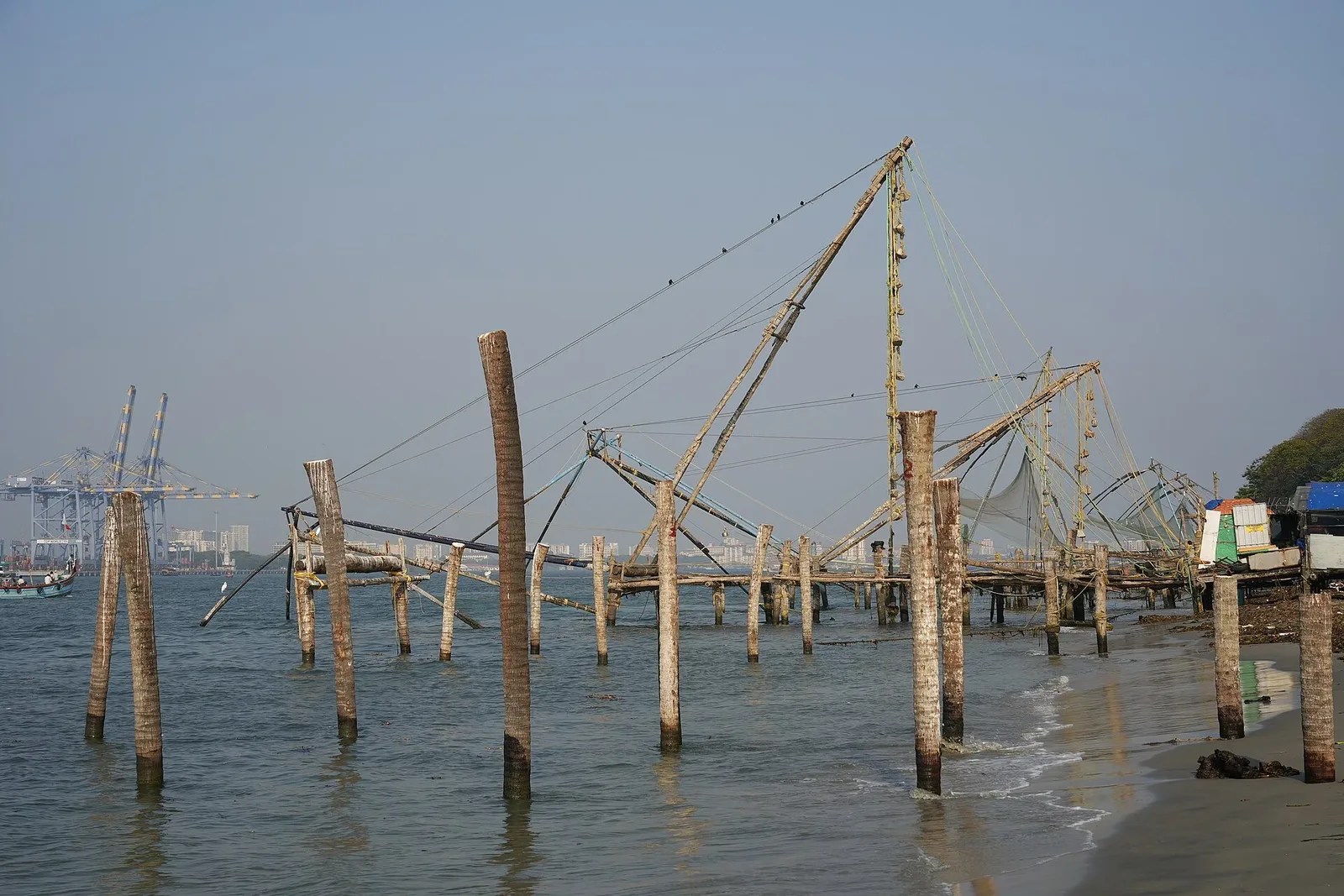
Two Kerala bases that pair naturally — walkable Fort Kochi with its Chinese fishing nets and Dutch Palace, then Alleppey (Alappuzha) for the backwaters — with the metro, water metro and ferry details that connect them, and an honest answer to the question every visitor asks: what should a houseboat actually cost?
Spend your Kochi days based in or near Fort Kochi: walk the shore at the Chinese fishing nets (free, on the open promenade), see St Francis Church and the Mattancherry Dutch Palace (₹5 entry, closed Fridays), and cross the harbour on the Kochi Water Metro or the government ferry. Then travel south to Alleppey for the backwaters. On the houseboat question: there is no official tariff — houseboats are a private market, so no government rate exists to quote or check. Price depends on the boat's size, the season and what is included; a section below explains how to judge a quote instead of trusting one.
SECTION 01How This Kochi–Alleppey Trip Fits Together
Understand Kochi's geography first, because it decides where you sleep and how you move. The name covers a cluster of places around a natural harbour: Ernakulam, the mainland city with the main railway stations and the metro; Fort Kochi and Mattancherry on the old peninsula to the west, about 12 km from Ernakulam Town; and a scatter of islands between them. Most of what a first-time visitor comes for — the nets, the palace, the churches, the old warehouses — sits in Fort Kochi and Mattancherry; Ernakulam is where you arrive.
Alleppey is the second base. Kerala Tourism calls Alappuzha — Alleppey's official name — the "Venice of the East", a town of beaches, backwaters and paddy fields where the houseboat cruise is the signature experience. It is a separate stay, not a day trip: the road journey south takes roughly an hour and a half to two hours depending on traffic, and a backwater day deserves a morning start on the water rather than a commute.
A workable shape is two or three nights in Kochi — one day for Fort Kochi on foot, one for Mattancherry and the harbour crossings — then one or two nights in Alleppey built around your time on the backwaters. Everything can be reordered around one fixed point: the Dutch Palace closes on Fridays.
SECTION 02Fort Kochi on Foot: The Nets, the Church and the Shore
The Chinese fishing nets
Begin at the water's edge. The Chinese fishing nets are Fort Kochi's emblem: great cantilevered structures along the shore, each some 10 metres high and carrying a net of around 20 square metres, worked by a crew with ropes and counterweights. Kerala Tourism's own Fort Kochi brochure records that they were installed between 1350 and 1450 CE and links them to the Chinese traders who reached this coast in the era of Zheng He — which is how a technology from the China Sea came to define the skyline of a Kerala port.
There is no ticket and no gate. The nets stand on the open public shore and promenade, and watching them dip and rise costs nothing. The crews sometimes invite visitors onto the platform or to help haul for a small tip — a private arrangement between you and the crew, so agree any amount before you step up, and treat it as a gratuity rather than an entry fee.
St Francis Church and the old quarter
A short walk inland stands St Francis Church, which Kerala Tourism identifies as the oldest European church in India — a plain, whitewashed building whose importance lies in its age and its layered Portuguese, Dutch and British history. It is a working church, so visit between services. Around it, the Fort Kochi lanes repay unhurried wandering: old merchant houses, cafes in converted warehouses and spice-scented streets, none of it needing a ticket or a timetable.
SECTION 03Mattancherry: The Dutch Palace
Mattancherry, the adjoining old quarter, holds Kochi's one essential museum-palace. The Mattancherry Palace — universally called the Dutch Palace — was built around 1545 by the Portuguese and presented as a gift to Veera Kerala Varma, the king of Kochi; the "Dutch" name came later, from subsequent repairs. Kerala Tourism describes a palace in the traditional naalukettu style around a central courtyard holding a temple to Pazhayannur Bhagavathi, the goddess of the Kochi royal family.
Come for the murals. Kerala Tourism records murals of the Ramayana covering some 100 square metres in the royal bed chamber, alongside murals of Kumarasambhavam in the ladies' room below. The coronation hall displays life-size statues of the Kochi kings from 1864 onwards, and the collection includes palanquins, ceremonial dress and portraits. Even the floors are a story: made of lime, plant juices, burnt coconut shells and egg whites polished to a sheen, they are routinely mistaken for black marble. The palace is a protected monument — it appears in the Archaeological Survey of India's list of ticketed monuments in Kerala.
The practical facts are simple and cheap. The Ernakulam District Tourism Promotion Council lists entry at ₹5 per person, offline booking only — you pay at the palace, not online. Kerala Tourism lists hours of 10:00 AM to 5:00 PM on all days except Fridays. One honest note: the council publishes a single per-person figure, with no separately published foreign-visitor rate on the official pages checked — international visitors should confirm the charge at the counter. Allow an hour to an hour and a half; Mattancherry's lanes deserve the rest of the morning.
SECTION 04Getting Around Kochi: Metro, Water Metro and the Harbour Ferries
The Kochi Metro and the Kochi1 card
For the mainland city, the metro is the dependable spine. Kochi Metro Rail's own fare page prices journeys in distance slabs of ₹10, ₹20, ₹30, ₹40, ₹50 and ₹60 — you pay by how far you ride, and most cross-city hops fall in the lower slabs. Riding more than a couple of times? The Kochi1 card is the local habit: KMRL lists a 20% discount on every ride with it, a Weekday Pass at ₹125, a Weekend Pass at ₹230, and monthly passes discounted 25% (30 days) and 33% (60 days).
The Kochi Water Metro
Kochi is India's first Water Metro city, and for a visitor it is both transport and sightseeing: electric boats on scheduled routes across the harbour and backwaters, between terminals that include Fort Kochi, Mattancherry, the High Court jetty on the Ernakulam shore, Vypin and Willingdon Island. The operator's ridership counter passed 7.9 million passengers in October 2026 — a working commuter system, not a tourist novelty, so expect peak-hour queues. The Fort Kochi–High Court crossing is the one most visitors use, replacing a long road loop around the harbour with a short ride straight across it.
On fares, this guide prints the position with a flag. Published fare information for the Water Metro puts single journeys on a route-by-route scale of roughly ₹20 to ₹40, with the Fort Kochi–High Court crossing at ₹40 — but the operator's own website did not render a fare table when we checked it on 30 October 2026, so treat those figures as the best available indication and confirm your route's fare at the terminal before you board.
The government ferry and the harbour cruises
The older crossing still runs. The State Water Transport Department's government ferry links the Ernakulam jetty and Fort Kochi in about twenty minutes, frequently through the day. We do not print its fare: the department's website returned unrelated, defaced content when checked, and fares reported elsewhere conflict. Expect a very small charge and carry coins.
For the harbour without a destination, the Kerala Shipping and Inland Navigation Corporation (KSINC) — the state shipping corporation — runs sightseeing and sunset cruises from Marine Drive, bookable through its official cruise portal. No KSINC fare is printed either: its booking pages rendered no current tariff we could check, so the fare to trust is the one on its booking page the day you book.
SECTION 05The Road to Alleppey and the Backwaters
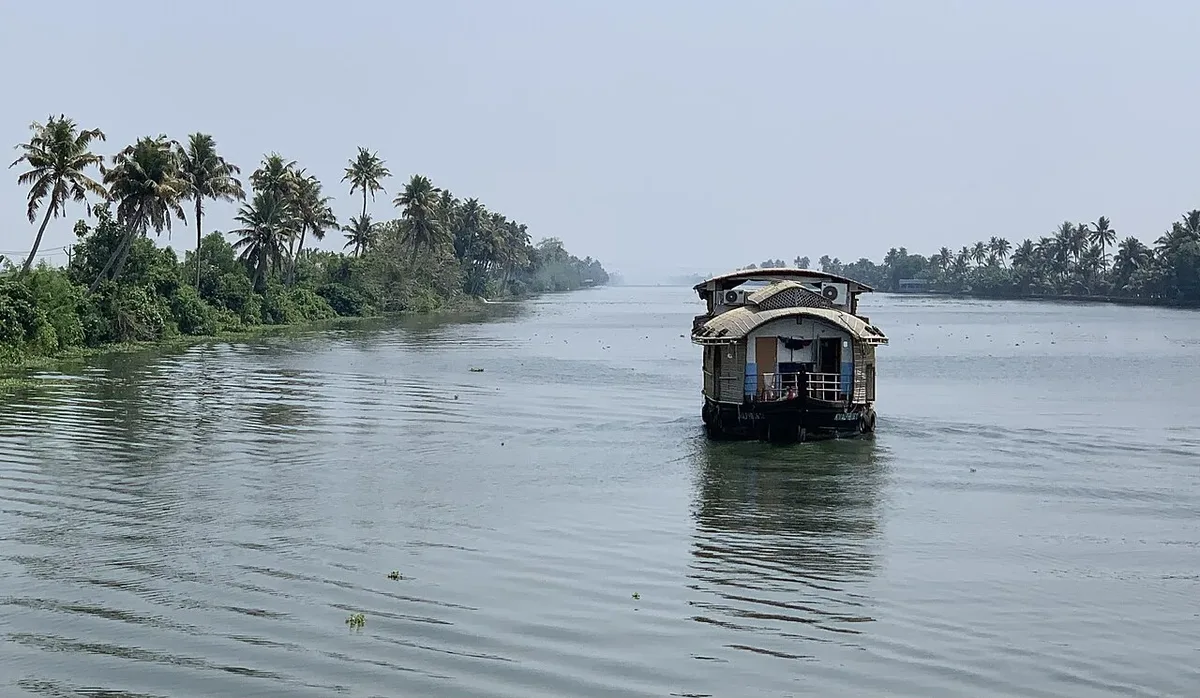
Alleppey sits south of Kochi at the edge of Vembanad Lake — Kerala's longest and largest lake — where the canals, lagoons and rivers of the Kuttanad region spread out behind the coast. Kerala Tourism describes a town built around water: beaches, coir, paddy fields below sea level, and the waterways that earned it the "Venice of the East" label. The backwaters here are a lived-in landscape of villages, toddy tappers, coir workers and houseboats, not a single lake cruise.
The town's other famous day is the Nehru Trophy Boat Race, staged on Punnamada Lake — an arm of Vembanad at Alleppey — where the great snake boats race over a 1,380-metre course. If your trip coincides with the race, book everything early; on any other date, the Punnamada finishing-point area is where the houseboat day begins, and the rhythm is far slower.
SECTION 06The Houseboat Decision: What You Are Actually Paying For
Here is the fact this guide most wants you to have, stated plainly: there is no official houseboat tariff. Houseboats at Alleppey are privately owned and privately priced. No government department publishes a rate card, no authority fixes a standard price, and any website presenting a single "official" price for a houseboat is inventing it. That is why this guide — which checks every other price it prints against an official source — prints no houseboat figure at all. What we can give you is the list of things the number is actually made of, so you can judge any quote.
Boat size and layout. The biggest driver. A one-bedroom boat for a couple and a four-bedroom boat for two families are different products; so are upper decks, enclosed dining and bathroom quality. Ask how many bedrooms, whether the boat is exclusively yours — for overnight trips, insist on exclusive — and see recent photographs of the actual boat, not the fleet's best example.
Season. The same boat costs markedly more in the peak winter season — roughly December and January — than in the monsoon months, when rain reshapes the trip and demand falls. A quote that looks suspiciously cheap for late December deserves questions; a monsoon quote should reflect the season.
What is included. Meals are the usual dividing line: most overnight quotes include all meals cooked on board, but check whether seafood beyond the standard menu is extra, and whether drinks are covered. Confirm boarding and return times in writing — a "one night" trip that boards late and returns early is shorter than it sounds — and ask where the boat moors overnight.
Route and trip type. An overnight cruise, a day cruise of a few hours and a small shikara or canoe trip through the narrow canals are three different experiences at three different price levels, all privately priced. The big houseboats keep to the wider waterways; the narrow village canals — where much of Kuttanad's daily life happens — are the small boats' territory. Many visitors find a houseboat day plus an hour in a small boat beats either alone. Scheduled public boats exist — the state transport department runs passenger services around Alleppey — but they follow routes and timetables, not the drift-at-will pattern that makes a houseboat day what it is.
Book the way you would book any private service with no published tariff: compare two or three operators, get the inclusions in writing, agree what happens if the boat provided differs from the boat booked, and be wary of any quote that cannot explain itself against the list above.
SECTION 07Before You Go: Checks for the Kochi–Alleppey Trip
- ☐ Keep Mattancherry off Friday. The Dutch Palace is closed on Fridays (10:00 AM–5:00 PM other days, ₹5 at the counter).
- ☐ Reconfirm fares on the official pages below — metro slabs and passes, and the Water Metro fare at the terminal. Checked 30 October 2026; all can change.
- ☐ Get the Kochi1 card if you will ride the metro more than twice — 20% off every ride, plus day passes at ₹125 (weekday) and ₹230 (weekend).
- ☐ Carry small cash — the palace ticket is offline-only, the ferry is a small cash fare, and jetty purchases are easier with notes.
- ☐ Judge houseboat quotes by the checklist, not the headline — size, season, inclusions, boarding times, route.
- ☐ Book Alleppey as its own stay. The road south takes roughly 1.5–2 hours; a backwater day wants a morning start.
- ☐ Pack for the water: sun protection, a light layer for evening crossings, shoes that cope with wet jetties.
FAQFrequently Asked Questions
How many days do you need for Kochi and Alleppey?
Three to four days in total works well: two in Kochi (one for Fort Kochi on foot, one for Mattancherry and the harbour crossings) and one to two in Alleppey around your backwater trip. Kochi's sights are compact; the time pressure is the road south and the pace of the backwaters.
How much does a houseboat in Alleppey cost?
There is no official answer to check: houseboats are a private market with no government-published tariff, so this guide prints no figure. Any quote is built from the boat's size and standard, the season (peak winter costs most, monsoon least), what meals and extras are included, and the route and trip length. Compare quotes against those factors, get inclusions and boarding times in writing, and distrust anyone who quotes you an "official rate".
What does the Kochi Metro cost, and is the Kochi1 card worth it?
Kochi Metro Rail prices journeys in distance slabs of ₹10 to ₹60. The Kochi1 card takes 20% off every ride, and KMRL lists a Weekday Pass at ₹125 and a Weekend Pass at ₹230, with monthly passes discounted 25% (30 days) and 33% (60 days) — checked on KMRL's official fare page on 30 October 2026. Riding more than a couple of times a day, the card or a pass pays for itself.
What is the best way between Ernakulam and Fort Kochi?
By water. The Kochi Water Metro runs scheduled electric boats between terminals including Fort Kochi and the High Court jetty on the Ernakulam shore — published fares put most single journeys around ₹20–₹40, but confirm at the terminal, as the operator's site did not render a fare table when we checked. The government ferry makes the same crossing in about twenty minutes for a very small cash fare. The road alternative loops around the harbour and is the slowest of the three on a busy day.
When is the Dutch Palace closed, and what does it cost?
The Mattancherry (Dutch) Palace is open 10:00 AM to 5:00 PM on all days except Fridays — per Kerala Tourism. The Ernakulam District Tourism Promotion Council lists entry at ₹5 per person, payable at the palace (offline booking only); no separate foreign-visitor rate was published on the official pages checked, so international visitors should confirm at the counter.
Official references and checking status
The changeable facts in this guide — fares, entry charges, opening hours and service details — were checked on 30 October 2026 against the official pages listed below; the accompanying sources file records which page supports which claim. Three honest limits: Water Metro fares are given as a range with a caution, because the operator's website did not render a fare table in this check; no fare is printed for the State Water Transport Department ferry, whose website returned unrelated defaced content when checked, or for KSINC's cruises, whose booking pages rendered no current tariff; and no houseboat price appears anywhere here, because houseboats are privately priced and no official rate exists. Confirm current prices and timings before you go.
- Kochi Metro Rail (KMRL) — Kochi1 card and fare slabs
- Kochi Water Metro (KWML) — terminals, routes and services
- Kerala Tourism — Mattancherry Palace (Dutch Palace), Kochi
- Ernakulam District Tourism Promotion Council — The Dutch Palace (entry fee and booking)
- Kerala Tourism — Fort Kochi brochure (Chinese fishing nets)
- Kerala Tourism — Alappuzha and the backwaters
Photos in this guide: the Chinese fishing nets at Fort Kochi by Ingo Mehling / Wikimedia Commons (CC BY-SA 4.0); a houseboat on the Alleppey backwaters by Paul Arps / Wikimedia Commons (CC BY 2.0).
General information only. This guide is based on official sources publicly available and checked on the date shown on this page. Visa rules change, and consular and USCIS officers decide every case on its own facts — nothing here is a confirmation or a guarantee for your individual case, and this is not legal advice. Always confirm the current requirement on the official page linked in this guide before you act, and consider a qualified immigration attorney for your specific situation.