
Researched & checked — 30 Oct 2026
Mumbai in 2 Days: The Gateway, Elephanta and Getting Around Without a Car
NEW Published 30 October 2026
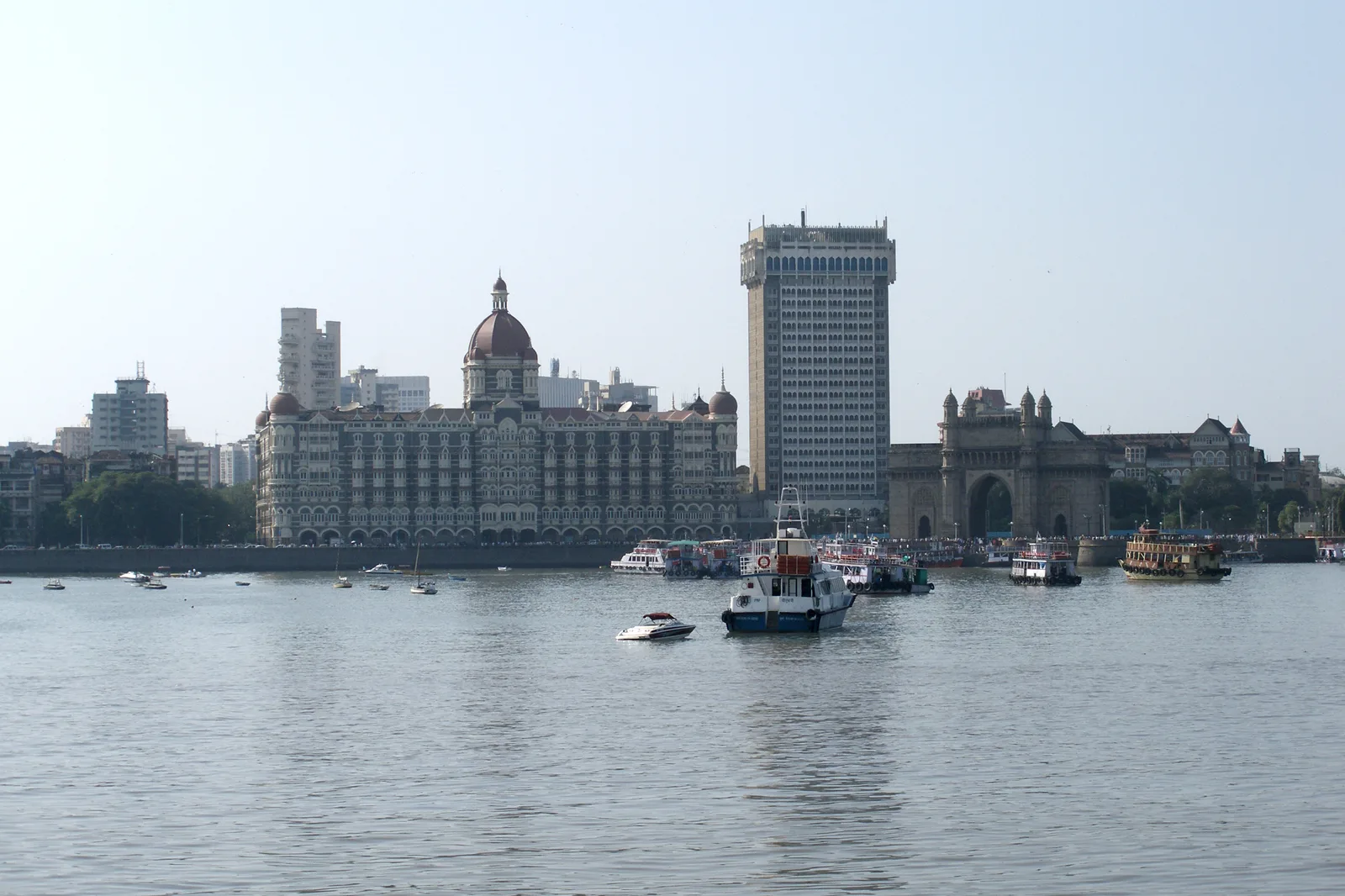
Two days in Mumbai built on the city's own transport — a boat across the harbour to the Elephanta Caves, the free Gateway of India, the CSMVS museum and the UNESCO-listed terminus in the walkable south, with the metro and local trains doing the rest — with verified prices where official pages publish them, and an honest blank where one famous price is published nowhere official.
For Mumbai in 2 days, do this: Day 1 — take a morning boat from the Gateway of India to the Elephanta Caves (ASI entry: ₹40 for Indian, SAARC and BIMSTEC visitors; ₹600 for other foreign visitors; children below 15 free; caves open 9 AM to 5 PM and closed on Mondays), then spend the late afternoon at the Gateway itself — a free public monument on an open plaza. Day 2 — the CSMVS museum in Fort (Indian adults ₹200, foreign adults ₹700; 10:15 AM to 6:00 PM) and Chhatrapati Shivaji Terminus from outside. Use the Aqua Line metro and the suburban locals between clusters. One blank, deliberately: this guide prints no Elephanta ferry fare, because the boats are run by private and cooperative operators and no official fare is published — you pay at the jetty, so carry cash and ask before you board.
SECTION 01How These Two Days Fit Together
Mumbai is a north–south city, and visitors waste their days travelling its length twice. This plan refuses to: both days anchor in the south, where the harbour, Fort and Colaba hold the sights, and the only long ride — the metro north — is optional. Day 1 belongs to the harbour: out to Elephanta in the morning, when the sea is calmest and the caves coolest, back to the Gateway and Colaba for the evening. Day 2 stays on land in Fort and Kala Ghoda: museum in the heat of the day, architecture at its edges.
Two scheduling facts shape everything: Elephanta's caves are closed on Mondays, so if one of your two days is a Monday, swap the days; and the boat times and cave hours together make Elephanta a morning trip, not an afternoon one. Everything else in this guide flexes; those two do not.
SECTION 02Day 1, Morning: The Boat to Elephanta
The day starts at the Gateway of India's jetty, where the harbour boats load. Elephanta Island — Gharapuri — lies about 11 kilometres north-east of Apollo Bunder, a crossing of roughly an hour each way; its two hills rise from the water as you approach. Boats are run by private and cooperative operators from the jetty through the day, and here this guide has to be straight with you: no official ferry fare is published anywhere we could verify. No transport-authority tariff page exists for these launches — fares are set by the operators and paid at the jetty — so this guide prints no figure rather than quote one from a travel blog. Carry cash in small notes, confirm the return fare and the last boat back before you board, and keep the return half of your ticket safe. In rough monsoon weather services can be curtailed — ask at the jetty on the day.
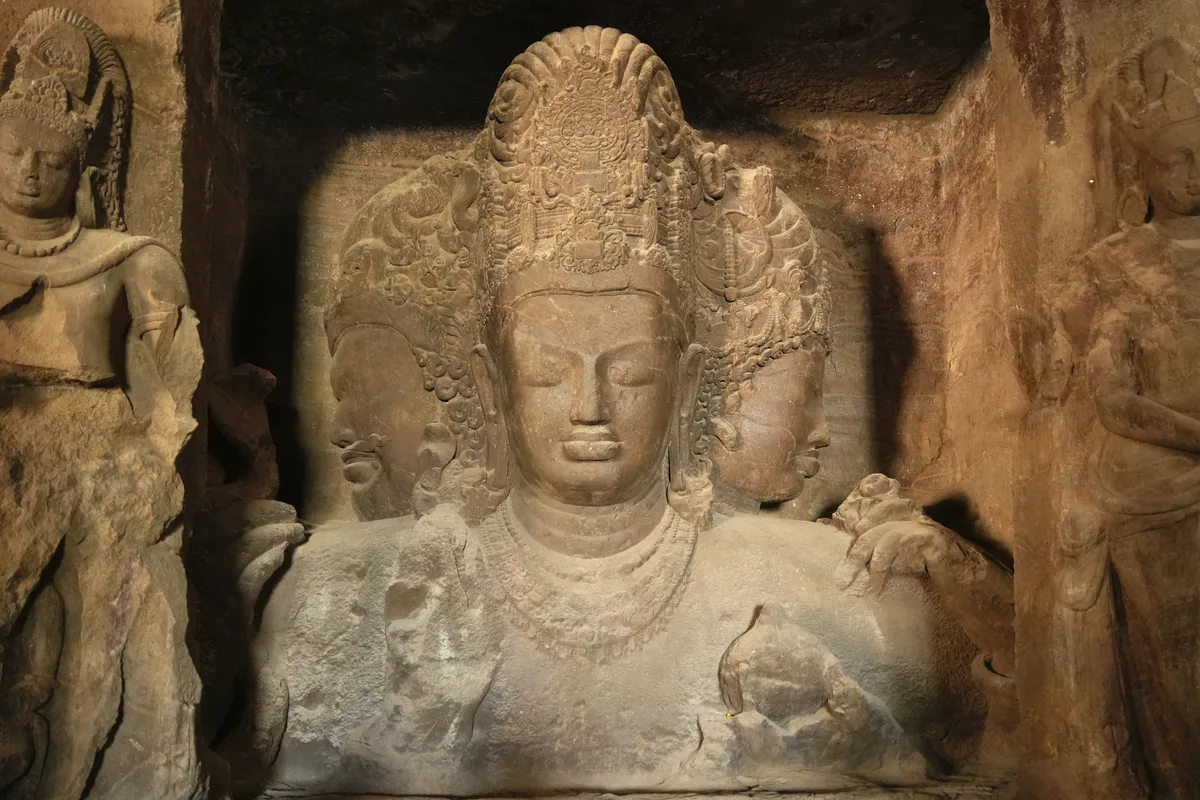
The caves themselves are the Archaeological Survey of India's charge, and its official page gives the facts that matter. There are seven rock-cut caves, dated to about the 6th–7th century AD, and the first and greatest of them, Cave 1, is a Shiva temple: panel after panel of the god in his forms — Ardhanarisvara, Nataraja the dancer, the marriage of Shiva and Parvati, Gangadhara bringing down the river, Ravana shaking Mount Kailasa. At its heart stands the panel everyone crosses the harbour for: the great three-faced Mahesa-murti, the image often called the Trimurti — carved on a scale that photographs flatten and the cave restores.
The ASI lists the caves' hours as 9:00 AM to 5:00 PM, closed on Mondays, and its entry fees, quoted exactly as the ASI publishes them, are: children below 15 years enter free; visitors from SAARC and BIMSTEC countries pay ₹40 per head (₹35 booked online); other foreign visitors pay ₹600 per head (₹550 online). Indian visitors pay the domestic ₹40 rate (₹35 online) — the same figure the ASI lists for the SAARC and BIMSTEC tier. On the island, a path and steps climb from the jetty to the caves; take them slowly — Cave 1 last, for the masterpiece as finale — and leave margin for the walk down and the return boat, back at the Gateway by mid-afternoon.
SECTION 03Day 1, Late Afternoon: The Gateway and Colaba
Back on the mainland, give the monument you sailed from its own half-hour. The Gateway of India stands at Apollo Bunder, at the end of Chhatrapati Shivaji Marg, looking over the harbour: a 26-metre basalt arch in Indo-Saracenic style, as Mumbai City's district page records it. It commemorates the landing of King George V and Queen Mary at Apollo Bunder on their 1911 visit to India — the foundation stone was laid on 31 March 1911, George Wittet's design was sanctioned in 1914, and the arch was completed in 1924. There is no ticket, no gate, no turnstile: the Gateway stands on an open public plaza at the water's edge, free to walk around at any hour, and late afternoon into dusk — harbour light, boats coming in, the great hotel beside it lit — is when it earns its fame.
Spend the evening in the Colaba streets behind the Gateway — cafes, bookstalls and the Causeway's shops on public streets, free to wander beyond what you choose to spend. The museum quarter of Kala Ghoda is tomorrow's ground — walk a little of it tonight and Day 2 will feel familiar.
SECTION 04Day 2: Fort and Kala Ghoda — the Museum and the Terminus
Indoors first: the CSMVS museum
Day 2's anchor is the Chhatrapati Shivaji Maharaj Vastu Sangrahalaya — the museum long known as the Prince of Wales Museum — at 159-161 Mahatma Gandhi Road in Fort, a grand Indo-Saracenic building in a garden, holding the city's great collection of sculpture, paintings and decorative arts. The museum publishes its rates on its official site, and they were revised with effect from 1 May 2025: Indian adults (above 15) pay ₹200 — ₹250 with the audio guide — with ₹100 entry for defence personnel and Indian senior citizens with ID, ₹40 for children of 5 to 15, and an economy ticket at ₹30; foreign adults pay ₹700, with the audio guide included, and foreign children ₹200. Photography is a paid extra, not a right: the museum lists a handheld camera pass without tripod at ₹500 and a video camera at ₹5,000. Hours are 10:15 AM to 6:00 PM daily, ticket counter closing at 5:45 PM; the museum closes on a short list of public days — among them 26 January, 1 May, 15 August and 2 October — so check the site near a holiday. Allow two to three hours; the audio guide earns its ₹100 on the domestic ticket.
The terminus from outside: CST
A short walk north stands the building that rivals the Gateway as Mumbai's emblem: Chhatrapati Shivaji Terminus, the former Victoria Terminus. UNESCO inscribed it on the World Heritage List in 2004, calling it an outstanding example of Victorian Gothic Revival architecture in India blended with themes from Indian traditional architecture — Italianate Gothic bones, Indian carved detail, and a working railway station underneath it all. Treat it as an exterior sight. The facade, dome and carved stonework are the visit, best read from across the road in morning or late-afternoon light; the platforms beyond are for travellers, and no sightseeing ticket exists or is needed for the view from the street.
Fill the rest of the day at walking pace in the same square mile: Kala Ghoda's galleries and cafes, the university and High Court Gothic along the Oval Maidan, Flora Fountain at Hutatma Chowk. Nothing here is more than minutes from the next thing, and the Aqua Line stations at Churchgate, Hutatma Chowk and CSMT thread straight through it.
SECTION 05Getting Around Without a Car: Metro, Locals and Buses
The Aqua Line (Metro 3) is the visitor's new spine: Mumbai's first fully underground metro — 33.5 kilometres and 27 stations from Cuffe Parade in the south — two stops from the Gateway — through Churchgate, CSMT, Mumbai Central, Dadar and Bandra Kurla Complex to the airport and Aarey JVLR, running end to end since October 2025, with first trains at 5:55 AM. Fares are distance slabs: the chart released by the metro corporations prices short hops at ₹10 (up to 3 km) and ₹20 (3 to 12 km), rising through ₹30, ₹40 and ₹50 to ₹60 for rides of 30 to 36 km — the whole south-Mumbai end of this itinerary costs ₹10 to ₹20 a ride. The corporation's own site could not be read as published text for this guide, so treat those slabs as the widely republished official chart and confirm your fare in the Mumbai One app or at the station.
The suburban locals are the older, bigger machine: three corridors converging on CSMT (Central Railway) and Churchgate (Western Railway) in the south, running from early morning to past midnight, every few minutes at peak. This guide prints no local-train fare table, because no official table could be read for it in this pass — in practice you buy a ticket at the station counter, tell the clerk your destination, and pay the posted second-class fare — small change by any traveller's standard. Two rules of survival: ride outside the morning and evening rush if you can, and check which side the platform exit falls on before your stop.
BEST buses fill the gaps the rails leave — the red buses run the whole city, including the Colaba and Fort streets this itinerary walks, on conductor-sold tickets. Treat them like the locals: the mechanism is the thing to know (board, state your stop, pay the conductor, keep the ticket till you alight); exact fares belong to the day, not to a guide written months earlier. Metered black-and-yellow taxis cover the odd short hop, above all the station-to-Gateway run with luggage.
SECTION 06Plan Your Two Days: The Mumbai Checklist
Work through this list the evening before, and the two days mostly run themselves.
- ☐ Check the day of the week. Elephanta's caves are closed on Mondays — if a Monday is one of your days, make it the Fort and museum day instead.
- ☐ Carry cash for the Elephanta boat. The ferry fare is set by the jetty operators and published on no official page; carry small notes, confirm the return fare and last boat before boarding, and keep the return ticket safe.
- ☐ Start Elephanta early. Caves open 9:00 AM to 5:00 PM; a morning boat gives you the caves in the cool and the Gateway at its best on return.
- ☐ Know your ASI tier. Elephanta entry: ₹40 domestic / SAARC / BIMSTEC (₹35 online), ₹600 other foreign visitors (₹550 online), children below 15 free.
- ☐ Decide on the camera before CSMVS. A handheld camera pass is ₹500 and video ₹5,000 on top of entry — many visitors happily leave the camera in the bag and take the ₹100 audio guide instead.
- ☐ Ride the Aqua Line for cross-town jumps. The Cuffe Parade, Churchgate, Hutatma Chowk and CSMT stations thread this whole itinerary; short hops price at ₹10–₹20 on the slab chart.
- ☐ Avoid the locals at peak hour. The same trains that are a pleasure at 11 AM are a contact sport at 9 AM — schedule station runs outside the rush.
- ☐ Reconfirm every price and hour on the official pages linked below — figures here were checked on 30 October 2026 and can change.
FAQFrequently Asked Questions
How much does an Elephanta trip cost?
Two separate payments. The caves are the ASI's: ₹40 per head for Indian, SAARC and BIMSTEC visitors (₹35 booked online), ₹600 for other foreign visitors (₹550 online), and children below 15 free — the ASI's own figures, checked 30 October 2026. The boat is separate and this guide quotes no fare for it: the launches from the Gateway jetty are run by private and cooperative operators, no official tariff is published, and figures on travel sites are reported operator prices, not an official rate. Pay at the jetty, in cash, and confirm the return sailing before you board.
Is the Gateway of India free to visit?
Yes. It is a public monument on an open waterfront plaza at Apollo Bunder — no ticket, gate or entry fee, and the plaza is open around the clock. The costs around it are optional ones: the harbour boats, the cafes of Colaba, anything you buy on the Causeway.
When are the Elephanta Caves closed?
On Mondays — the ASI lists the caves' hours as 9:00 AM to 5:00 PM on the other six days, so build your two days so Elephanta never falls on a Monday. Harbour boats can also be curtailed in rough monsoon weather; ask at the jetty on the day.
How much is the Mumbai Metro?
On the Aqua Line (Metro 3), fares are distance-based: the chart released by the metro corporations runs from ₹10 (up to 3 km) and ₹20 (3 to 12 km) to ₹60 for the longest rides. The short hops between this itinerary's south-Mumbai stations — Cuffe Parade, Churchgate, Hutatma Chowk, CSMT — sit in the ₹10–₹20 bands. Confirm your exact fare in the Mumbai One app or at the station.
Can you really see Mumbai without a car?
Yes — this itinerary does, and the south of the city is designed for it. The Gateway, Colaba, CSMVS, CST and Kala Ghoda stand within one walkable grid; the Aqua Line and the locals cover the longer jumps; BEST buses and metered taxis fill the gaps. What a car adds in Mumbai is mostly traffic.
Official references and checking status
The prices, hours and transport details in this guide were checked against the official pages below on 30 October 2026. Three honest limits, stated plainly. First, no Elephanta ferry fare is printed: the launches are run by private and cooperative operators, no official tariff page exists that this guide could read, and quoting a blog's figure as fact would be inventing a price — you pay the operator at the jetty. Second, the Aqua Line fare slabs are the chart released by the metro corporations and widely republished since the line opened fully in October 2025; the corporation's own site could not be read as published text in this pass, so the slabs carry a confirm-at-the-station instruction. Third, no suburban-rail or BEST fare table is printed, for the same reason — those sections describe how the systems work and how to pay, not unverifiable figures. Everything else priced here is quoted from the official pages below. Prices and rules change — re-check the relevant page below before you travel.
- Archaeological Survey of India — Elephanta Caves (the caves, hours, closed day and entry fees)
- Mumbai City district, Government of Maharashtra — Gateway of India (history, dimensions and setting)
- CSMVS (Chhatrapati Shivaji Maharaj Vastu Sangrahalaya) — visit page (hours, ticket rates from 1 May 2025, camera passes, closed days)
- Mumbai Metro Rail Corporation — Metro Line 3, the Aqua Line (the 33.5 km Colaba–Bandra–SEEPZ corridor)
- UNESCO World Heritage Committee — decision inscribing Chhatrapati Shivaji Terminus on the World Heritage List (2004)
Photos in this guide: the Gateway of India and the Taj Mahal Palace Hotel from the harbour, ferries in the foreground, by Vyacheslav Argenberg / Wikimedia Commons (CC BY 4.0); the Mahesa-murti (Trimurti) in Elephanta's Cave 1 by Ingo Mehling / Wikimedia Commons (CC BY-SA 4.0). Both resized and converted for this page.
General information only. This guide is based on official sources publicly available and checked on the date shown on this page. Visa rules change, and consular and USCIS officers decide every case on its own facts — nothing here is a confirmation or a guarantee for your individual case, and this is not legal advice. Always confirm the current requirement on the official page linked in this guide before you act, and consider a qualified immigration attorney for your specific situation.