
Researched & checked — 30 Oct 2026
Oahu and Honolulu: Waikiki, Pearl Harbor and Diamond Head, With the Reservations That Catch People Out
NEW Published 30 October 2026
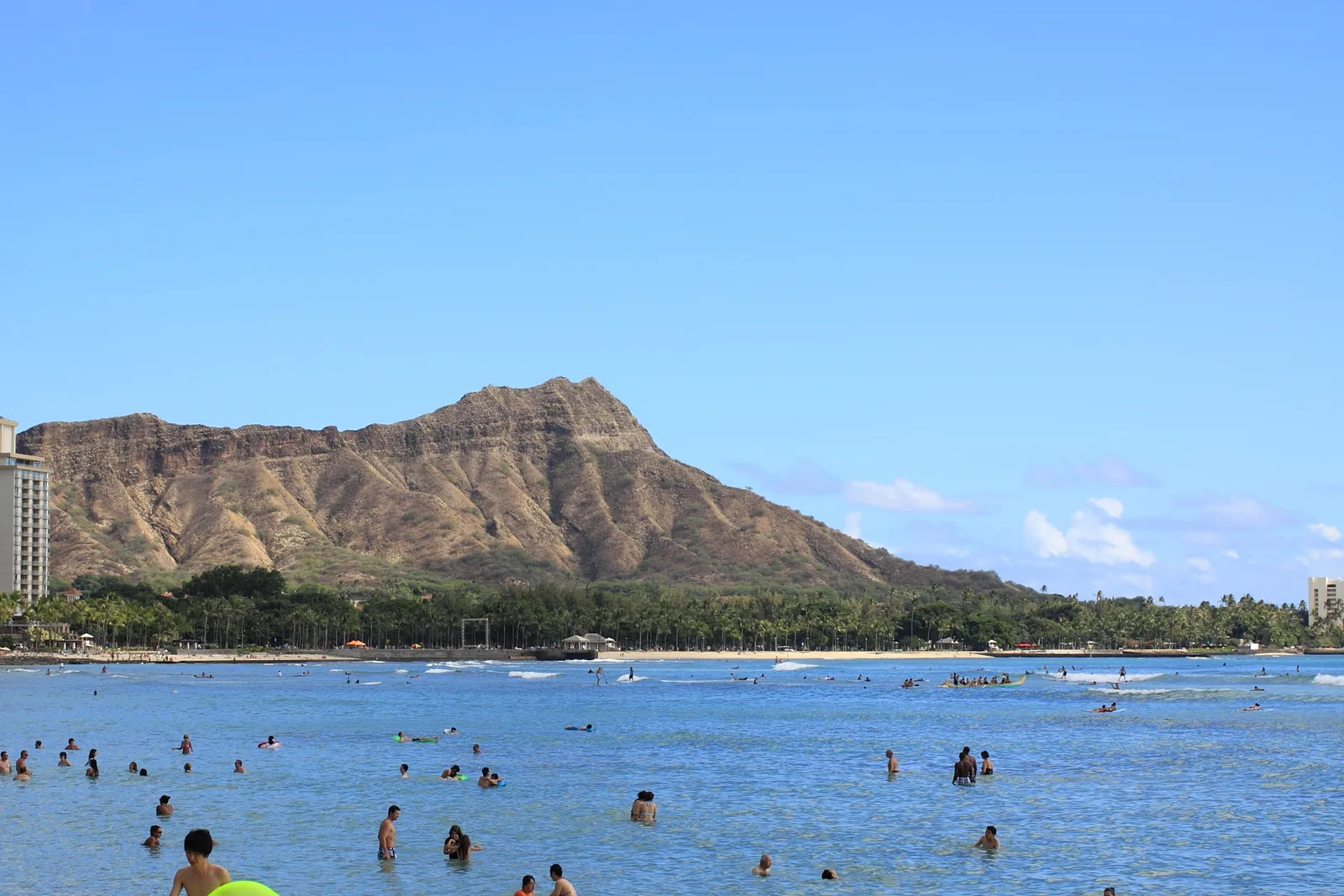
A first-timer's guide to Oahu — Waikiki's free public beach, Pearl Harbor's free-but-fiercely-booked memorial programme, and the two sights, Diamond Head and Hanauma Bay, where showing up without the right reservation on the right day simply means going home again.
Waikiki Beach is public and free — walk on, no ticket, no booking. The reservations are the trip's real itinerary: the USS Arizona Memorial programme is free but bookable only on Recreation.gov, with tickets released daily at 3 p.m. Hawaii time, 24 hours and 8 weeks ahead, plus a $1 booking fee per ticket. Diamond Head requires non-residents to reserve in advance: $5 entry per person, $10 parking per vehicle, cards only, last entry 4:30 p.m. Hanauma Bay charges non-residents $25, opens reservations just two days ahead at 7 a.m., and closes every Monday and Tuesday. Around town, a HOLO card caps TheBus fares at $7.50 a day.
SECTION 01Waikiki: The Part That Needs No Booking
Begin with the relief: Waikiki Beach is a public beach. There is no entrance fee, no reservation, no gate and no wristband — the two-mile curve of sand along Kalakaua Avenue, from the Hilton Hawaiian Village end to Kapiolani Park beneath Diamond Head, is simply open, and the famous view of the crater closing the beach's eastern end is free to anyone standing on it. What costs money in Waikiki is everything adjacent — parking, loungers, surf lessons, lunch — never the beach itself. Hawai'i's shoreline is public in a way visitors from many countries find startling: no hotel owns the sand in front of it, and your towel has as much right to be there as any guest's.
Use Waikiki as the trip's flexible filler. Mornings belong to the booked sights in this guide; the beach takes the afternoons, the jet-lagged first evening and the unscheduled last day. The water is sheltered and gentle by Hawaiian standards, the surf breaks are beginner-friendly, and sunset over the Pacific is the neighbourhood's daily free show. Everything else in this guide is a day trip from here: Pearl Harbor lies west of downtown, Diamond Head stands at Waikiki's own eastern end, and Hanauma Bay is a short drive beyond it. Which is fortunate, because those three need military-grade timing.
SECTION 02Pearl Harbor: A Free Programme With a Booking Race
The USS Arizona Memorial programme — a short talk, the 23-minute film context and the Navy boat ride out to the white memorial spanning the sunken battleship — is run by the National Park Service and is free. But free no longer means walk-up. Reservations are taken only online, through Recreation.gov; the old same-day distribution at the visitor centre has been discontinued, and Recreation.gov charges a $1 non-refundable fee per ticket — the only money the memorial itself will ever ask of you. Tickets are released daily at 3 p.m. Hawaii time in two windows: 24 hours ahead and 8 weeks ahead. Popular dates go fast in both windows, so the 8-week release is the planner's friend and the 24-hour one the gambler's second chance. You may reserve at most 10 tickets per day, counting infants and small children — every person needs a ticket — and reservations are final: they cannot be changed or refunded.
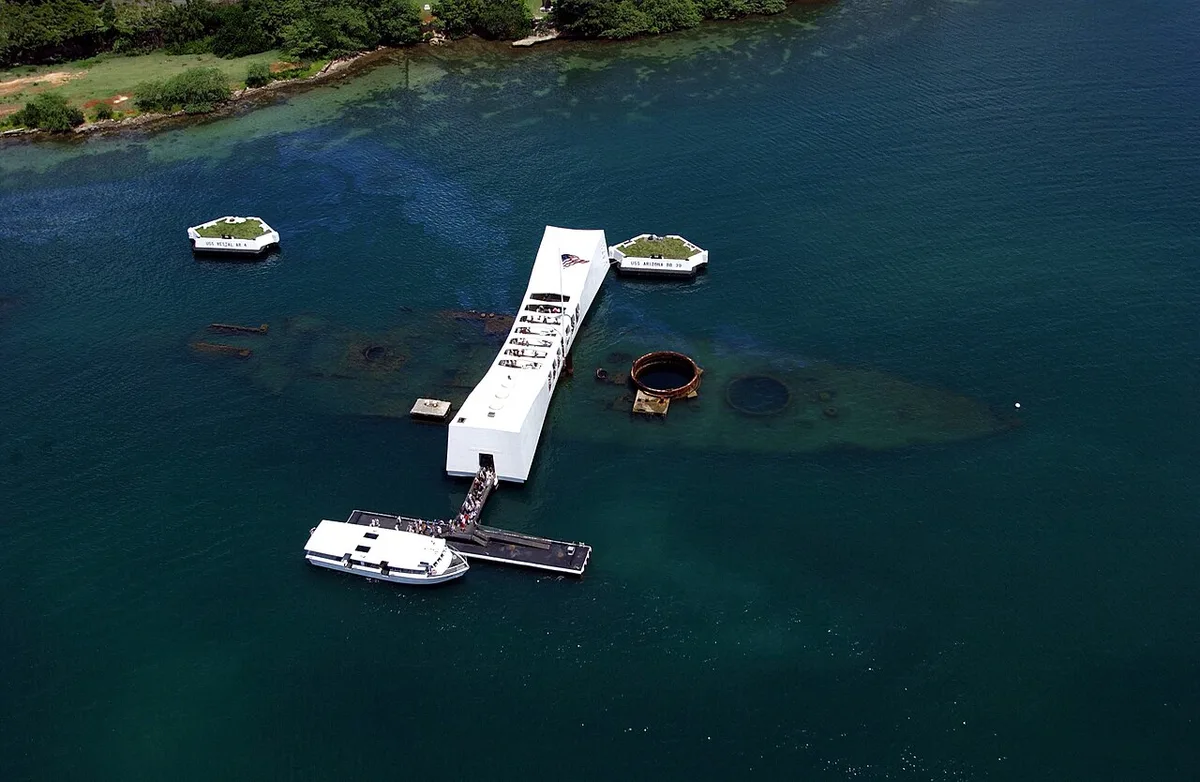
Programmes run daily, every 15 minutes, from 8 a.m. to 12 noon and 1 p.m. to 3:30 p.m., and the Park Service's timing advice is firm: arrive at least an hour early, and check in at least 10 minutes before your programme, because late arrivals' seats are released to the standby line. A Standby Callback system — register at the tablets on site and wait for a text — exists as a genuine last resort, but the Park Service is plain that standby access cannot be guaranteed; treat it as luck, not a plan. Two more rules catch people out. First, the bag policy: bags larger than a small wallet are not permitted inside — leave everything at the hotel, or use the bag storage available nearby for a fee; a clear backpack is the rangers' suggested workaround for essentials. Second, parking at the visitor centre costs $7 per day.
The consolation prize is substantial: if the boat programme sells out, the visitor centre itself — its museums, exhibits and the film — is free and needs no ticket at all. The centre is open daily from 7 a.m. to 5 p.m. (closed on Thanksgiving, Christmas Day and New Year's Day), so a Pearl Harbor morning without a memorial ticket is still a morning at Pearl Harbor, not a wasted trip. Nearby paid attractions — the battleship Missouri, the aviation museum, the submarine Bowfin — are separate organisations with their own tickets, and this guide prices none of them.
SECTION 03Diamond Head: The Hike You Must Book First
Diamond Head — Leahi, the crater at Waikiki's shoulder — is Oahu's signature walk, and since May 2022 it has run on a system that still surprises arrivals at the gate: entry and parking reservations are required in advance for non-residents. The state parks division's current figures: entry is $5 per non-Hawaii resident, and parking is $10 per non-resident vehicle, paid by credit card only. Hawaii residents enter free with a Hawaii ID or driving licence, and children aged 3 and under are free. Book through the state's reservation system before you go; a non-resident without a reservation should expect to be turned away, however empty the crater looks.
The monument is open daily from 6 a.m. to 6 p.m., with last entry at 4:30 p.m. — the gates lock at 6 — and it closes on Christmas Day and New Year's Day. The summit trail is short and steep rather than long: 0.8 of a mile climbing 560 feet, through switchbacks, up stairs and through a 225-foot lighted tunnel to the 1911 Fire Control Station at the rim, with the 1917 lighthouse below. Allow one and a half to two hours for the round trip, carry water — there is none and no shade worth the name on the trail — and go early: the 6 a.m. slots trade a dawn alarm for cool air, empty switchbacks and the sunrise over the crater's eastern rim. The trail is not step-free or accessible, and dogs are not permitted except service animals. On a clear morning the summit view takes in the whole of Waikiki, the Koolau range and the Pacific in three directions — the photograph that explains Honolulu's geography better than any map.
SECTION 04Hanauma Bay: The Two-Day Window and the Closed Days
Hanauma Bay, the flooded volcanic crater east of Waikiki designated the state's first Marine Life Conservation District in 1967, is Oahu's great snorkelling classroom — and its tightest booking puzzle. Start with the days: the bay is open Wednesdays to Sundays only, and closed every Monday and Tuesday, as well as Christmas Day and New Year's Day. Entry runs from 6:45 a.m. to 1:30 p.m.; the beach is cleared at 3:30 p.m. and everyone is out by 4. A Monday trip to Hanauma Bay is the single most common Oahu planning error, and it is made before leaving home.
Prices, from the City and County of Honolulu, which manages the preserve: non-resident entry is $25 per person (plus a 2.35% online service fee), children 12 and younger are free though a reservation is still recommended for them, Hawaii residents enter free with no reservation on showing photo ID, and US military members and their dependants are free with military ID. Every visitor, every visit, watches a mandatory educational video before reaching the sand — it cannot be skipped, and it is part of the point of the place. Reservations run through the city's PROS system and open two days in advance at 7 a.m. Hawaii time — Monday 7 a.m. for Wednesday, and so on — staying open until the day sells out or 11:59 p.m. the night before; one reservation can cover up to 10 people, at most 5 adults and 5 children, is paid online, and is non-refundable and non-transferable, with ID matching the booking checked at the gate.
Three traps remain. Parking is separate: $3 per vehicle for non-residents, $1 for residents, cash on site — and a reservation does not reserve a parking space, so a full lot can still undo a booked morning; go early. The walk-in line is real but rationed: about a quarter of daily access is held back, with walk-in tickets issued from the 6:45 a.m. gate opening — but your whole party must be standing there to claim them. And the bus no longer comes down: city bus service into the bay has been discontinued, and Route 22 now stops up on Kalanianaole Highway, leaving a walk down to the entrance. The City notes one newer alternative — since November 2025, tour packages including transport have been sold through Roberts Hawaii, bookable about a month ahead — for travellers who would rather buy certainty than win the two-day race.
SECTION 05Getting Around: TheBus and the HOLO Caps
Honolulu is one of the few American cities where a visitor can honestly skip the rental car, and the economics run through a small plastic card. The HOLO card — $2 for the card itself — works on TheBus and the Skyline rail, and its fares are built around caps. A single ride is sold as a 2-Hour Pass for $3.00, with unlimited transfers inside those two hours; keep tapping and the day cap stops charges at $7.50. Longer stays have their own arithmetic: a 3-Day Pass costs $20 and a 7-Day Pass $45, while the rolling month cap is $90. One child aged 5 or under rides free with a fare-paying rider, if the child does not take a seat. Pearl Harbor, the Bishop Museum, Iolani Palace and the Waikiki end of the Diamond Head run are all realistic bus trips from a Waikiki hotel.
Cash is the trap in this system. Paying cash on TheBus costs $3.25 per boarding, every boarding — no transfers, exact fare, no change given — so a two-bus journey costs $6.50 in cash against $3.00 on the card inside its two-hour window, and a day of cash riding passes the $7.50 cap without ever enjoying it. One more warning: Honolulu revised its transit fares with effect from July 2026 — the figures above are the city's current published set as checked on 30 October 2026, but if you are reading older guides quoting a lower monthly cap, they are describing the old fares, and the city's fare page linked below is the one to trust for your dates.
SECTION 06Honolulu Beyond the Beach: A Palace and a Museum
Downtown holds the islands' most surprising building. Iolani Palace, completed in 1882 for King Kalakaua, is the only official royal residence in the United States — a National Historic Landmark, restored room by room, where Hawaii's last monarchs lived and where Queen Liliuokalani was imprisoned after the monarchy's overthrow. The palace is open Tuesday to Saturday, 9 a.m. to 4 p.m. (closed Sundays and Mondays), with the ticket office in the Iolani Barracks open from 8:30 a.m. to 3:30 p.m. Visits are by tour — self-guided audio and docent-led formats — and children under 5 are free. Expect palace manners: shoe coverings are issued and worn inside, beachwear is not admitted, and large bags and backpacks may not enter. This guide deliberately prints no admission figure for the palace: it sells several tour types through its online booking partner at different prices, so any single number here would mislead — the palace's own booking page, linked from its site, shows the live price for the tour and date you choose.
For the deeper story, the Bishop Museum in Kalihi — the state's museum of natural and cultural history, founded in 1889 — is the rainy-day and curious-mind anchor of an Oahu trip: Hawaiian Hall's feather work, royal objects and voyaging history repay two to three hours. It is open daily, 9 a.m. to 5 p.m., with last check-in at 4 p.m. and children under 4 free. Admission is dynamically priced by date in the museum's own online store: when checked on 30 October 2026, adult general admission was listed between $33.95 and $38.95 depending on the day, with lower resident and military rates on ID — so treat those figures as a range to expect, confirm the price for your date in the store before you go, and be suspicious of any guide quoting one flat Bishop Museum price.
FAQQuick Questions
Is the USS Arizona Memorial really free — and how do I get tickets?
The programme itself is free; the only charge is Recreation.gov's $1 non-refundable booking fee per ticket. Reservations are online only — same-day distribution at the visitor centre has ended — and tickets are released daily at 3 p.m. Hawaii time, 24 hours and 8 weeks in advance, up to 10 per person per day including children. If you miss out, the visitor centre, museums and film are free without any ticket, and a standby callback line runs on the day with no guarantee.
Do I need a reservation for Diamond Head?
Yes, if you are not a Hawaii resident. Non-residents must reserve entry (and parking, if driving) in advance through the state parks system: $5 per person for entry, $10 per vehicle for parking, credit card only. The monument is open daily 6 a.m. to 6 p.m. with last entry at 4:30 p.m., and closes on Christmas Day and New Year's Day. Residents with Hawaii ID enter free.
Why can't I book Hanauma Bay for next week?
Because bookings open only two days ahead, at 7 a.m. Hawaii time, through the city's PROS system — and the bay is closed every Monday and Tuesday regardless. Non-resident entry is $25 (children 12 and under free), parking is extra and cash-only on site, and about a quarter of each day's places are held for walk-ins from 6:45 a.m. on the day, with the whole party present.
Is Waikiki Beach free?
Yes — it is a public beach with no entry fee, reservation or gate, and Hawaii's shoreline is public: no hotel owns the sand. What costs money is everything around it — parking, equipment hire, lessons and food — never access to the beach itself. Waikiki is the one Oahu sight you never need to book.
How do I get around Honolulu without a car?
With TheBus and a HOLO card ($2): rides come as a $3.00 two-hour pass with unlimited transfers, charges cap at $7.50 per day, and 3-day and 7-day passes cost $20 and $45. Avoid paying cash on board — $3.25 per boarding, exact fare, no transfers — which punishes exactly the multi-bus days the card makes cheap. Fares were revised in July 2026, so check the city's fare page for your dates.
Official references and checking status
Checking status: every fee, hour, closure day and booking window here was checked in full on official sources — nps.gov, dlnr.hawaii.gov, honolulu.gov and the venues' own sites — on 30 October 2026. The honest limits: Waikiki Beach's free public access is stated as the absence of any fee or reservation system — none exists in any City or State source, unlike Diamond Head and Hanauma Bay, whose systems are documented above; Pearl Harbor's $7 parking is published by the park's cooperating association rather than the Park Service itself; Iolani Palace admission is deliberately not priced here because its tours are sold per format through its booking partner; and the Bishop Museum range is its own store's dated pricing on the day of checking, not a fixed tariff. Transit fares were revised in July 2026 and may move again.
- National Park Service — USS Arizona Memorial programmes
- Hawaii Division of State Parks — Diamond Head State Monument
- City and County of Honolulu — Hanauma Bay Nature Preserve
- City and County of Honolulu — Transit fares and the HOLO card
- Iolani Palace — Visit and tour information
- Bishop Museum — Hours and admission
Photos in this guide: Waikiki Beach and Diamond Head by Lahaina / Wikimedia Commons (CC BY-SA 4.0); the USS Arizona Memorial from above, US Navy photo by PH3 Jayme Pastoric / Wikimedia Commons (Public domain). Both resized and converted for this page.
General information only. This guide is based on official sources publicly available and checked on the date shown on this page. Visa rules change, and consular and USCIS officers decide every case on its own facts — nothing here is a confirmation or a guarantee for your individual case, and this is not legal advice. Always confirm the current requirement on the official page linked in this guide before you act, and consider a qualified immigration attorney for your specific situation.