
Researched & checked — 30 Oct 2026
Los Angeles in 3 Days: Hollywood, the Westside and Downtown Without the Traffic Trap
NEW Published 30 October 2026
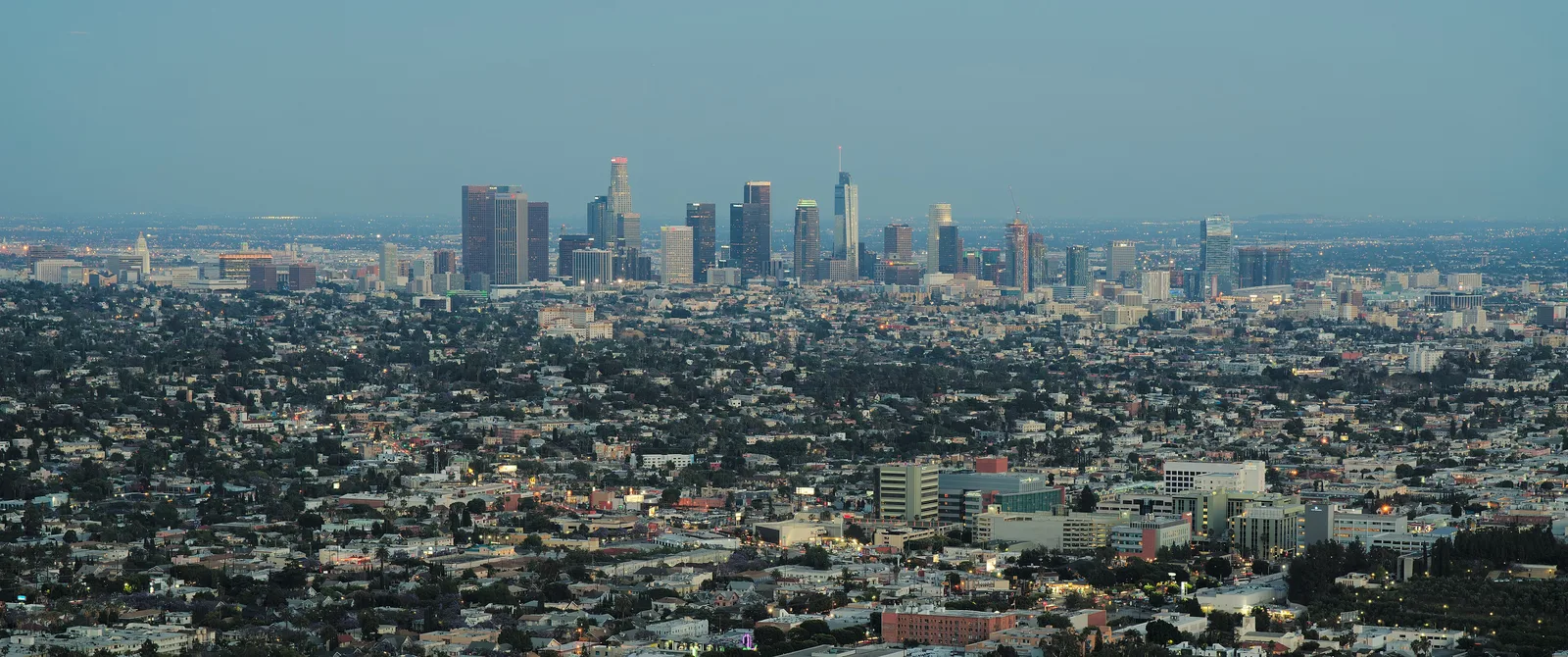
Three days in Los Angeles planned around the city's real geography — Hollywood and Griffith Park on day one, the Getty and the coast on day two, Downtown and its free museum on day three — using the Metro and one airport bus to keep the car, and the traffic, out of it.
Day 1 — Hollywood and Griffith Park: the Walk of Fame in the morning, then Griffith Observatory from mid-afternoon into the evening, when the free telescopes and the city lights are the point. Day 2 — the Westside: the Getty Center (free admission, reservation required, parking $25) and an afternoon down at Santa Monica and Venice. Day 3 — Downtown: The Broad (free, book the timed ticket), Grand Central Market, and the Arts District — or swap the day for Universal Studios Hollywood. Ride the Metro at $1.75 a trip with automatic caps of $5 a day, and take the FlyAway bus from LAX at $12.75. The two bookings that matter: the Getty reservation and The Broad's timed ticket.
SECTION 01How Is This 3-Day Los Angeles Itinerary Laid Out?
The plan follows the city in three bands. Day 1 stays in the north-east, where Hollywood Boulevard runs along the foot of the hills below Griffith Park. Day 2 goes west, to the Getty Center above Brentwood and the coast below it. Day 3 comes back to the centre, to Downtown. Within each day you mostly walk; between the clusters, and up to the observatory, you ride transit.
The Metro is better than its reputation. The base fare is $1.75, and Metro runs automatic fare capping: tap the same TAP card, or the same credit or debit card, every ride and you will never pay more than $5 in a day or $18 in seven days — after the cap, rides are free. Two honest catches: the caps only build if you pay by TAP or card, because riders paying cash are not eligible for them, and you must tap the same card in the same form all day. A fare also includes two hours of free transfers on Metro buses and trains. For a three-day trip there is no pass to work out — load a TAP card or tap your bank card and the cap does the maths.
- Day 1 — Hollywood and Griffith Park: Hollywood Boulevard · Walk of Fame · Griffith Observatory (planetarium, telescopes, the dusk view)
- Day 2 — The Westside: Getty Center · Santa Monica · Venice Beach
- Day 3 — Downtown: The Broad · Grand Central Market · Arts District — or Universal Studios Hollywood instead
Arriving: from LAX, the FlyAway bus is the straightforward answer. It costs $12.75 a trip, runs to Union Station in Downtown every 30 minutes (a second route serves Van Nuys), and takes up to two children aged five and under free with each paid adult. Cash is not accepted on any route — pay by tapping a contactless Visa or Mastercard or through the FlyAway app. Union Station is a Metro hub, so the same arrival drops you straight onto the network the rest of this itinerary uses.
SECTION 02Day 1: Hollywood Boulevard and Griffith Observatory at Dusk
Start on Hollywood Boulevard in the morning, when the pavements are quieter and the light is better. The Hollywood Walk of Fame is the rare famous sight that is exactly what it looks like: more than 2,600 five-pointed terrazzo and brass stars embedded in the sidewalks along 15 blocks of Hollywood Boulevard and three blocks of Vine Street. It is a public city sidewalk, administered by the Hollywood Chamber of Commerce — there is no ticket, no gate and no opening hour, and it is free to all. Walk it, find your names, photograph the theatres, and give it an hour rather than a day; the boulevard's souvenir strip is not the city at its best.
The afternoon belongs to Griffith Park, and the timing is built into the building. Griffith Observatory opens at noon Tuesday to Friday and 10 a.m. on Saturdays and Sundays, closing at 10 p.m., and is closed on Mondays — so on a weekday this is naturally an afternoon-and-evening visit. Admission to the observatory building, the grounds and the public telescopes is always free; what costs money is parking and the Samuel Oschin Planetarium. Planetarium tickets are $12 for adults, $10 for seniors (55+), students and teachers with ID, and $8 for children aged 5–12; children under five sit on a lap free. The shows run about 35 minutes, every 60 to 90 minutes through the day, and there is one mechanic to plan around: show tickets are sold only at the observatory, and only for that day's shows — there is no booking ahead, so on a busy day, buy your show ticket when you arrive, then explore the exhibits and the grounds until it starts.
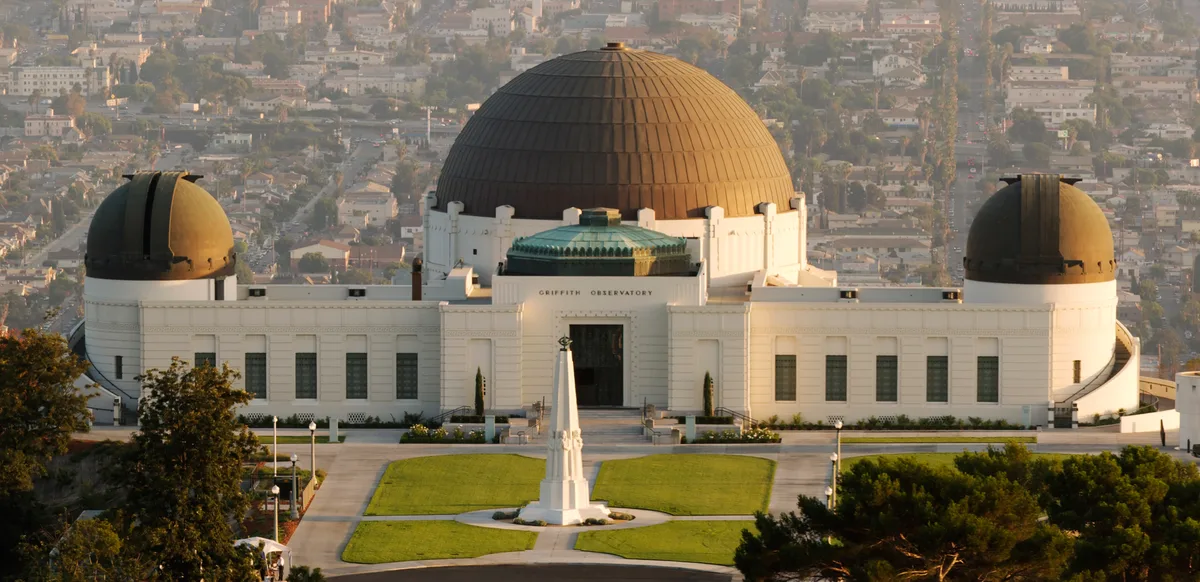
Stay to the end. The terrace is one of the great free viewpoints in America — the Hollywood Sign behind, the whole basin in front — and after dark the public telescopes come out on the lawn. Head down before the 10 p.m. close, and the day has cost you a Metro fare and, if you took in a show, twelve dollars.
SECTION 03Day 2: The Getty Center and the Coast
Day two goes west. The Getty Center sits on a hilltop above Brentwood — a travertine museum complex in gardens, with the collection, the architecture and the view sharing the honours. The essentials are unusual and worth stating plainly: admission is always free, but a reservation is required — book your entry time online before you go. The centre is open Tuesday to Sunday, 10 a.m. to 6:30 p.m., staying open until 9 p.m. on Saturdays, and closed on Mondays (and on Thanksgiving, December 25 and January 1). If you drive or take a rideshare up the hill, the charge is at the gate: parking is $25 per car, $15 after 3 p.m. and $10 after 6 p.m., and free on Saturdays after 6 p.m. — which makes a Saturday-evening visit, with the late opening, the connoisseur's slot.
One planning flag, stated honestly: the Getty has announced a major modernisation project that closes the centre to group visits through 2027, with groups welcomed back in spring 2028. Individual visiting arrangements around that project can change — check getty.edu when you book, and treat this day as the one to confirm before you build plans on it.
Come down the hill to the coast for the afternoon. Santa Monica's pier and palisades and the boardwalk south into Venice are free, walkable and exactly the Los Angeles of the postcards — swimmers, skaters, the Muscle Beach gym, the canals a few streets inland. Sunset over the Pacific is the day's natural end, and the Metro's E Line runs back from Santa Monica to Downtown when you are done.
SECTION 04Day 3: Downtown, The Broad — or a Studio Day
Downtown is the walkable LA nobody warns you about. Its anchor sight for a first trip is The Broad, the contemporary art museum on Grand Avenue, and its ticket policy is the friendliest in the city: general admission is always free. You can simply walk up — the museum welcomes walk-ups without reservations — but the sensible move is to book a free timed-entry ticket in advance and skip the standby line. One room needs its own strategy: Yayoi Kusama's Infinity Mirrored Room is ticketed separately, on tickets that bundle it with general admission, released on the museum's website on the last Wednesday of each month at 10 a.m. Pacific, with further tickets released daily — check the site the evening before your visit. The Broad is closed on Mondays, which is one reason this itinerary puts Downtown on day three rather than day one.
Around it, Downtown fills a day at walking pace: Grand Central Market's food hall on Broadway for lunch, the Bradbury Building's staircase across the street, the bookshops and galleries of the Arts District over the river, and the towers of Bunker Hill above. It is the one part of Los Angeles where the sights queue up in the order you reach them.
The honest alternative for day three is Universal Studios Hollywood, up in the San Fernando Valley and reached by the Metro B Line to Universal City station. It is a full day and a serious ticket, and its pricing needs care: Universal sells its one-day tickets at date-based prices that change by the day you visit, and its own site offers online savings against the front-gate price — it advertises savings of up to $50 on one-day general admission bought online. Because there is no single fixed price, this guide prints none: check the calendar on the official site for your date, buy there rather than through resellers, and expect weekends and holidays to price above quiet weekdays. Choose it instead of Downtown, not as well as — a theme-park day bolted onto a museum day shortchanges both.
SECTION 05What Do the Paid Parts of This Itinerary Cost?
A surprising amount of this trip is free: the Walk of Fame, Griffith Observatory's building, grounds and telescopes, the Getty's galleries and gardens, The Broad, the beaches and the boardwalk all charge nothing. The paid parts, at the prices checked for this guide, are:
- Metro: $1.75 a ride, automatically capped at $5 a day and $18 in any seven days when you tap the same TAP or payment card. Cash fares are not capped.
- LAX FlyAway bus: $12.75 a trip to Union Station; no cash — contactless card or the app. Up to two children five and under ride free with a paid adult.
- Griffith Observatory planetarium: $12 adults, $10 seniors, students and teachers, $8 children 5–12 — sold only at the observatory, for that day's shows. Admission itself is free; parking at the observatory is charged.
- Getty Center: admission free with a required reservation; parking $25, falling to $15 after 3 p.m. and $10 after 6 p.m., free Saturday evenings after 6 p.m.
- Universal Studios Hollywood (optional day): date-based pricing with no fixed figure — the official site advertises online savings of up to $50 against the front-gate price for one-day admission. Check your date on the official calendar.
Three days of sightseeing in Los Angeles, done this way, can cost less in tickets than one theme-park day — the city's best rooms and views are the free ones, and the charges cluster in parking, which the Metro quietly removes.
SECTION 06What Mistakes Do First-Time Visitors Make?
Scheduling by the map instead of the basin. Hollywood to Santa Monica looks like a short hop and can take the heart out of a day in traffic. One cluster a day is not a limitation; it is the whole method of this itinerary.
Turning up at the observatory on a Monday, or in the morning on a weekday. Griffith Observatory is closed on Mondays and opens at noon Tuesday to Friday. A weekday-morning plan fails at a locked door — and so does a Monday plan for the Getty or The Broad, which also close that day.
Expecting to book the planetarium ahead. There is no advance sale: tickets are sold at the observatory, for that day only. Arrive, buy the show ticket first, then sightsee around its time.
Arriving at the Getty without the reservation. Admission is free but not walk-up — an entry reservation is required. It costs nothing and takes a minute online; forgetting it costs the day.
Paying cash on the Metro and expecting the cap. Fare capping works on TAP and payment cards only. Cash riders pay full fare every ride — over three days, the difference is the price of the planetarium show.
Can you visit Los Angeles without a car?
Yes, if you plan by cluster, as this itinerary does. The Metro's trains and buses cover Hollywood, Downtown, the Getty's Brentwood stop connections and Santa Monica; the base fare is $1.75, capped at $5 a day and $18 in seven days on the same TAP or payment card. The FlyAway bus covers the airport run at $12.75.
Is Griffith Observatory free?
Admission to the building, grounds and public telescopes is always free. The charges are the Samuel Oschin Planetarium shows — $12 for adults, $10 for seniors, students and teachers, $8 for children 5–12, sold only at the observatory for that day — and parking. The observatory is closed on Mondays and opens at noon on weekdays.
How much does the Getty Center cost?
Admission is free, but an entry reservation is required. Parking is $25 per car, $15 after 3 p.m., $10 after 6 p.m. and free on Saturdays after 6 p.m. The centre is closed on Mondays. Note the announced modernisation closure affecting 2027 — check getty.edu before you go.
How much is the bus from LAX to Downtown Los Angeles?
The FlyAway bus to Union Station costs $12.75 a trip and runs every 30 minutes. Cash is not accepted — tap a contactless Visa or Mastercard or pay in the FlyAway app. Up to two children aged five and under ride free with each paid adult.
How much are Universal Studios Hollywood tickets?
There is no single price: one-day tickets are priced by date, and the official site advertises online savings of up to $50 against the front-gate price. Check the calendar price for your exact date on Universal's own site and buy there — and give the park a full day of its own rather than adding it to another cluster.
Official references and checking status
The prices, hours and ticket rules in this guide were checked against the official pages below on 30 October 2026. Two honest limits: Universal Studios Hollywood prices its one-day tickets by date and publishes no fixed price, so this guide describes its pricing system and its official online-savings claim rather than printing a figure that would be wrong for your date; and parking at Griffith Observatory is charged, but no official parking tariff was confirmed for this guide, so no figure is printed — check the observatory's site before you drive. The Getty's modernisation closure during 2027 is announced on its own pages; confirm current visiting arrangements on getty.edu. Prices and rules change — re-check the relevant page below before you travel.
- LA Metro — Fare capping (the $1.75 base fare, the $5 daily and $18 seven-day caps, TAP and card payment)
- Griffith Observatory — Samuel Oschin Planetarium (show prices, same-day ticket sales at the observatory)
- Getty — Visit the Getty Center (free admission with reservation, hours, parking charges)
- Universal Studios Hollywood (date-based one-day pricing; online savings against the front-gate price)
- Los Angeles World Airports — Transit to LAX (FlyAway fares, frequencies and payment rules)
- Hollywood Walk of Fame — Hollywood Chamber of Commerce (the stars, the 15 blocks of Hollywood Boulevard and three of Vine)
- The Broad — Visit (free general admission, timed tickets, the Infinity Mirrored Room releases)
Photos in this guide: the Los Angeles skyline at dusk from Griffith Observatory by Daniel L. Lu / Wikimedia Commons (CC BY-SA 4.0); Griffith Observatory by Matthew Field / Wikimedia Commons (CC BY-SA 3.0). Both resized and converted for this page.
General information only. This guide is based on official sources publicly available and checked on the date shown on this page. Visa rules change, and consular and USCIS officers decide every case on its own facts — nothing here is a confirmation or a guarantee for your individual case, and this is not legal advice. Always confirm the current requirement on the official page linked in this guide before you act, and consider a qualified immigration attorney for your specific situation.