
Researched & checked — 30 Oct 2026
San Francisco in 2 Days: The Waterfront, Alcatraz and the Hills, Done on Foot and Muni
NEW Published 30 October 2026
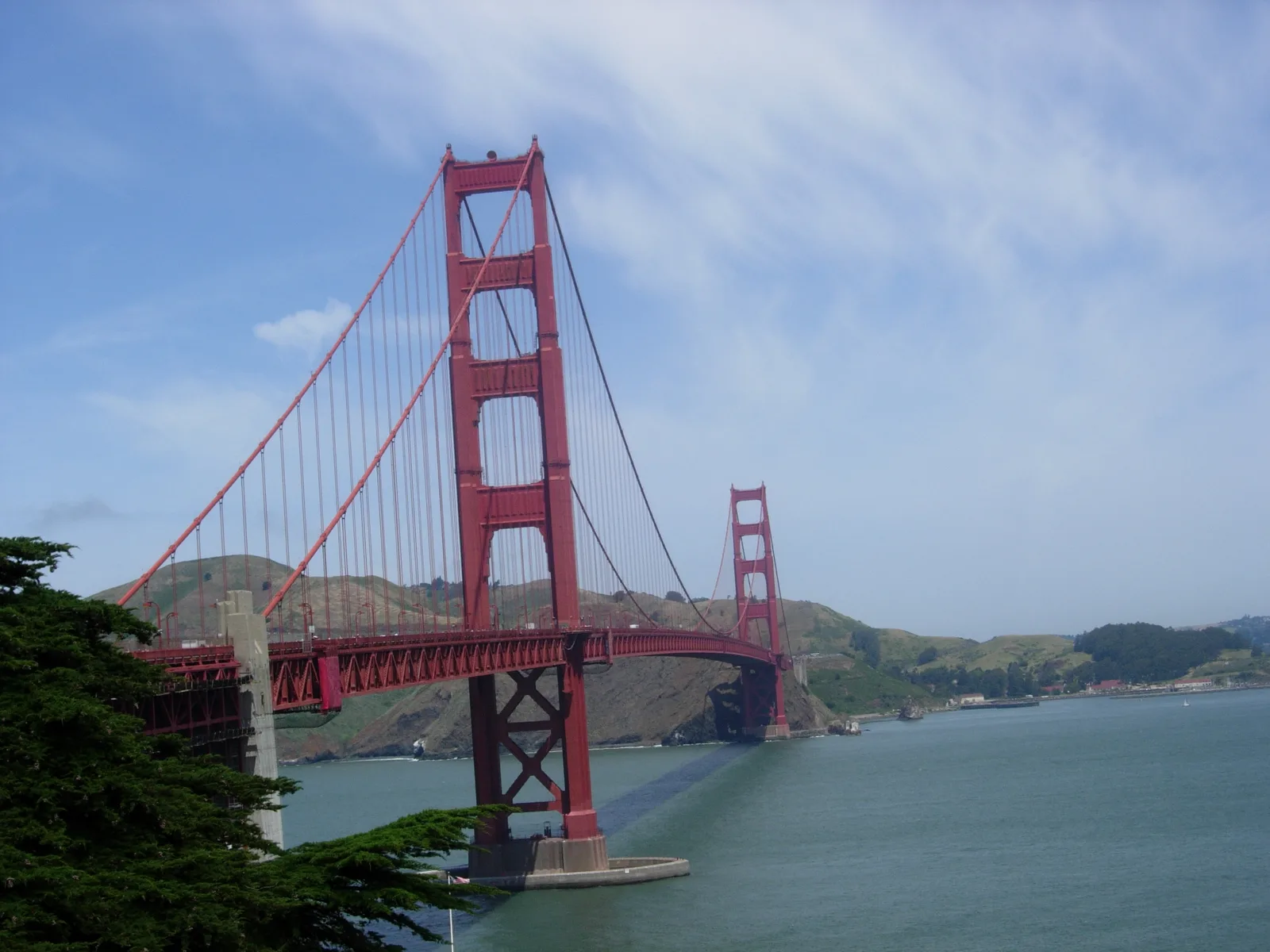
Two days in San Francisco built the way the city rewards — Alcatraz booked first and taken early, the northern waterfront walked end to end, the Golden Gate Bridge crossed on foot, and the hills ridden the way the city itself rides them: on Muni and the cable cars.
Day 1 — the bay: an early Alcatraz ferry from Pier 33 (adults $47.95; the Park Service charges no island fee — the ticket is the boat, and Alcatraz City Cruises is the only authorised seller), then Fisherman's Wharf, Pier 39 and the Embarcadero on foot. Day 2 — the land: walk the Golden Gate Bridge's east sidewalk in the morning (free for pedestrians; the toll is for vehicles), then ride the cable cars ($9 a ride, or covered by the $15 one-day Visitor Passport) over the hills to Lombard Street and Chinatown. Muni single rides are $2.85 on Clipper or a contactless card, and BART from the airport to downtown was $11.80 when checked. One booking shapes the trip: Alcatraz tickets sell up to 90 days ahead and the good sailings go first.
SECTION 01How Is This 2-Day San Francisco Itinerary Laid Out?
The plan splits the city along its northern shore. Day 1 runs east to west along the water — out to Alcatraz from Pier 33, back to Fisherman's Wharf and the Ferry Building. Day 2 crosses to the bridge at the city's north-west corner, then works back through the hills — Russian Hill, Nob Hill, Chinatown — that fill the north-east. Almost everything in these two days is walkable; Muni fills the gaps, and the cable cars are saved for where they are genuinely useful as well as famous: the steepest climbs.
Muni's fares are simple once the cable cars are separated out. A single ride on buses, the Metro light rail and the historic F-line streetcars costs $2.85 paying by Clipper card or a contactless bank card, or $3.00 in cash, and one fare is valid for unlimited travel for 120 minutes. A one-day pass covering everything except the cable cars costs $5.70 — exactly two single fares. Cable cars are priced apart: $9 for a single ride, no transfers included. That gap is what the Visitor Passports exist to close: $15 for one day, $35 for three days, $47 for seven days, covering Muni and the cable cars together, sold on Clipper and in the MuniMobile app. The arithmetic of this itinerary is that a day with two cable-car rides in it makes the $15 passport the cheapest ticket in the city.
- Day 1 — The bay: Alcatraz Island · Fisherman's Wharf and Pier 39 · the Embarcadero and Ferry Building
- Day 2 — The bridge and the hills: Golden Gate Bridge on foot · the Presidio and Crissy Field · cable cars · Lombard Street · Chinatown and North Beach
Arriving: BART runs from San Francisco International Airport straight downtown in about half an hour. BART prices by distance; the airport ride to the downtown stations — Powell Street, Montgomery, Embarcadero — was $11.80 when checked for this guide, but treat that as a figure to confirm rather than a promise: run your exact station pair through the fare calculator on bart.gov before you travel. Within the city, switch to Muni — BART only crosses San Francisco along Market Street, while Muni is the network that actually reaches the waterfront and the hills.
SECTION 02Day 1: Alcatraz First, Then the Waterfront
Book this before anything else in the trip. The system works like the Statue of Liberty's, and for the same reason: the National Park Service charges no entrance fee to visit Alcatraz Island — what you buy is the ferry, and Alcatraz City Cruises is the only NPS-authorised ferry provider, and the only ferry permitted to dock at the island. Anyone else selling you an "Alcatraz tour" is selling a boat that circles it. Day tour prices are $47.95 for adults (18+) and for youths 12–17, $29.15 for children aged 5–11 and $45.15 for seniors (62+), with children under five carried free; the price includes the round-trip ferry from Pier 33, entry to the cellhouse and the "Doing Time" audio tour, and ranger-led tours on the island are free. Federal recreation passes do not apply — there is no federal fee for them to cover. Tickets can be bought up to 90 days in advance, the Park Service strongly recommends booking ahead, and in busy months the morning sailings sell out well before the day. Cancellations made at least 72 hours before departure are refundable, which makes booking early a low-risk decision.
Take an early sailing. The crossing is short, the visit runs about two to three hours at a natural pace, and the island rewards the first boats: the cellhouse audio tour — former inmates and officers telling the story in your ears as you walk the rows — works best before the corridors fill. Back at Pier 33 by around lunchtime, the rest of day one simply unfolds westward along the water, all of it free and none of it needing a ticket: Fisherman's Wharf's working-boat harbour and crab stalls, the sea lions hauled out at Pier 39, the historic ships along the Hyde Street Pier, and then the long, flat, bay-side walk south along the Embarcadero to the Ferry Building, whose clock tower has been timing the city's arrivals since the ferry age. It is the gentlest possible first afternoon — save your legs; day two has hills in it.
SECTION 03Day 2, Morning: The Golden Gate Bridge, On Foot
The bridge is the city's other great free sight, and it is best done the slow way. Pedestrians walk the east sidewalk — the side facing the city and the bay — which is the only sidewalk open to people on foot. The gates are automatic and the hours follow the clock of the seasons: 5 a.m. to 6:30 p.m. during Pacific Standard Time, and 5 a.m. to 9 p.m. in Pacific Daylight Time. There is no charge and no ticket: pedestrian access to the bridge is free. (Cyclists use both sidewalks, toll-free, around the clock.) Go in the morning if you can — the light is on the city side, the wind is usually kinder, and if the fog is coming it tends to arrive as the day warms. Walk halfway for the tower and the strait dropping away beneath you, or cross the whole span to the Marin side viewpoint and ride back; either way, budget the better part of two hours and a layer more clothing than the city below suggested. The bridge stands out in the weather, and it is colder up there than any photograph admits.
One money note, for readers who do drive despite this itinerary's advice: the bridge toll applies to vehicles only, collected southbound into San Francisco, and it is fully electronic — there are no cash booths. Rates in force from July 2026 are $10.25 with FasTrak, $10.50 by licence-plate account or one-time payment, and $11.25 if it comes to a toll invoice. A rental car crossed without an arrangement becomes the invoice version plus whatever the rental company adds; on foot, the whole question never arises.
SECTION 04Day 2, Afternoon: Cable Cars, Lombard Street and the Hills
Come back from the bridge along the Presidio's shore — Crissy Field's restored marsh and beach, with the bridge shrinking behind you — and the afternoon turns uphill, which in San Francisco means it turns to the cable cars. Three lines survive: Powell–Hyde and Powell–Mason, climbing from the downtown turntable at Powell and Market over the hills to the Wharf side, and the California Street line, running east–west over Nob Hill. They are working transit and a national landmark at once — the last manually operated cable-car system anywhere — and they are priced like the attraction they have become: $9 a single ride, paid to ride once, with no transfer onto anything else. Ride them deliberately, not by default: this is the day the $15 Visitor Passport pays for itself, because two cable-car rides plus the Muni trips around them cost more bought separately. Board at a turntable for the full ritual of the car being spun on its table, or do what residents do and board part-way up the hill, where the queues are shorter and the gripman's bell does the rest.
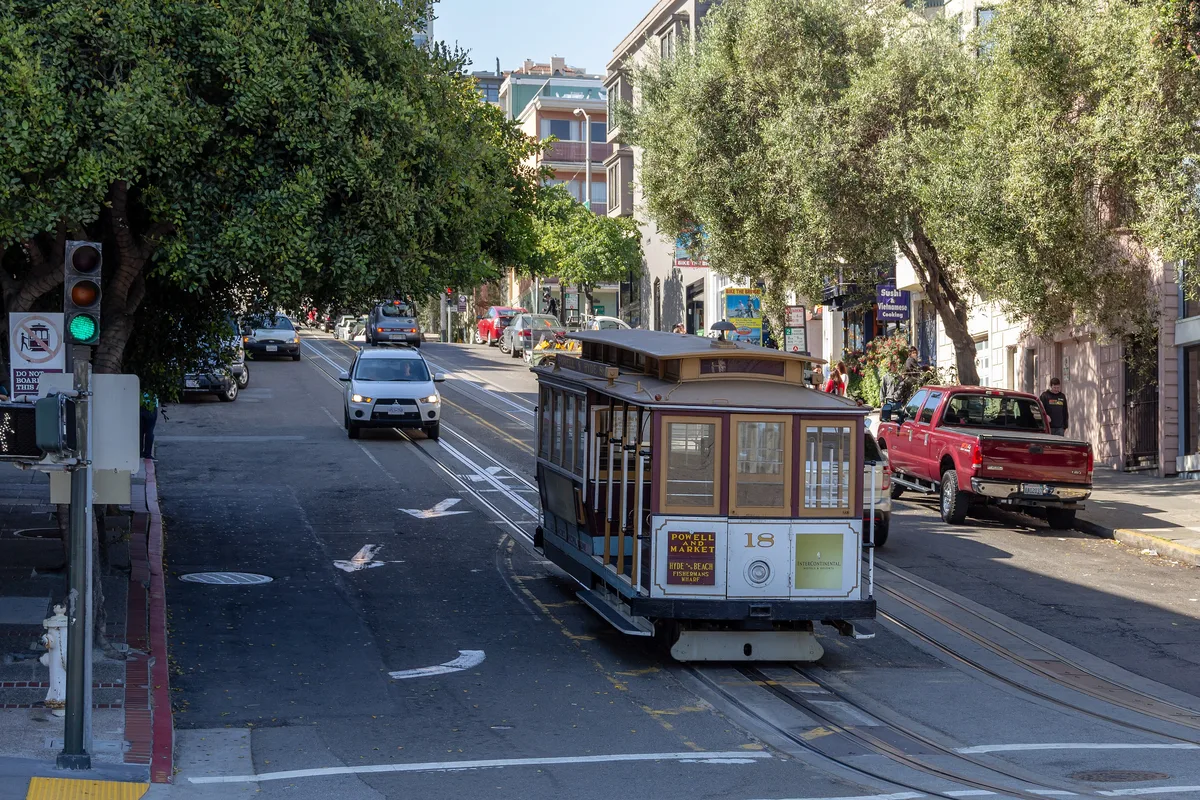
The Powell–Hyde car drops you at the top of the day's most famous piece of street. Lombard Street's crooked block, between Hyde and Leavenworth, is a public street — free to walk down, switchback by switchback, with the bay opening out at every turn. From its foot, Russian Hill flattens towards North Beach, the old Italian quarter, and Chinatown beyond it — the natural walking end to the trip, dense with bakeries, temples, alleys and dinner. If energy remains, the F-line's historic streetcars run the whole Embarcadero and up Market Street on ordinary Muni fares, each car painted in the colours of a different city's transit past: the prettiest $2.85 in American public transport.
SECTION 05What Do the Paid Parts of This Itinerary Cost?
San Francisco's headline sights split cleanly: the island is the one serious ticket, and almost everything else is free or the price of a transit fare. At the prices checked for this guide:
- Alcatraz day tour: $47.95 adults and youths 12–17, $29.15 children 5–11, $45.15 seniors 62+, under-fives free — ferry, cellhouse and audio tour included. No separate Park Service fee, and no pass discount. Book up to 90 days ahead.
- Muni: $2.85 a ride by Clipper or contactless card ($3.00 cash), each fare good for 120 minutes; one-day pass without cable cars $5.70.
- Cable cars: $9 a single ride, no transfers — or ride them under a Visitor Passport: $15 for one day, $35 for three, $47 for seven, Muni included.
- Golden Gate Bridge: free on foot, always. Vehicles pay the southbound toll only — $10.25 FasTrak, $10.50 plate payment, $11.25 by invoice — and there is no cash option.
- BART from SFO: $11.80 to the downtown stations when checked; distance-based, so confirm your stations in the fare calculator on bart.gov.
Two days of sightseeing here can cost little more than the Alcatraz ticket and a passport — the bridge, the waterfront, Lombard Street and the views from every hill in this plan are all free.
SECTION 06What Mistakes Do First-Time Visitors Make?
Leaving Alcatraz to the day. The official ferry sells up to 90 days ahead and popular sailings go. Turning up at Pier 33 hoping is the single most common way this trip loses its centrepiece — book it when you book the flights.
Buying an "Alcatraz tour" from anyone else. Only Alcatraz City Cruises may dock at the island. Every other boat is a bay cruise that passes it, whatever the sales pitch says — the Park Service's position is not ambiguous.
Paying $9 a ride on the cable cars all day. Two rides plus Muni trips cost more than the $15 one-day Visitor Passport that covers all of it. Do the arithmetic before the first ride, not after the third.
Arriving at the bridge at closing time. The pedestrian gates are automatic and keep seasonal hours — 6:30 p.m. in standard time, 9 p.m. in daylight time. A sunset plan that starts too late ends at a locked gate.
Dressing for California and meeting the bridge. Wind and fog off the strait make the bridge walk the coldest hour of most visitors' trips, in any month. One more layer than the hotel street suggested — every time.
How many days do you need in San Francisco for a first visit?
Two full days cover the essentials honestly — Alcatraz and the waterfront on day one, the bridge and the hills on day two — because the city is compact and this plan walks or rides between everything. A third day adds the neighbourhoods: the Mission, Golden Gate Park and the museums.
Do I need to book Alcatraz tickets in advance?
Yes. Tickets sell up to 90 days ahead through Alcatraz City Cruises — the only authorised ferry, at $47.95 for adults — and the Park Service strongly recommends advance booking. There is no Park Service entrance fee and no pass discount; the ticket is the ferry. Cancellations at least 72 hours ahead are refundable.
How much is a cable car ride in San Francisco?
$9 for a single ride, with no transfers. If your day holds two rides, the $15 one-day Visitor Passport — which covers cable cars and all Muni — is cheaper than paying separately. A Muni one-day pass without cable cars is $5.70, and ordinary Muni rides are $2.85 by card.
Is the Golden Gate Bridge free to walk across?
Yes. Pedestrians use the east sidewalk, free of charge, between 5 a.m. and 6:30 p.m. in standard time or 9 p.m. in daylight time. The toll is for vehicles only, charged southbound into the city and collected electronically — there are no cash booths.
How do I get from SFO airport to downtown San Francisco?
BART runs from the airport station to Powell Street, Montgomery and Embarcadero in about 30 minutes. The fare was $11.80 when checked, but BART prices by distance — confirm your exact stations in the fare calculator on bart.gov. Once downtown, Muni ($2.85 a ride) is the network for the city itself.
Official references and checking status
The prices, hours and ticket rules in this guide were checked against the official pages below on 30 October 2026. One honest limit: BART's fare calculator is interactive and did not render a fare passage when checked, so the $11.80 airport-to-downtown fare is stated as the figure current transcriptions of BART's own fare table agree on, and this guide tells you to confirm it in the calculator rather than presenting it as read from the page itself. Fares approved for January 2027 — including a higher cable-car fare — are not used anywhere in this guide, which states the prices in force at checking. Prices and rules change — re-check the relevant page below before you travel.
- SFMTA — Muni fares (the $2.85 single ride, the $5.70 day pass, the $9 cable-car fare and the Visitor Passports)
- National Park Service — Alcatraz Island: Fees & Passes (no NPS entrance fee; the authorised ferry and its day-tour prices)
- Alcatraz City Cruises — Day Tour tickets (the official concessioner; booking window and cancellation terms)
- Golden Gate Bridge District — Bikes & Pedestrians (the east sidewalk and its seasonal hours)
- Golden Gate Bridge District — Tolls & Payment (southbound vehicle tolls from July 2026; no cash collection)
- BART — Fare Calculator (distance-based fares; check your station pair)
Photos in this guide: the Golden Gate Bridge from the city side by Daryl Beggs / Wikimedia Commons (CC BY-SA 3.0); a Powell and Hyde cable car on Hyde Street by Dietmar Rabich / Wikimedia Commons (CC BY-SA 4.0). Both resized and converted for this page.
General information only. This guide is based on official sources publicly available and checked on the date shown on this page. Visa rules change, and consular and USCIS officers decide every case on its own facts — nothing here is a confirmation or a guarantee for your individual case, and this is not legal advice. Always confirm the current requirement on the official page linked in this guide before you act, and consider a qualified immigration attorney for your specific situation.