
Researched & checked — 3 Nov 2026
Kaziranga National Park: Safari Zones, Booking and the Rhino Grasslands, Planned on Official Facts
NEW Published 3 November 2026
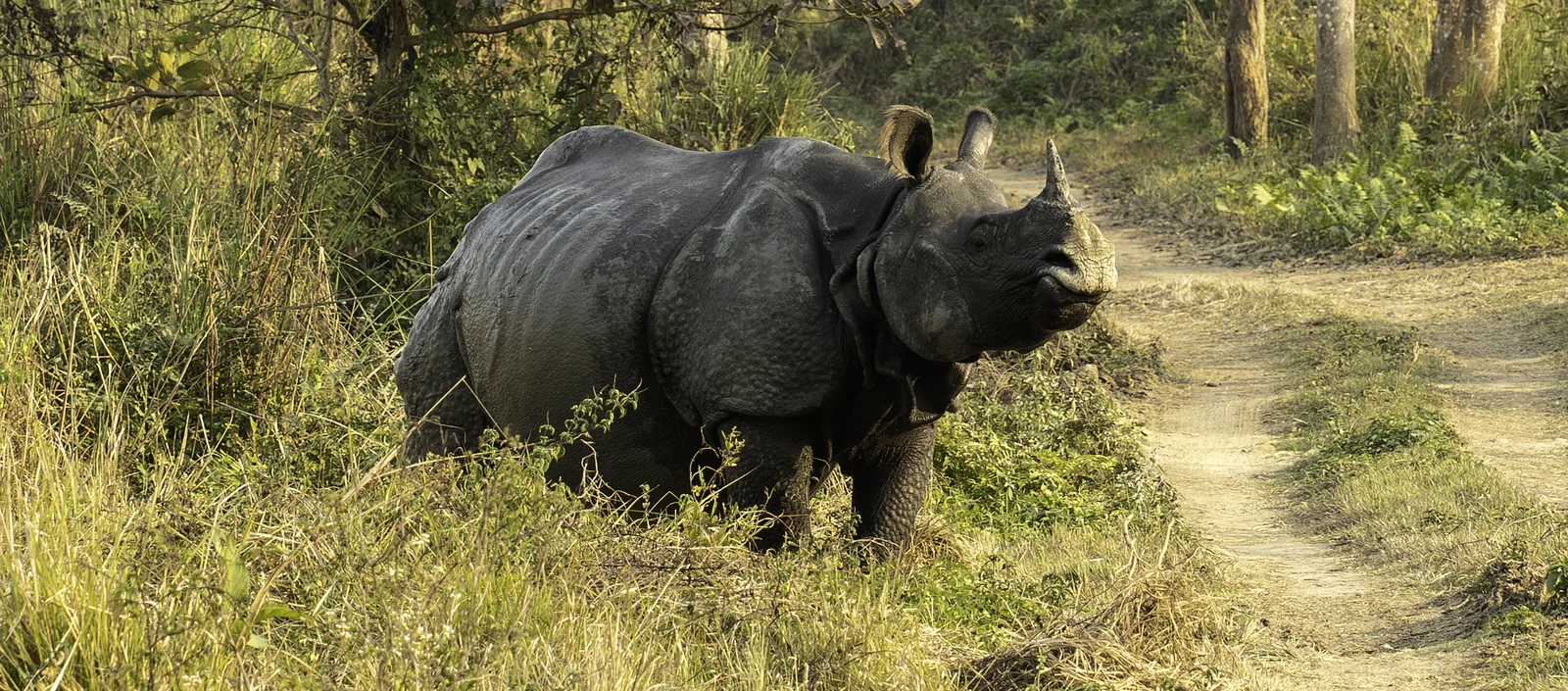
A UNESCO World Heritage floodplain in Assam where two-thirds of the world's one-horned rhinos live — planned range by range on what UNESCO and Assam's own official tourism pages actually state.
Kaziranga is not a park you visit for a checklist of animals. It is a working floodplain of the Brahmaputra river — tall elephant grass, oxbow lakes and forest that the river rearranges every monsoon — and it holds the world's largest population of the Indian one-horned rhinoceros. UNESCO, which inscribed the park as a World Heritage Site, describes it as the single largest undisturbed and representative area in the Brahmaputra Valley floodplain, and Assam Tourism calls it the land of the Big Five: rhinoceros, tiger, Asiatic buffalo, elephant and eastern swamp deer. This guide plans the visit the way the park is actually organised — four safari ranges radiating from the village of Kohora — and it is honest about the one thing most Kaziranga pages get wrong: the safari tariff. The official booking channels do not publish a stable, readable price list, and the numbers on commercial sites disagree with each other, so this guide prints no invented fees and tells you exactly where the real figure appears instead.
Base yourself at Kohora and safari in the Central (Kohora) and Western (Bagori) ranges first — they are the only two with elephant safaris, and Assam Tourism says the four ranges together take two to three days to cover. Visit between November and April; Assam Tourism's Directorate states the park remains closed from 1 May to the end of October because of floods, and rates late February to early April as the best sightseeing window. Book through the park's official channels and take the safari price from there: no official tariff was readable when this guide was checked, so no fee is printed here.
SECTION 01A floodplain, not a forest: why Kaziranga is different
Most Indian tiger reserves are dry forests. Kaziranga is the opposite: a wet alluvial plain that the Brahmaputra floods every year, and the flooding is not a defect of the park — it is the mechanism that keeps it alive. UNESCO's listing for the park explains that its wet alluvial grasslands, which occupy nearly two-thirds of the park, are maintained by annual flooding and by burning, and that the park's riverine habitat, oxbow lakes and wetlands make it crucial for migratory birds at the junction of the Australasia and Indo-Asian flyways. The inscribed World Heritage property covers 42,996 hectares across the Assam districts of Golaghat, Nagaon and Biswanath, and Assam Tourism puts the wider park, with its various annexures, at 858.98 sq km.
The wildlife case is just as distinctive. UNESCO records that Kaziranga is the world's major stronghold of the Indian one-horned rhinoceros, holding the single largest population of the species, estimated at over 2,000 animals. Assam Tourism expresses the same fact from the other side: the park possesses two-thirds of the world's population of the endangered Indian one-horned rhinoceros. The park was declared a Tiger Reserve in 2007 and, in UNESCO's measured wording, holds one of the highest densities of tigers in the country; Assam Tourism goes further and calls it the highest density of Royal Bengal tiger in the world. Both claims are printed here at the strength their sources give them — the pattern this site follows everywhere.
Legally, the park is managed by the Assam Forest Department under the Wildlife (Protection) Act 1972 and the Assam Forest Regulation 1891, and that matters practically: every safari you take is a Forest Department operation, run on the department's routes, in the department's vehicles or on its elephants, with its staff. National Highway 37 runs along the park's southern border, which is why the safari ranges are strung along one road corridor and why Kohora, midway along it, works as the single base for the whole park.
SECTION 02The four ranges: Kohora, Bagori, Agoratoli and Burapahar
Assam Tourism names the park's four main ranges plainly: the Central range at Mihimukh, the Western range at Bagori, the Eastern range at Agoratoli and the Burapahar range. Visitors usually call the Central range "Kohora", after the village and entry point it serves, and the names are used interchangeably in this guide the way they are on the ground. The ranges follow the highway corridor from east to west — Agoratoli in the east, then Kohora (Central), then Bagori (Western), then Burapahar towards the western end — so a multi-day visit naturally works along the road rather than criss-crossing it.
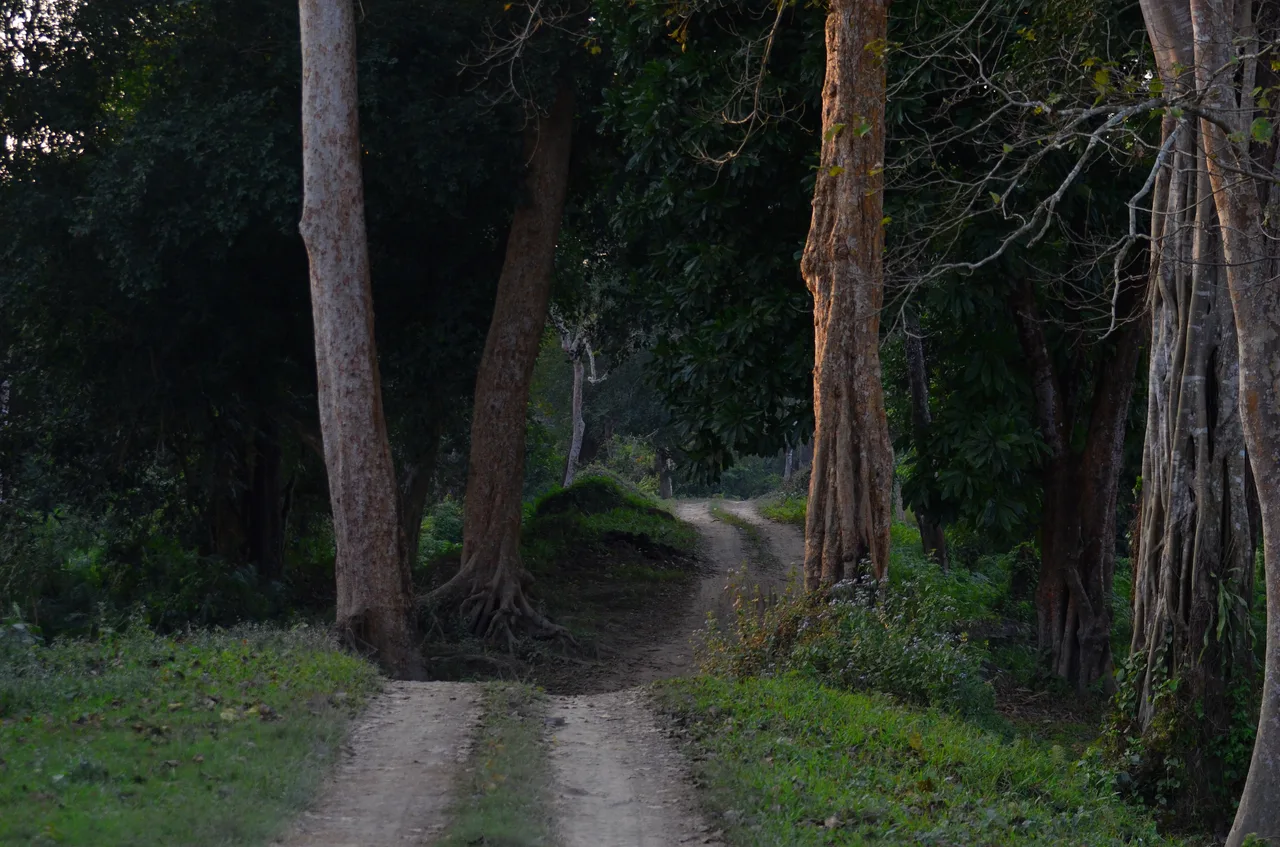
The ranges differ mainly in emphasis. The Central range at Kohora is the natural first safari: it is the park's centre point, it offers both jeep and elephant safaris, and its mix of grassland, wetland and woodland gives a first-time visitor the full Kaziranga grammar in one outing. The Western range at Bagori is the other elephant-safari range and is known for close grassland wildlife; between them, Kohora and Bagori are where most visitors spend most of their safaris. The Eastern range at Agoratoli is quieter and more wooded, with the river never far away, and rewards visitors who have already done the central grasslands. Burapahar, the fourth range, adds forested hill country — the park's least typical terrain — and completes the set. Assam Tourism's planning advice is the anchor for all of this: it usually requires two to three days to cover the four main ranges, so a single-day trip should be planned as a Kohora visit, not a Kaziranga visit.
SECTION 03Jeep safari or elephant safari: how each one works
Assam Tourism states the division of labour exactly: the Central and Western ranges offer elephant safaris, and all four main ranges provide jeep safaris. A jeep safari puts you in an open vehicle on the park's dirt tracks, ranging widely across a range in one outing — it is the safari that covers ground, reaches the wetlands and viewpoints, and suits photographers and anyone with limited days. An elephant safari puts you on elephant back at grass height, moving slowly off the tracks through the tall grass where the rhinos feed; it is shorter, quieter and gets you closer to grassland animals than any vehicle can, which is why its seats are the park's scarcest resource.
On timing, Assam Tourism's Directorate brochure for the park says both jeep safaris and elephant rides are possible in the mornings and early evenings, when the animals are most active — and the practical pattern follows from that: safaris run in a morning session and an afternoon-to-evening session, you choose a range for each session, and you are back at the range gate outside those hours. One rule from the same official material is absolute: it is mandatory for tourists to ensure that a Forest Department guide accompanies them. You do not tour Kaziranga independently or in a private car; you enter on a department safari, on its route, with its guide, and the guide's reading of animal movement and distance is what keeps both you and the animals safe.
There is a third, gentler option that most itineraries miss: Assam Tourism also offers a boat safari at Bhomoraguri, where it says sighting of the endangered Ganges river dolphin is a certainty. It is a different Kaziranga — river, sandbars and dolphins rather than grassland — and it pairs naturally with an Eastern-range day. Whichever safaris you choose, build the plan around the elephant seats: because the number of seats is limited, Assam Tourism advises reserving the elephant safari in advance, while it says jeep safaris are easily accessible and need no advance reservation. The next section explains how that reservation is actually made — and why the price is the one thing this guide will not quote you.
SECTION 04Booking your safari — and why this guide prints no tariff
Safaris at Kaziranga are administered by the Assam Forest Department, and the state's services have been moving onto official online channels: the park's own website and the Government of Assam's Sewa Setu portal, the state's single window for citizen services. Sewa Setu's own published flow is the shape of any booking there: a first-time user registers with name, mobile number, email, state and a password, logs in, picks the service under Apply Online, fills the application form, pays the fee online, and receives an acknowledgement with a reference number by SMS and email. Book only through official Assam government channels reached from the park's or the state government's own pages — and carry the identity document whose details you entered in the booking, because the permit is issued against those details and is checked at the range gate.
Now the honesty this site is built on. When this guide was researched, the park's official website and its linked booking portal could not be read, and no current official tariff — entry fee, jeep safari fee, elephant safari fee, camera fee, Indian or foreigner rates — could be verified on official text. What circulates instead is a thicket of commercial booking sites and blogs quoting numbers that flatly contradict each other: different sites put the same jeep safari thousands of rupees apart, elephant safari prices vary several-fold between listings, and the only official price list still circulating online is an Assam Tourism brochure whose entry fee of a few tens of rupees dates it to another era. Printing any of those numbers as "the Kaziranga safari price" would be inventing a fact, so this guide prints none. The figure that counts is the one the official booking channel shows for your range, date and visitor category at the moment you book — treat any site that quotes a confident fixed tariff, without being the park or the state, as a sales page, not a source.
What can be planned without the tariff is everything around it: reserve the elephant safari early because seats are limited; keep jeep safaris flexible because Assam Tourism says they need no advance reservation; and keep one session unbooked as a weather and flood-condition buffer, because this is a floodplain and the department, not the visitor, has the final word on which tracks run on a given day.
SECTION 05The wildlife: the rhino first, then the Big Five
Everything at Kaziranga starts with the one-horned rhinoceros. UNESCO lists the park's flagship species in one breath — tiger, Asian elephant, wild water buffalo, gaur, eastern swamp deer, sambar deer, hog deer, capped langur, hoolock gibbon and sloth bear, alongside the rhino — and records that some of the park's closed oxbow lakes even hold a population of Ganges dolphin. Assam Tourism groups the headline animals as the Big Five: rhinoceros, tiger, Asiatic buffalo, elephant and the eastern swamp deer. Two of its further claims are worth printing with their attribution attached, because they explain the park's fame: Assam Tourism states that Kaziranga holds the largest population of Asiatic wild buffalo and the last surviving population of eastern swamp deer. On safari, the realistic expectation follows the habitat: rhinos, buffalo, swamp deer and elephants are grassland and wetland animals you plan around; the tiger is the park's unseen landlord — present at remarkable density, but in tall grass a sighting is a gift, not an itinerary item.
The birdlife deserves its own sentence in any plan, because UNESCO's case for the park leans on it: Kaziranga's wetlands are crucial for migratory birds moving between the Australasia and Indo-Asian flyways, and Assam Tourism's own species material lists pelicans, ducks, geese, hornbills, ibis, cormorants, egrets, herons, the black-necked stork and the lesser adjutant among the park's birds. Winter — the same November-to-April window as the safari season — is when the migratory birds are in residence, which is one more reason the season and the wildlife peak coincide. Keep binoculars as ready as the camera: on a Kaziranga wetland, the rare sighting is as likely to be standing in the water as walking through the grass.
SECTION 06Season and floods: when the park is open, and when it is at its best
Assam Tourism gives the visiting season in one line: November to April are the best months to travel to Kaziranga. Its Directorate's park brochure adds the other half of the calendar: the park remains closed from 1 May to the end of October due to floods. That closure is the Brahmaputra doing its ecological work — UNESCO describes the grasslands themselves as maintained by the annual flooding — so the closed months are not a park failure to plan around but the reason the open months look the way they do. Within the season, Assam Tourism refines the advice: the best sightseeing starts from late February to early April, when the grass has been managed down, the wetlands are still full of winter birds and the animals concentrate around the remaining water.
Two planning cautions follow honestly from the sources. First, the edges of the season are the park authority's call, not a fixed calendar promise: the published frame is a November-to-April season with a May-to-October flood closure, and the current season's exact opening should be confirmed on the park's official channel before you fix travel around late October or early November dates. Second, the climate inside the season is a subtropical monsoon climate cooling down, not a desert winter: Assam Tourism records average annual rainfall of 1,320 mm, winter minimum temperatures around 15 °C and summer heat up to 38 °C. Pack for cool, damp safari mornings and warm afternoons, and expect the earliest safaris of the day to be the coldest hours of your trip.
SECTION 07Getting there, basing at Kohora, and behaving in the park
Assam Tourism's distances frame the journey: Kaziranga is 217 kilometres by road from Guwahati and 95 kilometres from Jorhat, the nearest airport; the nearest railhead is Jakhalabandha, 50 kilometres from Kohora; and regular Assam State Transport Corporation luxury buses run from Guwahati. In practice that makes Guwahati the long-haul gateway — fly or train there, then take the highway east along the park's southern edge — and Jorhat the shortcut for travellers already in upper Assam. Either way, the destination to name is Kohora: Assam Tourism calls it Kaziranga's centre stoppage point, and it is where the Central range gate, the safari booking activity and the accommodation cluster all sit.
For staying, the official anchor is Assam Tourism's own lodges at Kohora — Bonani Lodge, Bonoshree Lodge and Kunjaban Lodge, run under the Assam Tourism Department, with the department's Kohora contact number published as 03776-262423 — surrounded by the private resorts and lodges that now line the Kohora road. Book the base before the safaris: in the late-February-to-early-April peak, Kohora fills around the very dates Assam Tourism rates best. Staying at Kohora rather than in a distant town is also what makes the morning elephant safari possible without a pre-dawn highway drive.
Finally, conduct. Kaziranga's one published rule — a Forest Department guide must accompany you — carries the whole etiquette inside it: you are a guest inside a protected floodplain, moving on the department's routes at the department's pace. Stay in the jeep or on the elephant seat unless the guide says otherwise, keep voices down when animals are near, let the guide set the distance at every sighting, and carry every scrap of litter back to Kohora with you. None of that is bureaucracy; in tall grass, with rhinos and elephants moving through it, the guide system is the safety system — and it is also why a small park with very large animals can welcome visitors at all.
SECTION 08Questions visitors ask
When is Kaziranga National Park open, and which months are best?
Assam Tourism states that November to April are the best months to visit, and its Directorate's park brochure states that the park remains closed from 1 May to the end of October due to floods. Within the season, Assam Tourism rates late February to early April as the best sightseeing window. Confirm the current season's exact opening on the park's official channel before fixing travel around the season's edges.
Which safari range should a first-time visitor choose?
Start with the Central range at Kohora and the Western range at Bagori: Assam Tourism states that these two offer elephant safaris, while jeep safaris run in all four ranges. Add the Eastern range (Agoratoli) and Burapahar as days allow — Assam Tourism says covering all four ranges usually takes two to three days.
Why does this guide not print the Kaziranga safari prices?
Because no current official tariff could be read on official text when the guide was checked: the park's official website and booking portal were not readable, commercial listings contradict each other by thousands of rupees for the same safari, and the one official price list still circulating is an old Assam Tourism brochure whose figures are long out of date. The price that counts is the one shown by the official booking channel for your range, date and visitor category when you book.
How many days do I need for Kaziranga?
Assam Tourism's own estimate is two to three days to cover the four main ranges. A workable pattern is one range per safari session — Kohora (Central) and Bagori (Western) first, because they hold the elephant safaris, then Agoratoli (Eastern) and Burapahar — with the Bhomoraguri boat safari, where Assam Tourism says Ganges river dolphin sightings are a certainty, fitted into an Eastern-range day.
How do I reach Kaziranga, and where should I stay?
Assam Tourism puts Kaziranga 217 kilometres by road from Guwahati, 95 kilometres from Jorhat — the nearest airport — and 50 kilometres from Jakhalabandha, the nearest railhead, to Kohora; ASTC luxury buses run from Guwahati. Base yourself at Kohora, the park's centre point, where Assam Tourism runs the Bonani, Bonoshree and Kunjaban lodges and where the Central range gate and safari activity are concentrated.
Official references and checking status
Every load-bearing fact in this guide was checked against the official sources below on 3 November 2026. Kaziranga's own park website and its linked safari booking portal could not be read during this check, so no current safari tariff, session timetable or online-booking term is stated anywhere in this guide; Assam Tourism's older park brochure was used only for the points where it is quoted as such, and its printed prices were not used because they are long out of date.
- UNESCO World Heritage Centre — Kaziranga National Park listing — the floodplain ecology, the rhino stronghold and species list, the tiger reserve status and the park's legal management.
- Assam Tourism — Kaziranga National Park — the four ranges, which ranges offer elephant and jeep safaris, the best months, the distances from Guwahati, Jorhat and Jakhalabandha, and the department's Kohora lodges.
- Directorate of Tourism, Government of Assam — Kaziranga brochure (PDF) — the published closure from 1 May to the end of October due to floods, the morning and early-evening safari pattern, and the rule that a Forest Department guide must accompany tourists.
- Sewa Setu — Government of Assam citizen services portal — the registration, application, payment and acknowledgement flow used by Assam's online government services.
- Assam Tourism — official portal — the state's tourism information and its other Assam destination pages.
Photos: a one-horned rhinoceros in Kaziranga's grassland by Joydeep Chakraborty, CC BY-SA 4.0, via Wikimedia Commons; inline photo as credited in its caption.
General information only. This guide is based on official sources publicly available and checked on the date shown on this page. Visa rules change, and consular and USCIS officers decide every case on its own facts — nothing here is a confirmation or a guarantee for your individual case, and this is not legal advice. Always confirm the current requirement on the official page linked in this guide before you act, and consider a qualified immigration attorney for your specific situation.