
Researched & checked — 3 Nov 2026
Rann of Kutch: The White Desert, Rann Utsav and the Border Permit, Planned on Official Facts
NEW Published 3 November 2026
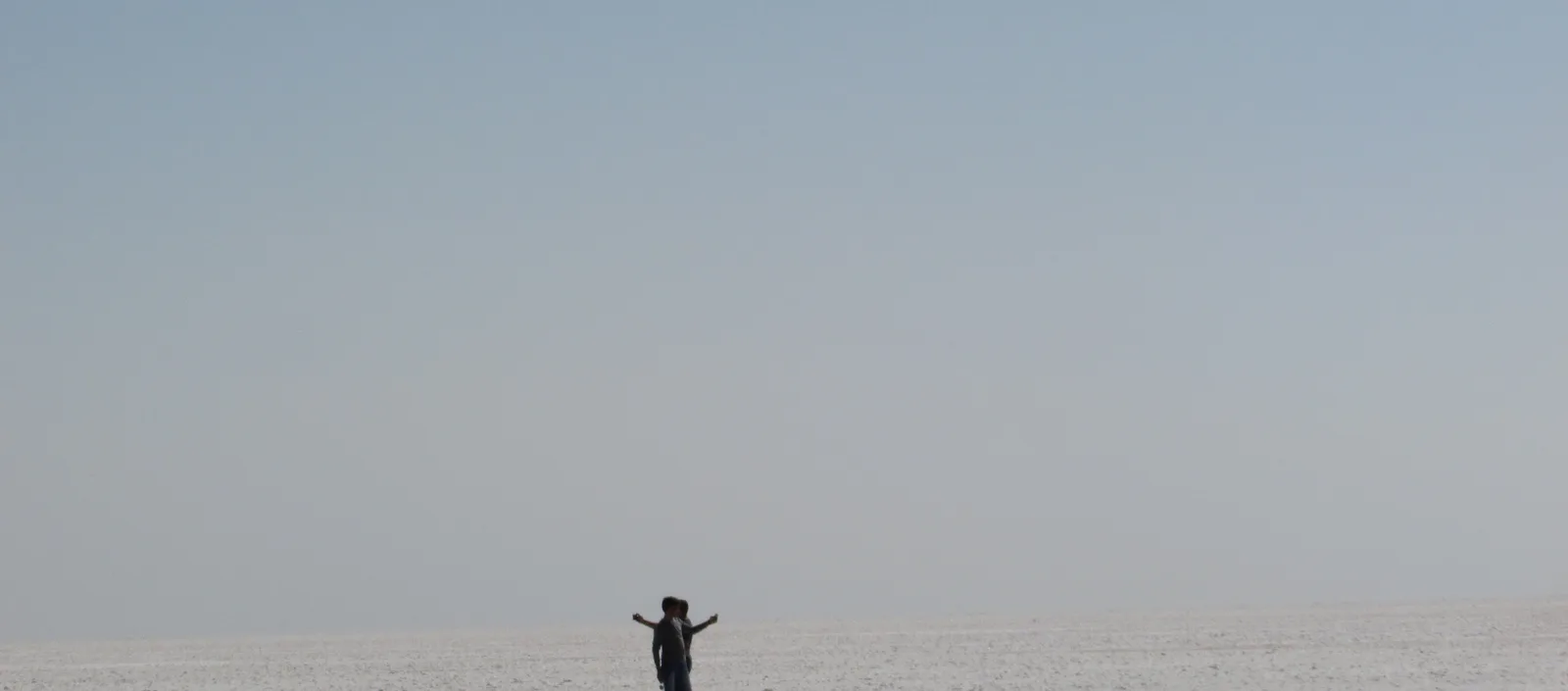
The Rann is planned on a short list of checkable facts: a salt desert that was once a sea, a festival whose tourism department names exactly one official website, an entry permit sold only through a Government of Gujarat portal, and a gateway town documented by the district administration itself. Each is taken here from Gujarat Tourism, the official Rann Utsav site it designates, and the Kutch district administration.
The White Rann at Dhordo is the dried bed of a former sea inlet: flooded in the monsoon, it sets into a hard white salt crust that the official Rann Utsav site describes as drying out from about November to March. The 2026–27 Rann Utsav season at the Tent City, Dhordo, runs 1 November 2026 to 7 March 2027 on rannutsav.net — the site Gujarat Tourism itself names as the festival's official website. Entry to the White Rann needs the online permit from the Government of Gujarat portal, rannpermit.gujarat.gov.in; no fee is quoted here, because no readable official page publishes one. Bhuj, about 85 km away, is the base: the closest airport and railway station, and home to the Aina Mahal, Prag Mahal and Gujarat's oldest museum.
SECTION 01What the Salt Desert Is: A Sea That Dried Into a Season
Begin with the geology, because the Rann is not a sand desert at all. Gujarat Tourism's Great Rann page gives the mechanism in plain terms: the area was once a sprawling shallow of the Arabian Sea, until a constant geological shift closed off its connection with the sea. What remained became a seasonal marshy salt desert. During the monsoons the marsh fills with water, the wetland extending from the Gulf of Kutch in the west to the Gulf of Cambay in the east; in summer the water dries away to leave a crunchy bed of white salty land. The white desert, in other words, is what the flooded marsh becomes when it dries — it exists only in the dry months.
The scale is set by the Kutch district administration: the Rann region comprises around 30,000 sq km, taking in the Great Rann, the Little Rann and the Banni grasslands, lying between Gujarat and Pakistan's Sindh province; the administration notes it is reputed to be the largest salt desert in the world, and that "Rann" descends from the Sanskrit Irina, meaning desert. Within that region, the official Rann Utsav site puts the Great Rann's white crust at roughly 7,500 sq km, setting into a hard, dazzling sheet as the flats dry from about November to March. The stretch nearest Dhordo village is the White Rann — Safed Rann — the part most travellers come to see, and Gujarat Tourism lists its visiting hours simply as dawn to dusk.
Two companions complete the geography. South-east of the Great Rann, Gujarat Tourism places the Little Rann, about 200 km east, whose 4,953-sq-km Wild Ass Sanctuary holds the only remaining population of the chestnut-coloured Indian wild ass, the khur, with blue-bull, blackbuck and chinkara — a separate excursion. And around the Great Rann's rim, the department describes the Banni grasslands' bhunga hamlets as an epicentre of Kutchi craft — embroidery, tie and dye, leatherwork, pottery, bell-metal work and Rogan painting.
SECTION 02Dhordo, the Tent City and Rann Utsav: The Season on Its Official Site
The festival needs one warning before any dates. Search for Rann Utsav and you will be offered a crowd of similar domains, packages and "official" booking pages. Gujarat Tourism cuts through it on its own festival page: "The official website of Rann Utsav: https://rannutsav.net/". Treat that as the department's ruling — rannutsav.net is the official channel; the .com and .org namesakes and the resellers are commercial operators, and this guide takes no dates, prices or promises from them. The department adds a distinction that matters at booking time: a Rann tour package may sleep you in any hotel or camp its seller chooses, so "Tent City" in a reseller's brochure does not by itself mean the official one beside the White Rann.
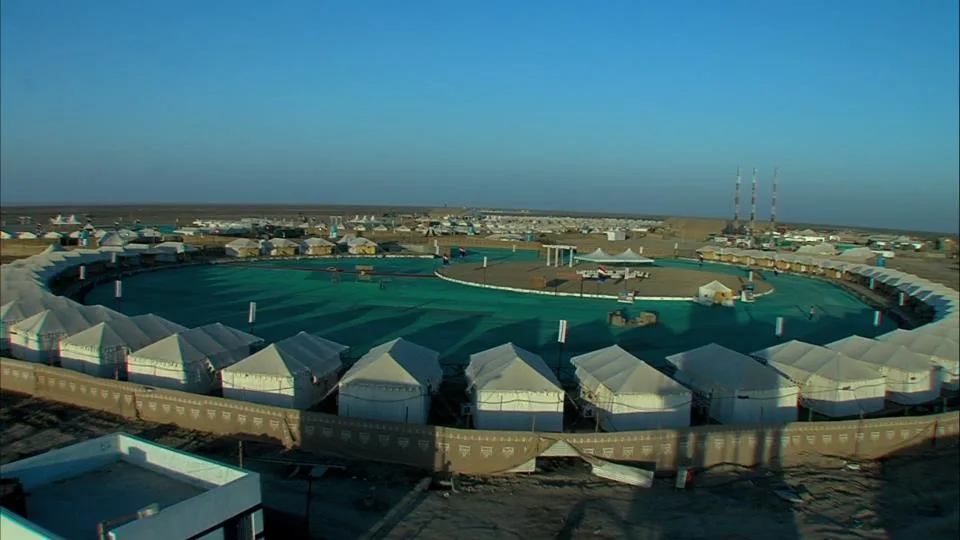
On that official site, the current season is stated outright: Rann Utsav – The Tent City, Dhordo, runs for 2026–27 from 1 November 2026 to 7 March 2027. The Tent City is operated by Evoke Experiences, and its accommodation runs from Swiss Cottages and Premium Tents up to Rajwadi and Darbari Suites. The food is vegetarian — Kutchi and other Indian selections, with Jain food also available. One honest wrinkle: Gujarat Tourism's own festival page still carried the previous season's dates when this guide was checked on 3 November 2026, which is why the dates above come from the official site the department designates. Tariffs live on that site and vary by category and date; this guide prints none — read the tariff for your dates on rannutsav.net itself.
The village underneath the festival has a distinction of its own. Gujarat Tourism records that Dhordo was recognised as one of the 54 Best Tourism Villages of 2023 by the United Nations World Tourism Organization (UNWTO), and is known for intricate mud craft and Mutwa embroidery. Around the desert, the festival gathers the Banni villages' folk music, dance and crafts. The official site's timing guidance is worth following literally: the cooler months from November to February are generally preferred, and full-moon and festive periods are the most popular — the moonlit salt is the signature sight, while a dark, moonless night is the better bet for stars.
SECTION 03The Permit: A Border-Area Entry, Arranged Online Before You Go
The White Rann is not an open common, and the reason is on every map: it fronts the international border with Pakistan. The official Rann Utsav site states the consequence plainly — entry requirements may apply because the White Rann is close to the international border, and visitors should use the Government of Gujarat permit portal. Gujarat Tourism gives the address in its own words: "For Online Entry Permit of White Rann at Dhordo please visit https://rannpermit.gujarat.gov.in/". The system is therefore online-first: the permit is a state-issued entry permit obtained through that portal before you arrive, for a road journey toward a guarded frontier, with the document checks that implies. Arrange it as part of booking the trip, not as an errand for the morning of the visit.
Two cautions from the official sources themselves. First, the festival site warns: do not assume every reseller package includes the permit — confirm whether permit assistance is included in what you bought; the traveller left without one is the traveller turned back. Second, and flagged as this guide's clearest limit: no permit fee is printed here. The fee is set on the state portal, and the portal itself could not be opened when this guide was researched (3 November 2026); neither Gujarat Tourism's pages nor the official festival site states a figure. The ₹100-per-adult number repeated across travel blogs appears in no official text that could be read, so it is not repeated here as fact. Check the portal for the current fee before you travel.
SECTION 04Bhuj as Base: Two Palaces and Gujarat's Oldest Museum
Almost every Rann itinerary sleeps at least a night in Bhuj, and the town earns it. The two palaces stand next door to each other in the same walled compound in the old town. The elder is the Aina Mahal, the palace of mirrors. Gujarat Tourism's booking portal records that it was built in 1752 for Maharao Lakhpatji by Ram Singh Malam, a sailor from Dwarka who had lived in Europe for 18 years; the mirrored interiors, blue-and-white tiling and Venetian-glass shades are his European training turned to a Kutchi king's taste. The palace lost its top storey in an earthquake, but the lower floor is open, with a 15.2 m scroll painting of a Kutch state procession and the fountain room, the Fuvara Mahal. Its published visiting hours are 9–11.45am & 3–5.45pm, Friday to Wednesday — closed on Thursdays.
Beside it, the district administration describes the Prag Mahal: commissioned by King Pragmalji in the 1860s, designed by Colonel Henry Saint Wilkins in the Italian Gothic style, its main halls open to visitors and its 45 m bell tower climbable for a view over the city — with the cracks the earthquake left between its stones still visible. Completing the circuit is the Kachchh Museum, which the administration identifies as the oldest museum in Gujarat, founded in 1877 by Maharao Khengarji: it holds the largest existing collection of Kshatrapa inscriptions, dating to the 1st century AD, examples of the now-extinct Kachchhi script, and the kori — Kachchh's own former currency — with a section devoted to the region's tribal cultures. Bhuj is a half-day of substance, not a transit halt.
SECTION 05Kalo Dungar: The One Hill Above the Salt
For the desert seen whole, there is exactly one vantage point, and Gujarat Tourism describes it precisely. North of the village of Khavda, Kalo Dungar — the Black Hill — marks Kutch's highest point at 462 m, with remarkable views of the Great Rann salt flat below. You will need your own transport to visit. The hilltop carries a temple dedicated to Lord Dattatreya, some 400 years old, around which the department retails the hill's enduring legend: Dattatreya, resting here, offered his own body to starving jackals and was restored as they ate — and for four centuries the temple's priests have prepared cooked rice for jackals who come in the late evenings for a meal. Stay towards sunset, when the blanched landscape changes hues as the sun sinks, and you have the Rann's best single viewpoint.
Kalo Dungar is also where the border stops being an abstraction. Gujarat Tourism states that a 15-minute drive from the base of the hill lands you on the India Bridge, that the area comes under the jurisdiction of the army and photography is not allowed there, and that the Indo-Pak border lies about 40 km north. Read that as the visit's terms, not as colour: beyond the hill you are in a military-guarded frontier zone — cameras away when told, instructions followed without argument. It is the same fact that produces the permit in Section 03, seen from the other end.
SECTION 06Mandvi: The Coast, the Shipwrights and a Palace by Its Own Beach
The standard Rann circuit ends at the sea. Mandvi, on Kutch's southern coast, is the district's beach town: Gujarat Tourism's booking portal calls the beach "Kutch nu Gharanu" — the jewel of Kutch — renowned for its pristine shoreline and gentle waves, with the historic Mandvi Fort above it, and adds the town's second identity: a traditional ship-building centre, where wooden vessels are still made by hand on the shore.
Mandvi's monument is the Vijay Vilas Palace. The district administration records that it was built as a summer resort during the reign of Maharao Shri Khengarji III for his son and heir, the Yuvraj Shri Vijayaraji — construction began in 1920 and was completed in 1929 — in red sandstone, on the plan of the palaces of Orchha and Datia. Two facts make it more than a museum piece: the palace has its own private beach, where tented accommodation is offered, and members of the old royal family still reside there. Gujarat Tourism's portal puts the beach about 60 km from Bhuj airport, which makes Mandvi a workable final night or long day trip from Bhuj.
SECTION 07Best Months, Moon Nights, and Getting There Through Bhuj
The calendar is dictated by water. In the monsoon the Rann is a flooded wetland and there is no white desert to visit; the crust forms as the flats dry from about November, and the official festival site gives the practical window: the cooler months from November to February are generally preferred, inside a Tent City season that runs to 7 March 2027. Within those months, choose by the moon. Full-moon nights are the most popular time to see the moonlit white salt desert — the salt takes the moonlight and the whole plain glows — so full-moon weekends sell out first; a new-moon night inverts the bargain, trading the glow for some of the darkest stargazing skies in India. Either way, pack for the desert's split personality: glaring days on reflective salt, and genuinely cold nights. Gujarat Tourism's dawn-to-dusk hours set the day's shape: sunrise and sunset on the crust, midday back at base.
Every route runs through Bhuj. Gujarat Tourism's trip planner fixes the distances: the Rann is about 85 km from Bhuj, and Bhuj is the closest air and rail node to it — the district administration agrees that the nearest airport and railway station are both Bhuj. The planner describes Bhuj's Rudra Mata airport as a small but busy node on the Mumbai route, and puts Ahmedabad about 335 km from Bhuj, roughly seven hours by road. From Bhuj, the last leg is road: official Tent City packages may include scheduled shared transfers from Bhuj Airport and Bhuj Railway Station at fixed timings, so a booked package can carry you the 85 km — confirm the timings against your train or flight. Independent travellers hire a car in Bhuj for the desert, Kalo Dungar and Mandvi.
FAQFrequently Asked Questions
Do I need a permit for the White Rann, and what does it cost?
Yes — an entry permit, because the White Rann lies close to the international border. Gujarat Tourism directs visitors to the state portal: "For Online Entry Permit of White Rann at Dhordo please visit rannpermit.gujarat.gov.in". Arrange it online before you travel, and if you buy a package, confirm whether permit assistance is included — the official site warns not to assume every reseller package includes it. No fee is printed: the portal that sets it could not be opened when checked (3 November 2026), and no other official page states a figure — the ₹100 number on blogs is unofficial. Check the portal for the current fee.
When is Rann Utsav in 2026–27, and which nights should I pick?
The official Rann Utsav site — rannutsav.net, the site Gujarat Tourism itself names as official — gives the 2026–27 Tent City season at Dhordo as 1 November 2026 to 7 March 2027. The site advises that the cooler months from November to February are generally preferred, and that full-moon and festive periods are the most popular: full-moon nights are when the moonlit salt desert is at its most striking. Book full-moon dates earliest; choose a dark, moonless night instead if stargazing matters more. Note that Gujarat Tourism's own festival page still showed the previous season's dates when checked, so rely on the official site's.
Is rannutsav.com the official Rann Utsav website?
No. Gujarat Tourism's Rann Utsav page states it directly: "The official website of Rann Utsav: https://rannutsav.net/". The similarly named domains and the many operators selling "Tent City" packages are commercial resellers — and the official site itself cautions that a Rann tour package may use any hotel, camp or resort its seller selects, so a package labelled "Tent City" is not necessarily the official Tent City at Dhordo. Compare the exact property and category against the accommodation pages on rannutsav.net before paying.
How do I reach the Rann of Kutch?
Through Bhuj. Gujarat Tourism's trip planner puts the Rann about 85 km from Bhuj and names Bhuj as the closest air and rail node; the district administration confirms Bhuj as the nearest airport and railway station. Bhuj's Rudra Mata airport is described by the planner as a small but busy node connecting Mumbai to Bhuj; by road, Ahmedabad is about 335 km from Bhuj, roughly seven hours. From Bhuj it is a road journey — official packages may include scheduled shared transfers at fixed timings; check them against your arrival.
Can I visit the Rann outside the festival season?
The desert is there all year, but its famous form is not. Gujarat Tourism explains that the marsh floods in the monsoon — the wetland then stretches from the Gulf of Kutch to the Gulf of Cambay — and the white crust exists only as the flats dry, roughly November to March on the official site's account. Outside the season there is no Tent City (it is a seasonal festival city) and no white desert at Dhordo; a Bhuj-based trip can still take in the palaces, the museum, Kalo Dungar and Mandvi. The border-area permit is for the White Rann itself, not the festival — plan on it whenever you go, and confirm the current position on the state portal.
Official references and checking status
Checked on 3 November 2026 against the official sources listed below; the accompanying sources file maps each claim to its page. Four limits are flagged honestly. First, the permit fee is not printed: Gujarat Tourism directs applicants to the state portal rannpermit.gujarat.gov.in, the portal could not be opened when checked, and no other official text read states a fee — the circulating ₹100 figure is unofficial. Second, the 2026–27 season dates (1 November 2026 – 7 March 2027) are taken from rannutsav.net, the site Gujarat Tourism designates as official, because the department's own festival page still displayed the 2025–26 dates at checking; Tent City tariffs are likewise left to the official site. Third, the description of the region as "reputed to be the largest salt desert in the world" comes from the district administration and is attributed as reputation, not surveyed fact. Fourth, the checkpost mechanics travellers describe at the desert's edge are detailed only by commercial sources, so the permit is presented here as the official sources present it, with no unofficial process detail. Confirm current prices, dates and permit rules on the official sites before you travel.
- Gujarat Tourism (official) — Great Rann of Kutch: the sea that became a salt desert, crafts, the Little Rann, dawn-to-dusk hours
- Gujarat Tourism (official) — Rann Utsav: the official website designation, the permit portal direction, the UNWTO village award
- Rann Utsav – The Tent City (official site, as designated by Gujarat Tourism) — the 2026–27 season, tent categories, transfers, the permit warning
- Rann Utsav (official site) — White Desert of Kutch: the Great Rann's extent, the drying season, the border entry requirement
- Gujarat Tourism (official) — Kalo Dungar: 462 m, the Dattatreya temple, India Bridge, the army jurisdiction, the border distance
- Gujarat Tourism booking portal (official) — Aina Mahal: built 1752, Ram Singh Malam, the earthquake, visiting hours
- Gujarat Tourism booking portal (official) — Mandvi Beach: "Kutch nu Gharanu", the shoreline, the ship-building heritage
- Kutch District Administration (official) — White Rann of Kachchh: the region's extent, the name, nearest airport and station
- Kutch District Administration (official) — Kachchh Museum: founded 1877, Kshatrapa inscriptions, the Kachchhi script, the kori
- Kutch District Administration (official) — Vijay Vilas Palace, Mandvi: built 1920–1929, the private beach, the resident royal family
- Gujarat Tourism trip planner (official) — Rann of Kutch: 85 km from Bhuj, the air and rail nodes, the Ahmedabad road distance
Photos: Two visitors on the white salt crust of the Rann of Kutch, by Ranjith Kumar Inbasekaran, via Wikimedia Commons, licensed under CC BY-SA 4.0; the Tent City at Dhordo from above, by Kaushik Patel, via Wikimedia Commons, licensed under CC BY 2.0. Photographers keep their copyright; the licences require this credit.
General information only. This guide is based on official sources publicly available and checked on the date shown on this page. Visa rules change, and consular and USCIS officers decide every case on its own facts — nothing here is a confirmation or a guarantee for your individual case, and this is not legal advice. Always confirm the current requirement on the official page linked in this guide before you act, and consider a qualified immigration attorney for your specific situation.