
Researched & checked — 3 Nov 2026
Ujjain and Mahakaleshwar: Bhasma Aarti Booking and the Shipra Ghats, Planned on Official Facts
NEW Published 3 November 2026
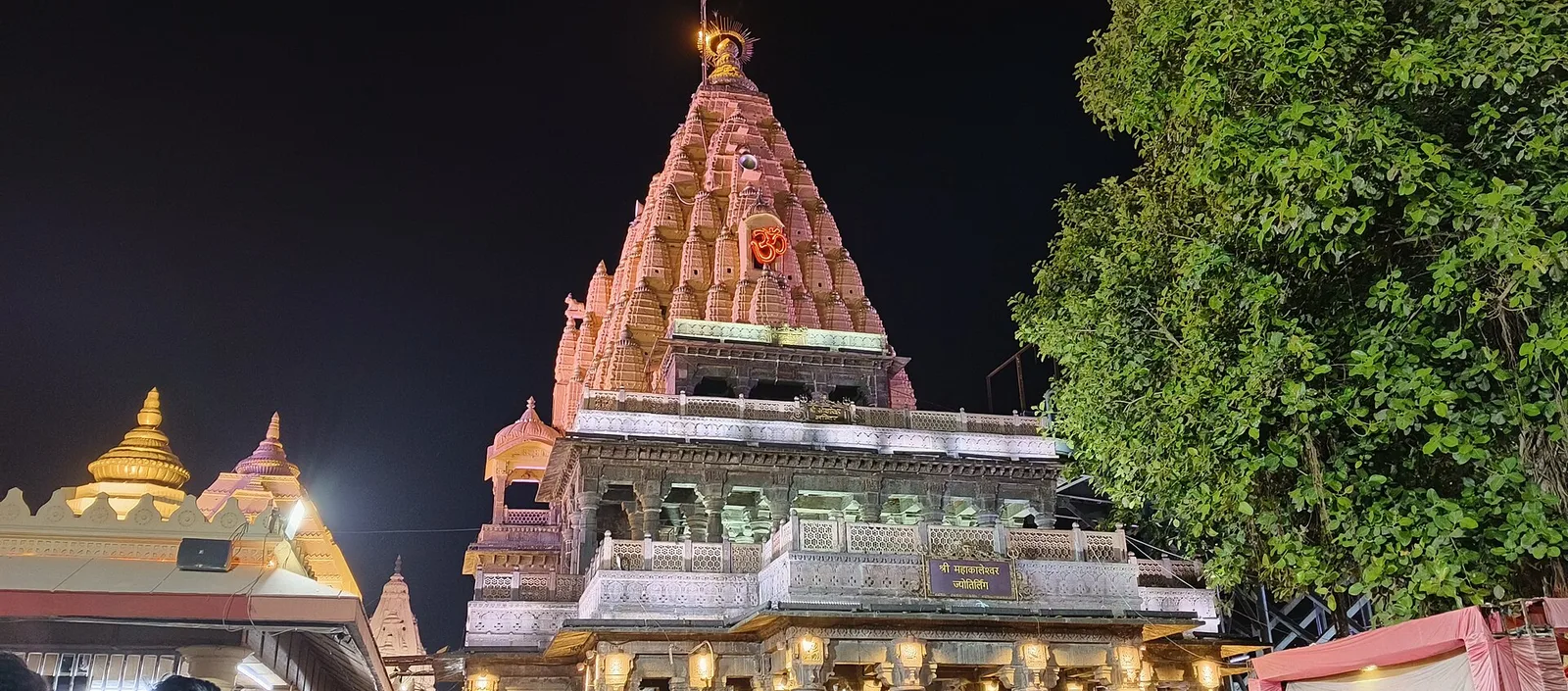
Ujjain can be planned on a short list of checkable facts: a self-manifested Jyotirlinga on the Shipra, a dawn aarti that admits only the pre-registered, a 900-metre temple corridor counted pillar by pillar in the government's own release, and an airport 55 km away. Each is taken here from Madhya Pradesh Tourism and the Press Information Bureau — and where the committee states a term only inside its booking login, this guide says so instead of borrowing a blog's numbers.
The Mahakaleshwar Temple in Ujjain houses one of the 12 Jyotirlingas — a swayambhu (self-manifested) lingam, south-facing, on the bank of the Shipra river. Its daily Bhasma Aarti — which the temple states begins at 4 AM — is attended only through prior registration on the temple committee's authorised website — register before you travel, not after you arrive. The temple is approached through the Mahakal Lok corridor: more than 900 metres, 108 pillars, around 200 statues, beside the old Rudrasagar Lake. In the evening, Ram Ghat — among the city's oldest bathing ghats — holds its Shipra aarti, which Madhya Pradesh Tourism places around 8 PM. The nearest airport is Indore, about 55 km; Ujjain's own railway station stands in the heart of town.
SECTION 01Mahakaleshwar: The South-Facing Jyotirlinga on the Shipra
Begin with the status, because it organises everything else in this city. Madhya Pradesh Tourism's account is the measured one this guide follows: the Mahakaleshwar Temple, also called the Mahakal Mandir, is Ujjain's most prominent spiritual attraction and among the most sacred Shiva temples in the country. It houses one of the 12 Jyotirlingas; the lingam is believed to be swayambhu — self-manifested — and the deity is also known as Dakshinamurti for its south-facing aspect, a distinction no other Jyotirlinga shares in the same way. The name itself is explained by the department: kaal carries two meanings, time and death, and Shiva as lord of both is Mahakaleshwar.
The temple does not stand alone. The same official pages describe a city on the Shipra that is home to more than 100 temples — Harsiddhi, Kal Bhairav, Mangalnath and dozens more, most within a short ride of the Mahakal precinct — and a riverbank that hosts the Simhastha (Kumbh Mela), held once every 12 years: the last took place in 2016 and the next falls in 2028. An ordinary-year visit is a visit to a working pilgrimage city between its giant festivals — busy every day, and overwhelming on the festival dates set out in Section 09.
SECTION 02Bhasma Aarti: The Booking Is the Plan
The Bhasma Aarti is the ritual Ujjain is famous for, and Madhya Pradesh Tourism describes its substance plainly: the process begins with the abhishek, the ritual bath of the shivling; the lingam is then smeared with offerings — curd, honey and sandal paste — cleaned with milk and water, and finally decorated with sacred ash, the bhasma that gives the aarti its name. It is a daily ritual, and the department calls it the most popular Bhasma Aarti in the world.
The rule that shapes your entire itinerary is stated by Madhya Pradesh Tourism in one sentence: to attend the Bhasma Aarti, go through the prior registration process on the authorised website — shrimahakaleshwar.com, the Shri Mahakaleshwar Temple Committee's own portal. There is no walk-in route to this aarti described by any official source, and no agent, hotel desk or tout is an authorised channel: the registration is the committee's, on the committee's site. Treat the booking as the first act of planning the trip — before the train, before the hotel — because the rest of the plan hangs off the date your registration confirms. The committee now runs the portal on its Madhya Pradesh government domain, shrimahakaleshwar.mp.gov.in (the older address redirects there), and releases advance booking month by month: its current notice, checked on 3 November 2026, opens booking for December 2026 on 8 November 2026 at 8:00 AM, and the services page also lists a Tatkal Bhasmaarti for the following day. Monthly releases like that fill fast — be on the portal when your month opens.
Now the honesty this guide owes you. The committee's public pages were read on 3 November 2026, and they fix everything above in the temple's own words — the 4 AM start, the monthly release, the Tatkal listing. What they do not publish is the operative fine print: the fee if any, the reporting time, and what the registration asks of you, including identification and dress requirements, appear only inside the booking login, and the figures published elsewhere flatly contradict each other — some quote a per-person charge, others describe the aarti as free. Printing any of those numbers would be repeating a guess, so this guide prints no Bhasma Aarti fee and no reporting hour. What you should do is mechanical and safe: register only through the committee's portal, read the terms inside the booking flow itself, complete the registration exactly as it asks, and carry the same government photo identity you registered with. If the flow shows a fee, it is payable there and nowhere else.
SECTION 03General Darshan: The Daytime Flow
Not every visit turns on the dawn aarti. The ordinary darshan — joining the queue, moving through the precinct and standing before the sanctum — runs through the day and needs no registration of the Bhasma Aarti kind. The approach is now part of the experience: arrivals funnel into the expanded precinct and the Mahakal Lok corridor of the next section, built precisely to decongest this flow — the Press Information Bureau records that the precinct has been expanded nearly seven times under the project, its plaza and pathways absorbing crowds that once compressed into the old lanes.
Two planning consequences follow. First, the temple's existing footfall is around 1.5 crore visitors a year (PIB) — one of India's most visited shrines on an ordinary day, so a queue is the normal condition and early hours are the calmest. Second, the state's own peak list — Mahashivratri, the Mondays of Sawan, Nag Panchami — tells you when that queue multiplies (Section 09). Beyond that, this guide prints no darshan timetable and no paid-queue price: the committee publishes its current arrangements on its own site, and unofficial pages disagree too much to repeat responsibly. Arrive early, and keep the day's plan loose around the darshan.
SECTION 04Mahakal Lok: The 900-Metre Corridor
Whatever brings you, you will meet the corridor first. The figures here are the government's own. Madhya Pradesh Tourism: the Shri Mahakal Lok Corridor is more than 900 metres long, surrounded by the old Rudrasagar Lake; along it stand 108 pillars and around 200 statues, with murals displaying stories of Shiva — and it looks, the department adds, stunning at night in colourful lights. The Press Information Bureau's dedication release adds the frame: the Mahakal Path's 108 stambhs depict the Anand Tandav Swaroop — the dance form — of Lord Shiva; the plaza spreads over 2.5 hectares around a lotus pond holding a statue of Shiva with water fountains; and the murals illustrate the Shiva Purana — the Saptarishi Mandal, Tripurasura Vadh, the story of Sati and Daksha among them.
The project's scale is also official record. Phase I of the Mahakal Lok project was dedicated to the nation on 11 October 2022; the total project cost is put by PIB at around ₹850 crore, planned in two phases, with a double purpose — modern amenities for pilgrims, and conservation of the precinct's heritage structures. The expectation recorded at the dedication was that footfall of around 1.5 crore a year would double. Walk the corridor slowly once in daylight for the murals, and once after dark for the lighting the department promises; it is a sight in itself, not merely a queue with better paving.
SECTION 05Harsiddhi, Kal Bhairav and Mangalnath: The Supporting Circuit
Three temples complete the standard Ujjain circuit, and Madhya Pradesh Tourism describes each at a strength this guide can stand behind. Harsiddhi stands first: the department calls it one of the 51 Shaktipeeths, near Rudra Sagar Lake — the place where, by the Shiva Purana tradition it recounts, the elbow of Sati fell. The present temple was restored in the Maratha period, and its signatures are the two lamp pillars: two soaring deepastambhas, each adorned with 1,008 lamps, outside the entrance, with the goddess Annapurna seated between Mahalaxmi and Mahasaraswati inside. The lamps' glory, the department says, is best sighted during Navaratri, celebrated here with much zeal. Harsiddhi sits a short walk from the Mahakal precinct and pairs naturally with Ram Ghat, which lies close by.
Kal Bhairav is the city's guardian, and its rite is the one visitors ask about. The department gives the route — cross the bridge over the Shipra, near the Bhagirathi caves — and the frame: devotion to the Ashta Bhairava, the eight attendants of Shiva, is integral to Ujjain's Shiva bhakti, and Kal Bhairav is chief among the eight. The temple is believed built by King Bhadrasen, and the offering to the deity includes flowers, coconut, incense and especially liquor, bought at the shops outside: the priest offers half to the idol and returns the rest as prasad. It is the temple's defining practice, stated here as plainly as the department states it.
Mangalnath stands on a hill over the calm stretch of the Shipra. The department's account is brief and complete: the temple is dedicated to Lord Mahadev, and according to the Matsya Purana the site is revered as the birthplace of Mangal Graha — Mars — which is why devotees with Mangal concerns in their charts make the trip up. Add Chintaman Ganesh — the department calls it Ujjain's largest Ganesha temple — if the day allows.
SECTION 06Ram Ghat and the Shipra Aarti: The Evening Anchor
Every Ujjain day has two anchors: the dawn aarti at the temple and the dusk aarti at the river. Ram Ghat, near the Harsiddhi Temple on the Shipra, is described by Madhya Pradesh Tourism as among the most vibrant places in the city and one of its oldest bathing ghats, a prominent venue of the Kumbh Mela. Devotees come through the day for the holy dip; in the evening the ghat holds its aarti to the river.
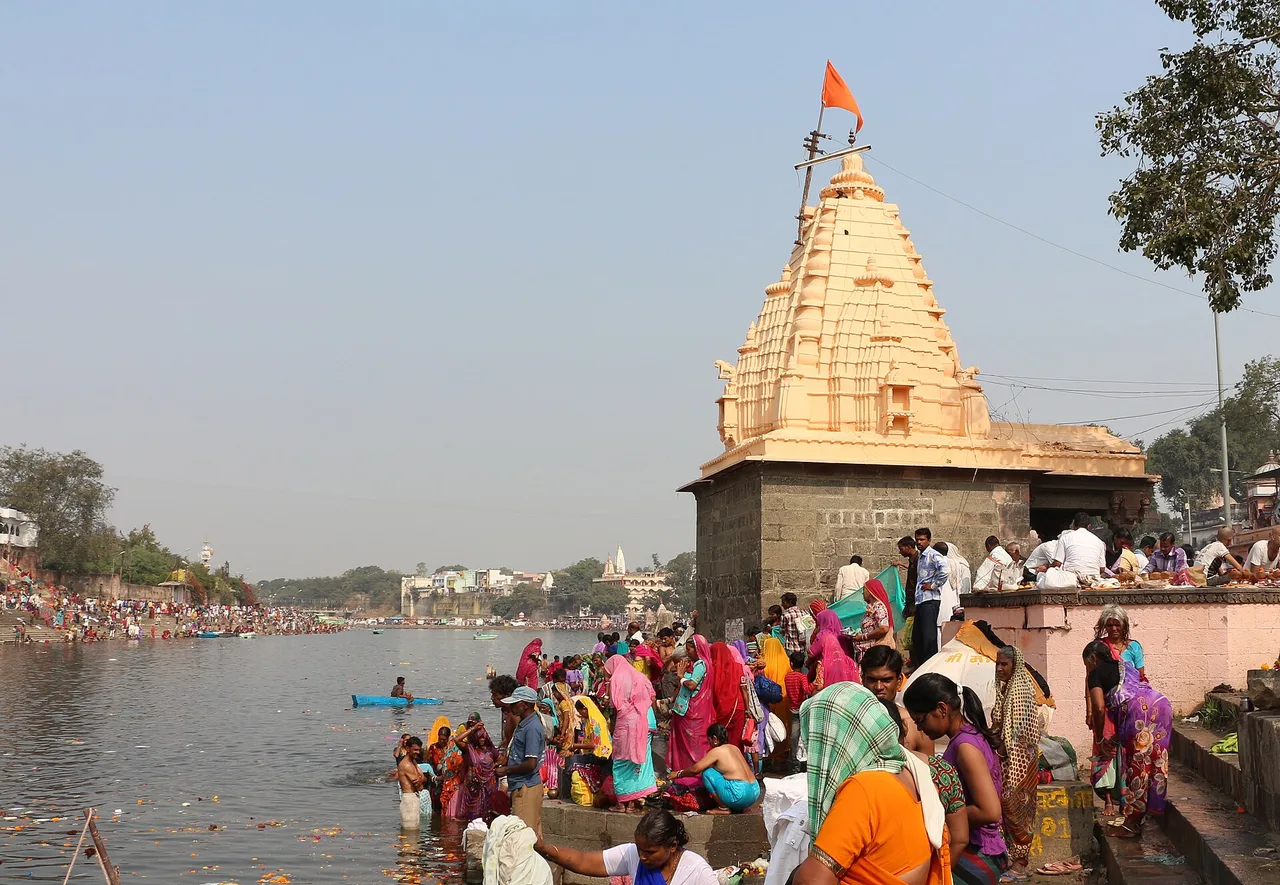
On timing, this guide prints exactly what the official text supports and no more. The department's Ujjain material states that the evening aarti ritual at Ram Ghat takes place around 8 PM every day. That "around" deserves respect: river aartis everywhere follow the light, unofficial pages variously promise 6:30, 7:00 and 7:30 PM starts, and no committee or ghat authority timetable could be read for this guide. So plan on the department's version — be on the steps well before 8 PM, earlier in winter when dusk comes sooner — and treat any page promising you a minute-exact start as guessing. Arriving early costs nothing; the ghat fills from the front steps outward, and the wait on the steps, watching the lamps being prepared, is part of the ceremony.
SECTION 07Getting There: Indore's Airport, Ujjain's Own Station
Madhya Pradesh Tourism's directions are complete enough to plan from directly. By air, the closest airport is Devi Ahilya Bai International Airport, Indore, at a distance of 55 km, connected by regular flights to Delhi, Mumbai, Pune, Bhopal, Hyderabad, Ahmedabad, Nagpur, Raipur and Kolkata, among the cities the department lists. From Indore, the road run to Ujjain is the standard final leg.
By rail, Ujjain's own station is the cleanest arrival in this guide: it is located in the heart of the town, connected to all major cities within the state and the rest of the country by commuter and express trains. Unlike pilgrimage towns where the railhead is a town away, here you step off the train already inside the city you came for. By road, private and state-operated buses ply between Ujjain and Indore, Omkareshwar, Maheshwar, Burhanpur, Dhar and Bhopal. The city has two main bus stands, and their positions are worth fixing before you arrive: the main bus stand at Dewas Gate stands in the heart of town, 600 metres from the railway station, with auto-rickshaws, tempos, cycle rickshaws and cabs hireable there; the Nanakheda Bus Terminus is about 5 km away. If a bus drops you at Nanakheda, budget the extra cross-town ride rather than discovering it at the kerb.
SECTION 08Where to Base, and the One-Day vs Two-Day Question
Base yourself by the day's two anchors, not by the map's centre. The Bhasma Aarti morning starts in the dark and the Shipra aarti ends the evening at Ram Ghat, so the practical choice is a stay within walking distance of the Mahakal precinct and the ghats — the old-city side, near the temple and Harsiddhi — from where both anchors are a walk rather than a negotiation with traffic. The station and Dewas Gate area is the fallback: central, transport-rich, still close. Avoid a highway-side stay that turns a pre-dawn start into a logistics problem; in Ujjain, proximity beats amenities.
One day works if the Bhasma Aarti registration is already in hand: the aarti first, rest through the late morning, corridor and general darshan in the afternoon, Harsiddhi on the way to Ram Ghat for the evening aarti. Without a registration it still works — darshan early, corridor, supporting temples, ghats at dusk — but with no slack. Two days is the better shape: day one for arrival, the corridor in daylight, Harsiddhi and Ram Ghat in the evening; day two opening with the Bhasma Aarti, then Kal Bhairav and Mangalnath at an unhurried pace, and the corridor once more after dark. The second day is also insurance: if crowds stretch the first day's darshan, the plan bends instead of breaking.
SECTION 09Festivals and Crowding: Mahashivratri and the Peaks
Madhya Pradesh Tourism's best-time advice doubles as a crowding calendar: Ujjain can be visited any time of year, but its celebrated peaks are Mahashivratri, the Mondays of the Sawan month, Nag Panchami and the yearly Kartik Mela — with the Simhastha Kumbh above them all on its 12-year cycle, next in 2028. Mahashivratri is the summit of the ordinary year: the night of Shiva, in the city of Mahakal, draws the largest crowds the temple sees outside a Kumbh year, and every part of the machinery this guide describes — registrations, queues, rooms, the road from Indore — is at its most stretched. Sawan Mondays build a weekly version of the same pressure.
The practical reading is symmetrical. If the festival is the point, come deliberately: register for the Bhasma Aarti at the earliest opportunity the portal allows, book the stay before the trains, and keep nothing time-critical on the same day. If it is not, the most effective decision available is the date — an ordinary weekday outside Sawan gives you the same temple, corridor and ghats at a fraction of the crowd. No official source read for this guide publishes festival-day crowd figures or special arrangements in advance, so none are promised here: check the committee's site as your date approaches.
FAQFrequently Asked Questions
How much does Bhasma Aarti booking cost, and how far ahead does it open?
The window is the committee's own published pattern; the fee is deliberately not printed. Advance booking opens in a monthly release on the committee's portal — its notice checked on 3 November 2026 opens December 2026 booking on 8 November 2026 at 8:00 AM — and a Tatkal listing covers the following day. The fee, however, appears only inside the booking login, and unofficial pages contradict each other (a per-person charge on some, free entry on others), so no fee is printed here. The booking flow itself is the authority: register there, read its terms, and pay only there if a fee is shown.
Can I attend the Bhasma Aarti without booking in advance?
Plan on no. Madhya Pradesh Tourism states that attending the Bhasma Aarti means going through the prior registration process on the committee's authorised website, and no official source describes a walk-in route to this aarti. If you reach Ujjain without a registration, the day is still complete — general darshan at the temple, the Mahakal Lok corridor, Harsiddhi, Kal Bhairav and the evening aarti at Ram Ghat — but the dawn aarti itself should be treated as booked or missed, not queued for.
What time does the Shipra aarti at Ram Ghat actually start?
Madhya Pradesh Tourism's Ujjain material places the evening aarti at Ram Ghat at around 8 PM every day, and that is the only timing this guide prints. River aartis follow the dusk, unofficial pages promise starts anywhere between 6:30 and 7:30 PM, and no ghat authority timetable could be read to settle it — so the honest plan is to be seated on the steps well before 8 PM, earlier in winter. The wait is not wasted: the lamps are prepared on the steps in front of you.
Is one day enough for Ujjain?
Yes, with the Bhasma Aarti registration already secured: aarti at dawn, rest late morning, Mahakal Lok and general darshan in the afternoon, Harsiddhi and the Ram Ghat aarti in the evening. Two days is the kinder shape — it separates the corridor and supporting temples (Kal Bhairav across the Shipra bridge, Mangalnath on its hill) from the darshan day and gives you slack if crowds stretch the queues. Ujjain's railway station is in the heart of town and Indore airport is 55 km away, so even a one-day trip loses little time to transfers.
When should I avoid Ujjain if I dislike crowds — and when are they the point?
Madhya Pradesh Tourism's own peak list is the guide: Mahashivratri is the biggest crush of the ordinary year, the Mondays of Sawan build weekly pressure, and Nag Panchami and the yearly Kartik Mela are busy; above all of them sits the Simhastha Kumbh, held every 12 years and next due in 2028. For a quiet visit, choose an ordinary weekday outside Sawan and away from Mahashivratri. For the festivals themselves, register and book everything at the earliest opportunity and keep the day's plan loose — and remember the baseline: the temple's ordinary footfall is already around 1.5 crore visitors a year.
Official references and checking status
Checked on 3 November 2026 against the official sources listed below; the accompanying sources file maps each claim to its page. Three limits are flagged honestly. First, the Temple Committee's public pages were read on its Madhya Pradesh government domain on 3 November 2026 — they supply the 4 AM start, the monthly booking release and the Tatkal listing — but the aarti's fee, reporting time and registration requirements appear only inside the booking login, so they are not printed, because unofficial pages contradict each other on every one of them. Second, the only official timing for the Ram Ghat evening aarti is Madhya Pradesh Tourism's "around 8 PM"; no minute-exact start is asserted. Third, no general-darshan timetable or paid-queue price is printed, for the same reason. Confirm current arrangements on the committee's site before you travel.
- Madhya Pradesh Tourism (official) — Ujjain destination page: the temple, Bhasma Aarti registration, Mahakal Lok, Kal Bhairav, Harsiddhi, best time and how to reach
- Madhya Pradesh Tourism (official) — Places to visit in Ujjain: Ram Ghat and its evening aarti, Mangalnath, Chintaman Ganesh, Simhastha cycle
- Press Information Bureau (official) — PM dedicates Phase I of the Mahakal Lok Project, 11 October 2022: corridor pillars, plaza, project cost and footfall
- Shri Mahakaleshwar Temple Committee (official) — the authorised Bhasma Aarti booking portal on the Madhya Pradesh government domain (the older shrimahakaleshwar.com address redirects here): the 4 AM start, the monthly booking-release notice and the Tatkal listing, read 3 November 2026
Photos: Mahakaleshwar Temple floodlit at night, by Ashverse, via Wikimedia Commons, licensed under CC BY-SA 4.0; Ram Ghat on the Shipra, by Bernard Gagnon, via Wikimedia Commons, licensed under CC BY-SA 3.0. Photographers keep their copyright; the licences require this credit.
General information only. This guide is based on official sources publicly available and checked on the date shown on this page. Visa rules change, and consular and USCIS officers decide every case on its own facts — nothing here is a confirmation or a guarantee for your individual case, and this is not legal advice. Always confirm the current requirement on the official page linked in this guide before you act, and consider a qualified immigration attorney for your specific situation.