
Researched & checked — 30 Oct 2026
Varanasi in 2 Days: The Ghats, Kashi Vishwanath and Sarnath, With the Real Costs Shown
NEW Published 30 October 2026
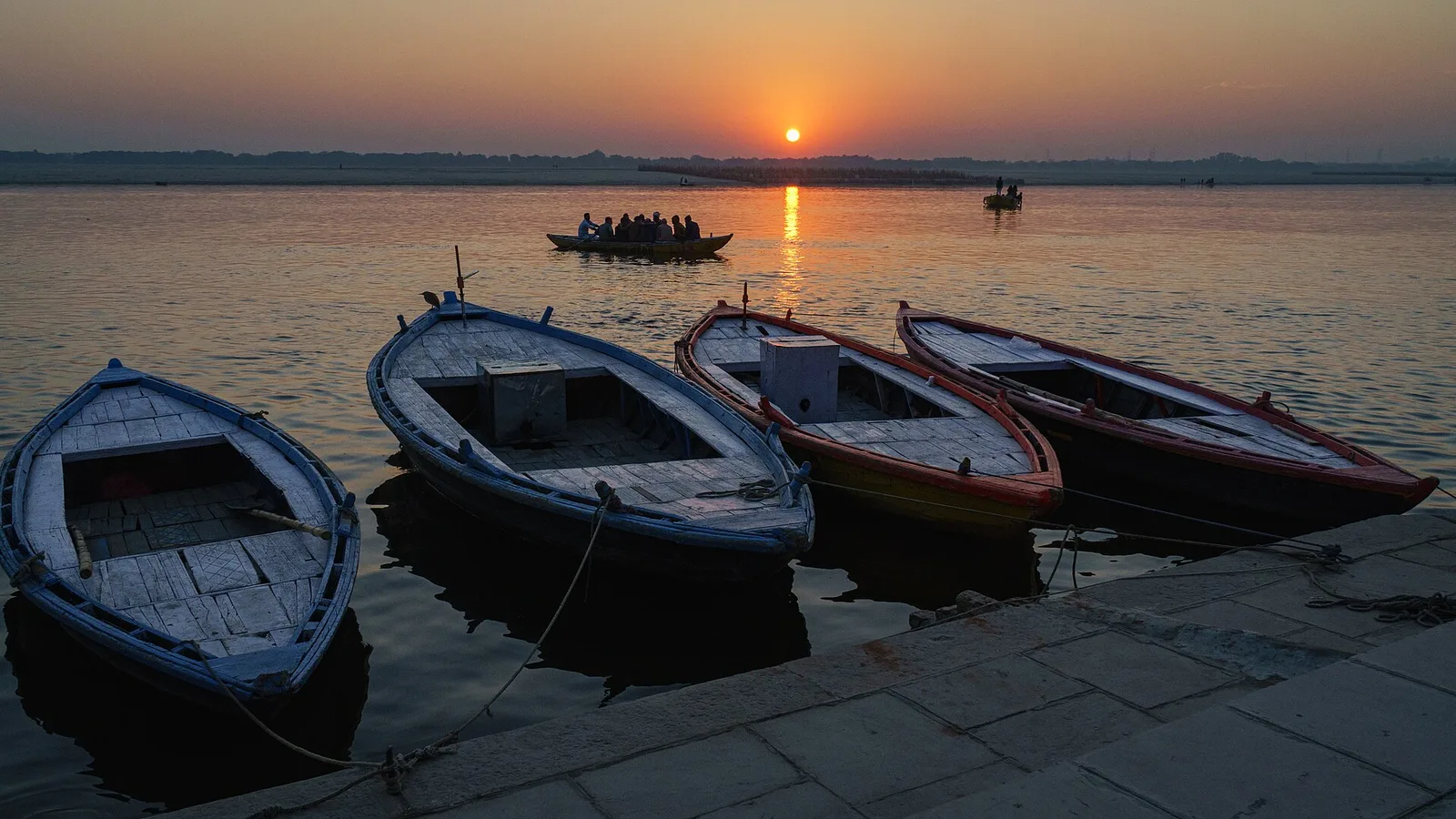
Two days in one of the world's oldest living cities, costed from the official sources: darshan at Kashi Vishwanath is free, the temple trust's own price list covers everything you can optionally pay for, the evening Ganga aarti costs nothing to watch, and Sarnath's two ASI tickets cost a few hundred rupees at most.
Darshan at Kashi Vishwanath is free — the temple trust's own FAQ answers "Do I need to pay to enter in temple?" with "No." The temple is open 3:00 am to 11:00 pm, with darshan in three windows (4:00–11:00 am, 12:20–7:00 pm, 8:30–9:00 pm) around four daily aartis. Everything paid is optional and priced by the trust itself: Sugam Darshan (queue-less, escorted) ₹300, Mangla Aarti tickets ₹500, the other three aartis ₹300 each, Rudrabhishek from ₹450. Foreign visitors holding a passport buy a ₹600 darshan ticket at the trust's help desk. The evening Ganga aarti at Dashashwamedh Ghat is a free public ritual — no ticket — and boats are a private market with no official tariff. At Sarnath, the archaeological park is ₹25 Indian / ₹300 foreign, and the museum is ₹5 for everyone — but closed on Fridays.
SECTION 01How the Two Days Fit Together
Day 1 belongs to the old city: the temple, the lanes behind the ghats, and the riverfront at dusk. Do the Kashi Vishwanath darshan in the morning, inside the first darshan window (4:00–11:00 am) while the lanes are still cool, then let the middle of the day slow down — the old city rewards wandering more than scheduling. Be back on the riverfront well before sunset for the Ganga aarti at Dashashwamedh Ghat: the temple's Gate No. 1 opens onto the corridor from the ghat side, so temple and aarti ghat are effectively one precinct.
Day 2 starts on the water and ends in another religion's founding moment. Take a boat at sunrise — the classic Varanasi hour, when the ghats light up one by one — then, after breakfast, head to Sarnath on the city's north-eastern outskirts for the excavated Buddhist site and its museum. One calendar warning shapes the plan: the Sarnath museum is closed on Fridays, so if your two days straddle a Friday, give Sarnath the other day. The excavated park itself, and everything in Varanasi city, runs daily.
Arrivals are simple: the trust's FAQ names Varanasi Junction as the nearest railway station and Lal Bahadur Shastri International Airport as the airport. Stay along the ghats if you can — almost everything in this guide is then walkable, which matters, because the lanes behind the ghats are largely a pedestrian world, not a car world.
SECTION 02Kashi Vishwanath: Darshan Is Free, and the Day Runs on Aartis
Start with the fact that organises everything else. The Shri Kashi Vishwanath Temple Trust's official FAQ asks, "Do I need to pay to enter in temple?" and answers: "No, but special darshan costs Rs. 300 per person." Ordinary darshan — joining the queue, passing through the Vishwanath Dham corridor and standing before the sanctum — costs nothing. The ₹300 figure is the optional Sugam Darshan, covered in Section 03.
The temple's day is long and structured. Per the same official FAQ, the temple remains open from 3:00 am to 11:00 pm, and darshan is given in three windows — 4:00 am to 11:00 am, 12:20 pm to 7:00 pm, and 8:30 pm to 9:00 pm — because the gaps between the windows belong to the temple's four aartis, which the trust lists as Mangla Aarti, Mid-Day Bhog Aarti, Sapta-Rishi Aarti and Night/Shringar Aarti. Their timings, again from the FAQ: Mangla Aarti 3:00–4:00 am (ticket-holders report at 2:30 am and enter by Gate No. 1); Mid-Day Bhog Aarti 11:15 am–12:20 pm; Sapt Rishi Aarti 7:00–8:15 pm; and Night/Shringar Aarti 9:00–10:15 pm. For aartis other than Mangla, devotees may enter by any gate.
The corridor — the Vishwanath Dham — is the route most visitors now take: a broad, managed precinct between the city and the temple, with the river at one end. The trust's FAQ confirms you can enter from the Ganga ghat side through Gate No. 1, and that entry from the ghat into the corridor is allowed from 6:00 am to 9:00 pm.
Three rules from the FAQ decide whether your visit runs smoothly. First, no mobile phones or other gadgets — the FAQ bars "any electronic or non-electronic gadgets, pen etc." from the temple premises — so leave phones at your hotel or in a locker; photography inside is simply not part of this visit. Second, the lockers are free: the trust lists free locker facilities at Mandir Chauk, YSK-1, YSK-2, YSK-3 and the Help Desk, and its help desk stands near Gate No. 4, with seven ticket counters across the precinct. Third, there is no dress code — the FAQ asks only that devotees wear decent clothes.
SECTION 03The Paid Options, Priced by the Temple Trust Itself
Everything in this section is optional, and everything is sold by the temple trust on its official website — which is also the answer to the touts: if a price is not on shrikashivishwanath.org's booking list, it is not the trust's price.
Sugam Darshan — ₹300 per person. The trust describes it as a "special process for quick queue-less, hassle-free darshan", designed for devotees with time constraints or disabilities. Per the FAQ, a Shastri escorts you near the sanctum without the queue; the ticket includes the Shastri's dakshina, a box of prasad, and free locker facility. On Mondays — Shiva's day, when Varanasi is at its fullest — and on festival days, this is the purchase that buys back your morning.
Aarti tickets — Mangla ₹500; Mid-Day Bhog, Sapt Rishi and Shringaar/Bhog ₹300 each. These are seats at the day's four aartis (timings in Section 02), bookable on the official website, through the trust's app, or at the help desk. Read the trust's terms before booking: the FAQ states plainly that aarti bookings cannot be cancelled and the date cannot be changed — the amount is treated as a donation to the temple, and no refund is given. Book only when your date is certain.
Rudrabhishek — from ₹450. The ritual bathing of the lingam is offered with one, five or eleven Shastris, priced on the booking list at ₹450, ₹1,380 and ₹2,600, and per the FAQ it can be performed any time between 4:00 am and 6:00 pm. The ticket includes the temple fee, the Shastri's dakshina and the pooja thali; milk is bought separately inside the premises.
Foreign visitors — ₹600 at the help desk. The trust publishes a dedicated process: foreign devotees holding a valid passport obtain a darshan ticket only at the trust's help desk head office near Bansphatak — not online. You show the original passport and submit photocopies of the passport and visa (the trust states these are for security purposes), and the ₹600 ticket includes Shastri assistance, prasadam and an ang-vastram (a ceremonial cloth). It turns an unfamiliar queue system into one desk, one ticket and an escort.
SECTION 04The Ghats and the Evening Ganga Aarti
Below the temple, the old city's riverfront unrolls as a near-continuous staircase of ghats — stone steps where the city's rituals, baths, boats and cremations share one stage. Walking them costs nothing and needs no plan: start near Dashashwamedh, the temple's ghat, and drift south towards Assi or north towards Manikarnika as the light changes.
The evening's fixed point is the Ganga aarti at Dashashwamedh Ghat, organised by the Ganga Seva Nidhi trust: a choreographed fire ritual in which priests raise tiered lamps to the river in unison, to chanting and conches, watched from the steps and from a flotilla of boats. Two honest facts about it. First, watching is free — it is a public ritual on a public ghat, and there is no ticket to stand or sit on the steps. Second, there is no official clock time to give you: the ceremony is set by dusk, so it begins earlier in winter and later in summer, and the organising trust does not publish a fixed start time on its website. The workable rule is to be in place well before sunset — the central steps fill early — and let the darkening sky start the show.
Many visitors watch from the water instead. That is the first of Varanasi's two boat markets, and it needs a clear-eyed note: the boats at the ghats are run by private boatmen and there is no official tariff for them — no government or trust price list exists that this guide can quote, so no per-person figure is printed here. Do what locals do: agree the price, the duration and the route (a held position for the aarti, or a row past the ghats afterwards) before you step in. The same applies to the sunrise row described next.
SECTION 05Sunrise on the River
If the aarti is Varanasi at full volume, dawn is Varanasi at a whisper. The classic second-morning plan is a rowing boat from the central ghats shortly before sunrise, drifting the riverfront as the sun comes up opposite the steps: bathers descending for the morning dip, temple bells starting, last night's aarti platforms standing empty, and the old city's eastern facade turning gold. It asks only one thing of you — an early alarm.
Because the boats are a private market with no official tariff (Section 04), arrange yours the evening before if you can: agree the pick-up ghat, start time, length of row and total price with the boatman. Shared boats gathering passengers at the main ghats at dawn are the budget version; a private boat is the quiet one. Afterwards, walk back through the waking lanes for breakfast, and keep the rest of the morning for Sarnath.
One crowd note for the whole trip: Varanasi's great festivals — above all Mahashivratri and Dev Deepawali — transform every queue and boat negotiation in this guide. The figures printed here are ordinary-day figures from the official lists; on a festival day, treat them as a floor, arrive earlier everywhere, and expect the city to be gloriously unmanageable.
SECTION 06Sarnath: The First Sermon, and the Museum That Closes on Fridays
End the two days where Buddhism began. Sarnath — the deer park of Mrigadava, on the city's north-eastern outskirts — is where the Buddha, newly enlightened, preached his first sermon to five companions. The excavated site is a garden of ruins: monastery foundations, votive stupas, the broken base of the Ashokan pillar, and, rising over all of it, the Dhamek Stupa, the great brick tower that marks the sermon's traditional spot. After the intensity of the old city, its lawns and shade feel like a held breath.
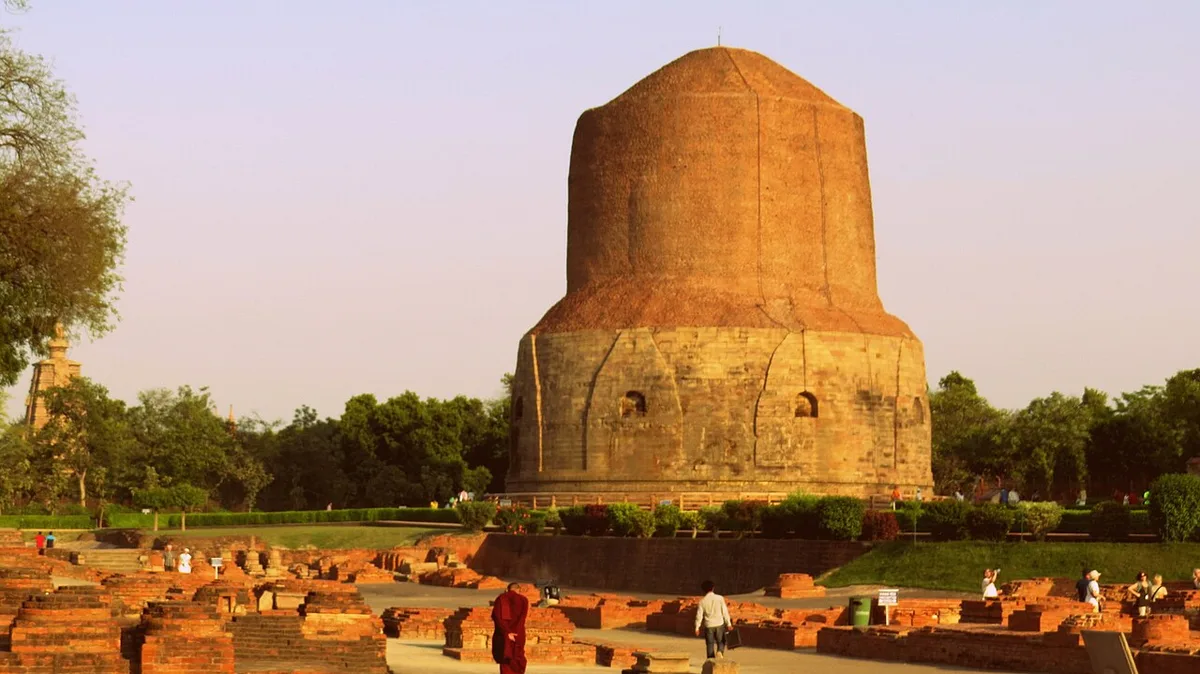
The costs are small and come, through the Ministry of Culture's Museums of India portal, from the ASI's own listing. The archaeological park — the excavated site — charges ₹25 for Indian visitors and ₹300 for foreign visitors. Across the road, the Archaeological Museum charges ₹5 for every visitor, with free entry for children below 15. The museum is worth far more than its price: it is the ASI's oldest site museum, established in 1910, and it holds the original Lion Capital of Ashoka — the sculpture that became India's national emblem — together with the celebrated Gupta-period image of the Buddha preaching. Allow an hour inside after the park.
Plan Sarnath around one line of the official listing: the museum's opening days run Sunday to Thursday and Saturday — it is closed on Fridays — and its hours are 9:00 am to 5:00 pm. So Sarnath belongs on your non-Friday morning, straight after the sunrise boat and breakfast. Around the ASI site, Sarnath's modern Buddhist temples — built by communities from the many countries the sermon's message reached — are free to enter and make a peaceful final loop.
FAQFrequently Asked Questions
Is darshan at Kashi Vishwanath really free?
Yes. The trust's official FAQ answers "Do I need to pay to enter in temple?" with "No, but special darshan costs Rs. 300 per person." General darshan through the corridor costs nothing; the ₹300 is the optional Sugam Darshan — a Shastri escorts you past the queue, with prasad and a free locker included. Foreign visitors with a passport use a separate ₹600 help-desk ticket, which also includes the escort.
What are the temple and darshan timings?
Per the trust's FAQ, the temple is open 3:00 am to 11:00 pm, and darshan runs 4:00–11:00 am, 12:20–7:00 pm and 8:30–9:00 pm, pausing for the four aartis: Mangla (3:00–4:00 am), Mid-Day Bhog (11:15 am–12:20 pm), Sapt Rishi (7:00–8:15 pm) and Night/Shringar (9:00–10:15 pm). Entry from the ghat side, through Gate No. 1 into the corridor, is allowed from 6:00 am to 9:00 pm.
How much does it cost to watch the Ganga aarti, and when does it start?
Watching from the steps of Dashashwamedh Ghat is free — a public ritual, with no ticket. The ceremony is timed to dusk, so the start moves with the season (earlier in winter, later in summer) and the organising trust publishes no fixed clock time; be in place well before sunset. Watching from a boat is the paid alternative, but boatmen are private operators with no official tariff — agree the price before boarding.
Can I take my phone or camera inside Kashi Vishwanath?
No. The trust's FAQ bars mobile phones and, in its words, "any electronic or non-electronic gadgets, pen etc." from the temple premises. Leave devices at your hotel or use the trust's free lockers — listed at Mandir Chauk, YSK-1, YSK-2, YSK-3 and the Help Desk. There is no dress code beyond wearing decent clothes.
How much is Sarnath, and when should I go?
On the ASI figures carried by the Ministry of Culture's Museums of India portal: the archaeological park is ₹25 for Indian visitors and ₹300 for foreign visitors; the museum is ₹5 for everyone, free below 15. The museum — home of the original Ashokan Lion Capital — is open 9:00 am to 5:00 pm and closed on Fridays, so put Sarnath on your non-Friday morning, after a sunrise boat ride.
Official references and checking status
Every changeable fact in this guide — darshan and aarti timings, the trust's ticket prices, the foreign-visitor process, the temple rules and Sarnath's fees and museum hours — was checked on 30 October 2026 against the official sources listed below; the accompanying sources file records which page supports which claim. Two honest limits: the Ganga aarti's start is set by dusk and the organising trust publishes no fixed clock time, so this guide gives the rule (be in place before sunset) rather than an invented hour; and the ghats' boats are a private market with no official tariff in existence, so no boat price is quoted. Confirm current prices and timings before you travel.
- Shri Kashi Vishwanath Temple Trust (official) — booking list: Sugam Darshan, aarti and Rudrabhishek prices
- Shri Kashi Vishwanath Temple Trust (official) — FAQ: temple and darshan timings, free darshan, gates, lockers and rules
- Shri Kashi Vishwanath Temple Trust (official) — foreign tourist ticket booking process
- Museums of India, Ministry of Culture — Archaeological Museum Sarnath: park and museum entry fees, museum hours and opening days
Photos: rowing boats at sunrise on the Ganga at Varanasi, by Schwiki, via Wikimedia Commons, licensed under CC BY-SA 4.0; the Dhamek Stupa at Sarnath above the excavated monastery ruins, by Preeti Prajapati, via Wikimedia Commons, licensed under CC BY-SA 4.0. Photographers keep their copyright; the licences require this credit.
General information only. This guide is based on official sources publicly available and checked on the date shown on this page. Visa rules change, and consular and USCIS officers decide every case on its own facts — nothing here is a confirmation or a guarantee for your individual case, and this is not legal advice. Always confirm the current requirement on the official page linked in this guide before you act, and consider a qualified immigration attorney for your specific situation.