
Researched & checked — 30 Oct 2026
Udaipur: The City Palace, Lake Pichola and What Entry Really Costs
NEW Published 30 October 2026
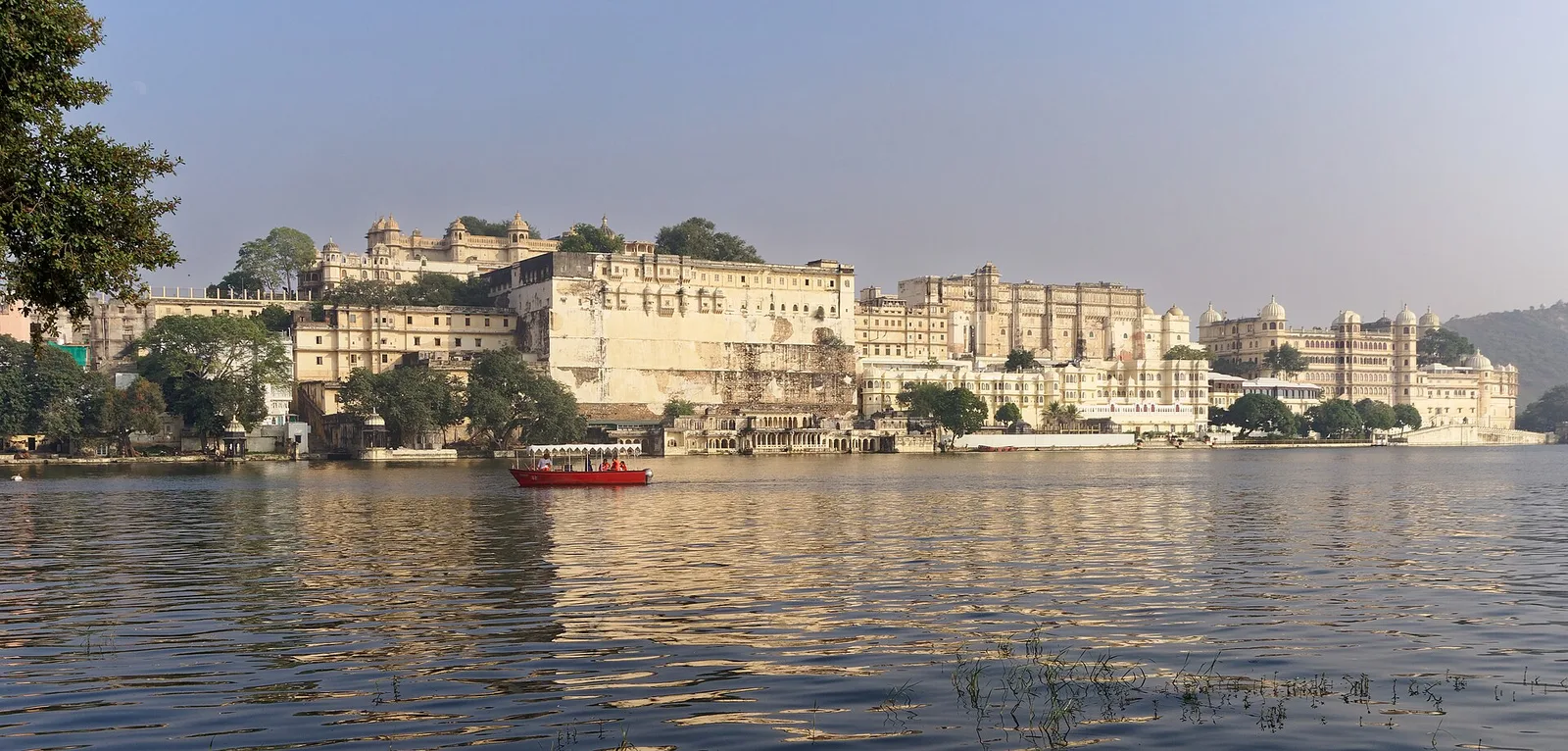
Udaipur's prices come in three kinds: the palace's own, published to the rupee by the House of Mewar's HRH Group; the state-run sights', which no official channel currently publishes in readable form — this guide explains why it prints none; and the lakefront's, which is free.
The City Palace Museum is open 9:00 am to 9:00 pm and charges ₹400 per adult and ₹150 per child (5–18), camera included — the same price for Indian and foreign visitors; there is no separate foreigner tariff. Under-5s and handicapped visitors enter free; senior citizens (60+, with ID) and defence and police personnel with family pay ₹250; an optional audio guide is ₹200. The Crystal Gallery inside the palace complex is ₹500 adult / ₹300 child, 9:00 am–6:30 pm, photography prohibited. The palace's own boat excursion to Jag Mandir island from Rameshwar Ghat jetty is ₹600 adult / ₹300 child on regular sailings and ₹800 / ₹450 for the sunset sailing, on a published rate card. For Saheliyon ki Bari and the Monsoon Palace (Sajjangarh), this guide prints no price: Rajasthan's archaeology department site was unreachable and the state booking portal shows no readable price list — Section 05 explains, and tells you where the real figure will be. The Fateh Sagar and Pichola lakefronts are free public promenades.
SECTION 01Three Kinds of Prices in One City
Udaipur's sightseeing money sorts into three systems, and knowing which system a sight belongs to tells you how much to trust any number quoted for it. The first system is the House of Mewar's own: the City Palace Museum, the Crystal Gallery and the palace's boats are run and priced by the HRH Group, whose website publishes entry fees, timings and a dated rate card for the boats. Figures from that system — most of this guide — can be checked to the rupee before you leave home.
The second system is the Rajasthan state's: Saheliyon ki Bari and the Monsoon Palace are state-run monuments, priced through the state's archaeology department and its online booking portal. As Section 05 sets out, neither channel currently yields a readable official price — the department's website could not be reached at all when this guide was researched, and the booking portal displays no price list in text — so this guide prints no state-monument figures rather than launder a blog's guess into a fact. The third system is no system: the lakeside itself — the promenades, ghats and waterfront roads of Pichola and Fateh Sagar — is public city space with no ticket at all.
A workable Udaipur day follows from that sorting. Give the palace complex the long morning (museum, then Crystal Gallery), take the boat in the late afternoon when the light turns, and use the free lakefront for the evening. Add a state sight once you have checked its live price on the state's portal or at its gate. The sections below take each system in turn.
SECTION 02The City Palace Museum: One Price for Everyone
The palace rises in a long granite-and-marble facade above Lake Pichola, built up by successive Maharanas over nearly four centuries. Two of its palaces — the Mardana Mahal (the palace for the royal men) and the Zenana Mahal (the palace for the royal ladies) — have been preserved as The City Palace Museum since 1969, and it is the museum, not the whole complex, that your ticket buys: armoury, textile and painting galleries, royal courtyards, and the lake views from the upper floors.
The museum's published terms, from the HRH Group's official page, are refreshingly uncomplicated. Timings: 9:00 am to 9:00 pm — an unusually long day for an Indian palace museum, which makes a late, quiet visit possible. Entry: ₹400 per adult (age 18 to 60), ₹150 per child (age 5 to 18) — and both prices are stated "inclusive of camera", so the camera fee that catches visitors out at so many Indian monuments does not exist here. There is, notably, no Indian/foreigner price split: the list names one adult price, and every visitor pays it. Concessions, all with the camera included: ₹250 for senior citizens above 60 (with valid ID) and for Indian defence services, paramilitary and police personnel with spouse and children; ₹150 per person for student groups (with valid ID); and free entry for children below 5 and for handicapped visitors.
Two optional extras are also published. An audio guide service is available at ₹200, in English, German, French and Spanish. And groups bringing their own licensed guide pay a temporary guide/escort permission fee of ₹600 — a charge on the guide's access, not on you as an individual visitor. An evening sound-and-light show also runs at the palace; its prices are not displayed in readable form on HRH's pages, so none are printed here — check on the day. What the museum ticket does not include is the Crystal Gallery, which is ticketed separately, next.
SECTION 03The Crystal Gallery: A Separate Ticket Inside the Palace
Housed in the Fateh Prakash Palace within the complex, the Crystal Gallery is the palace's strangest treasure: what HRH describes as probably the single largest private collection of crystal under one roof. Its origin is a single order — in 1877, Maharana Sajjan Singh ordered the collection from F. & C. Osler of Birmingham, the Victorian era's foremost makers of monumental cut glass — and its centrepiece is famous in its own right: the only crystal bed in the world, among crystal furniture, tableware and ornaments carrying the Mewar coat of arms.
The gallery's published terms are separate from the museum's and stricter. Timings: 9:00 am to 6:30 pm. Entry: ₹500 per adult and ₹300 per child — again, one list with no nationality split. And photography is strictly prohibited in the Crystal Gallery, the opposite of the museum's camera-included ticket, so the visit is a look-only experience paced by the gallery's audio narration of how the crystal was ordered and shipped. Decide before you queue whether a no-photographs gallery is worth ₹500 to you; for lovers of decorative art and royal eccentricity, it is the palace's most memorable room.
SECTION 04Lake Pichola by Boat: The Jag Mandir Excursion
The boat ride is Udaipur's signature hour, and it, too, is published. The lake itself is older than the city: HRH's account describes a 14th-century lake, extended in the 16th century by Rana Udai Singh II when he founded Udaipur beside it. The palace's boats leave from the Rameshwar Ghat jetty inside the City Palace complex and run the Jagmandir Island Palace Excursion — a circuit of the lake with a stop at Jag Mandir, the 17th-century island palace where, HRH's telling notes, Prince Khurram — the future emperor Shah Jahan — once took refuge.
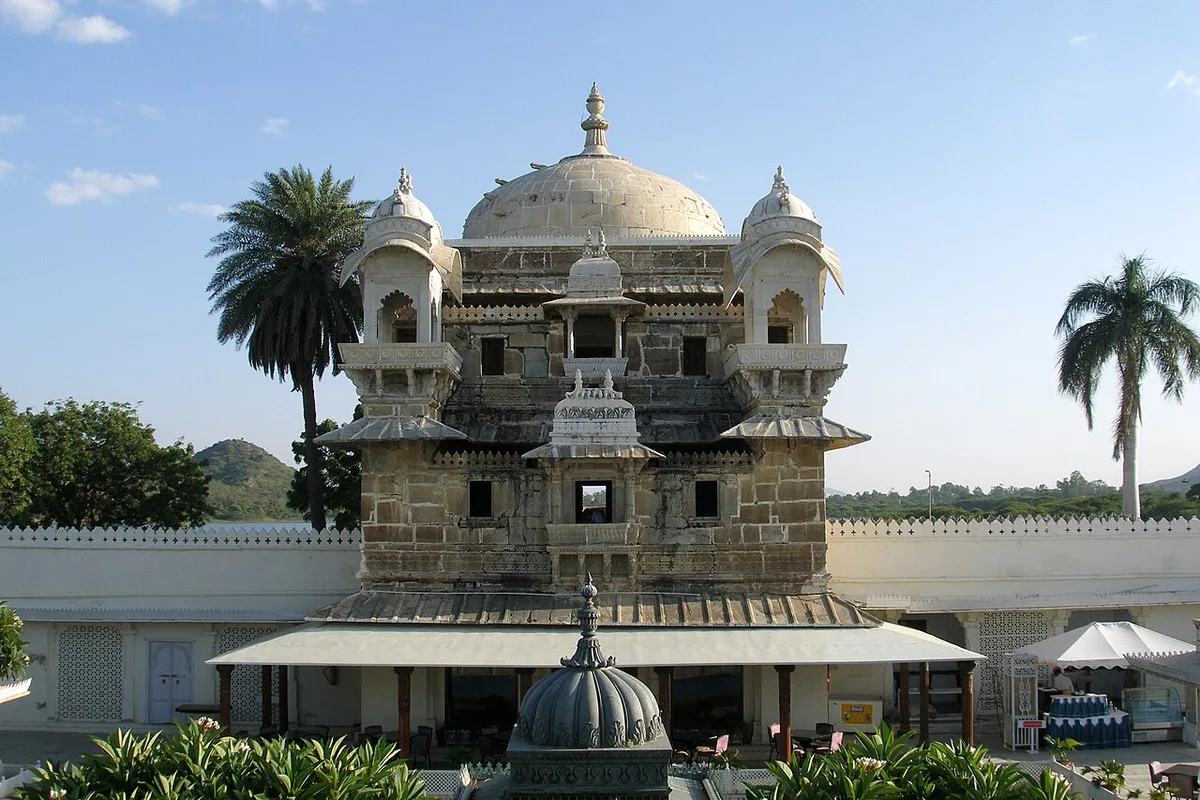
The route is a floating version of the city's history: the boat passes the lakeside facade of the City Palace, the bathing ghats, Bagore ki Haveli and the triple-arched Tripolia at Gangaur Ghat, the small island structures of Mohan Mandir and Arsi Vilas, and the second island palace, Jag Niwas — now the Lake Palace hotel — with the Monsoon Palace visible on its hill beyond. At Jag Mandir you land and wander: gardens, the Gol Mahal, and an exhibition on the island palace's building history.
The prices are on HRH's published rate card for the excursion (the current card is marked effective 1 April 2025 to 31 March 2026, rates inclusive of taxes):
- Regular excursion: ₹600 per adult, ₹300 per child
- Sunset excursion: ₹800 per adult, ₹450 per child
The accompanying timetable runs on the palace's own summer/winter split: regular boats sail 10:00 am to 3:00 pm in summer and 10:00 am to 2:00 pm in winter; the sunset boat runs until 6:00 pm in summer and 5:00 pm in winter — in practice, one sunset sailing timed to the light, so in winter your boat day ends early and the palace museum's long hours (to 9:00 pm) become the evening plan. The rate card carries the standard warning that management may change rates without notice; treat the figures as the published list to check against, not a guarantee. Boats also leave from public jetties outside the palace (the Lal Ghat area) under private operators: no official tariff governs those, so if you ride from there, agree the price, the route and whether Jag Mandir landing is included before you board.
SECTION 05The State-Run Sights: Why This Guide Prints No Prices for Them
Two of Udaipur's classic sights sit outside the palace system. Saheliyon ki Bari, the "garden of the maids of honour", is the city's beloved fountain garden of pools, lotus leaves and marble pavilions, made for the royal ladies' attendants. Sajjangarh, the Monsoon Palace, is the white palace on the high hill west of the city — built by Maharana Sajjan Singh in the late 19th century, in HRH's phrase, "to enjoy the beautiful monsoon season of the lake city" — and now the city's great sunset viewpoint, looking down over Fateh Sagar and the old city. Both are run by the Rajasthan state, through its archaeology and monuments machinery.
Here is the honest position, stated plainly because this site's rule is that a figure appears only if it was read in an official source. When this guide was researched (30 October 2026), the Rajasthan archaeology department's website could not be reached at all — the same failure this site met when researching Jaipur's state monuments — and the state's online monument-booking portal (OBMS) displays no readable price list: it is a booking application whose prices appear, if at all, only inside a transaction. Meanwhile the figures circulating on travel websites for these two sights disagree with each other severalfold, which is exactly what unverified numbers do. So this guide prints no entry price for Saheliyon ki Bari or Sajjangarh, rather than present a copied guess as the cost.
What you can rely on instead: the real current figure will be the one shown on the OBMS portal when you book, or on the board at the gate — check there, on the day, and let every website (this one included) yield to it. The sights themselves need no price to recommend the trip: go to Saheliyon ki Bari in the cool of the morning, and time Sajjangarh for the last hour of light, allowing for the climb up the hill road and the crowd with the same idea.
SECTION 06The Free City: Fateh Sagar and the Lakefront
End where Udaipur spends its own evenings. North of Pichola, Fateh Sagar Lake is ringed by a promenade drive where the city walks, cycles, sips coffee from stalls and watches the sun go down behind the Aravallis. There is no gate and no ticket: the lakefront is public street and promenade, and the same is true of the Pichola waterfront below the palace, where the ghats and lanes of the old city meet the water. After a day of palace tickets, the city's best sunset seat — any stretch of the Fateh Sagar parapet — costs exactly nothing.
One season note, drawn from the palace's own published timetable rather than a brochure: HRH's boating day itself changes with the year — longer in summer, with the sunset boat out until 6:00 pm, and compressed in winter, when the last sailing is 5:00 pm and the cold, clear evenings belong to the promenade and the lamplit palace instead. Plan winter days front-loaded (palace at opening, boat by mid-afternoon, lakefront at dusk) and summer days the other way round, with the museum's galleries held back for the hot middle hours. Either way, Udaipur's arithmetic is kind: one ₹400 museum ticket, one boat ride, and a free waterfront will carry the whole visit.
FAQFrequently Asked Questions
How much does a day at the City Palace really cost?
On the HRH Group's published lists checked 30 October 2026: museum entry ₹400 per adult / ₹150 per child (5–18), camera included; Crystal Gallery ₹500 / ₹300 if you add it; the Jag Mandir boat excursion ₹600 / ₹300 regular or ₹800 / ₹450 at sunset; an optional museum audio guide ₹200. So a full adult day — museum, gallery and sunset boat — is ₹1,700, and museum plus regular boat alone is ₹1,000. Under-5s enter the museum free, and the lakefront costs nothing.
Do foreign visitors pay more at the City Palace?
No. Unlike ASI monuments, which charge Indian and foreign visitors different fees, the HRH Group's published lists for the City Palace Museum, the Crystal Gallery and the boat excursion each name a single adult price that applies to everyone. The museum's concessions (₹250 for senior citizens and service personnel) are category-based, not nationality-based.
Why does this guide give no price for Saheliyon ki Bari or the Monsoon Palace?
Because no official figure could be read. Both are Rajasthan state monuments; the state archaeology department's website was unreachable throughout this research (the same failure met in Jaipur), and the state's OBMS booking portal shows no readable price list outside a transaction, while unofficial websites quote conflicting amounts. This site prints only figures read in official sources, so check the OBMS portal or the gate board for the live price — it is a modest state-monument ticket.
What are the boat timings, and which sailing should I take?
From HRH's published timetable for the Jagmandir Island Palace Excursion (Rameshwar Ghat jetty): regular boats run 10:00 am–3:00 pm in summer and 10:00 am–2:00 pm in winter; the sunset sailing runs until 6:00 pm in summer and 5:00 pm in winter. Prices on the current rate card are ₹600 adult / ₹300 child regular and ₹800 / ₹450 sunset. The sunset sailing is the one to build the day around; in winter it leaves early, so do the museum first.
Can I take photographs inside the palace?
In the City Palace Museum, yes — the published entry prices are expressly "inclusive of camera", so your phone or camera is covered by the ticket. In the Crystal Gallery, no: photography there is strictly prohibited, per the gallery's official page. Film and television crews need written permission and special fees, which is a different matter from a visitor's camera.
Official references and checking status
Every changeable fact about the palace system in this guide — museum and gallery fees and timings, concessions, boat prices and the boat timetable — was checked on 30 October 2026 against the HRH Group's official pages listed below; the accompanying sources file records which page supports which claim. Two honest limits: the boat prices come from HRH's rate card marked effective 1 April 2025 to 31 March 2026, which itself reserves the right to change rates without notice; and no prices are printed for the state-run sights or the sound-and-light show, because no official page displays them in readable form (Sections 02 and 05 give the reasons). One caution: the palace's official information is on hrhhotels.com; similarly named websites are unofficial travel blogs, however official they look. Confirm current prices and timings before you travel.
- HRH Group of Hotels (House of Mewar, official) — The City Palace Museum: timings, entry fees, concessions, audio guide
- HRH Group of Hotels (official) — Boat rides and charters: Jagmandir Island Palace Excursion rate card and timetable
- HRH Group of Hotels (official) — Crystal Gallery: timings, entry fees, photography rule
Photos: the City Palace facade across Lake Pichola with a boat on the water, by Jakub Hałun, via Wikimedia Commons, licensed under CC BY-SA 4.0; the Gol Mahal building on Jag Mandir island, by Vyacheslav Argenberg, via Wikimedia Commons, licensed under CC BY 4.0. Photographers keep their copyright; the licences require this credit.
General information only. This guide is based on official sources publicly available and checked on the date shown on this page. Visa rules change, and consular and USCIS officers decide every case on its own facts — nothing here is a confirmation or a guarantee for your individual case, and this is not legal advice. Always confirm the current requirement on the official page linked in this guide before you act, and consider a qualified immigration attorney for your specific situation.