
Researched & checked — 3 Nov 2026
Manali: Old Manali, Solang Valley and the Rohtang Permit Rules, Planned on Official Facts
NEW Published 3 November 2026
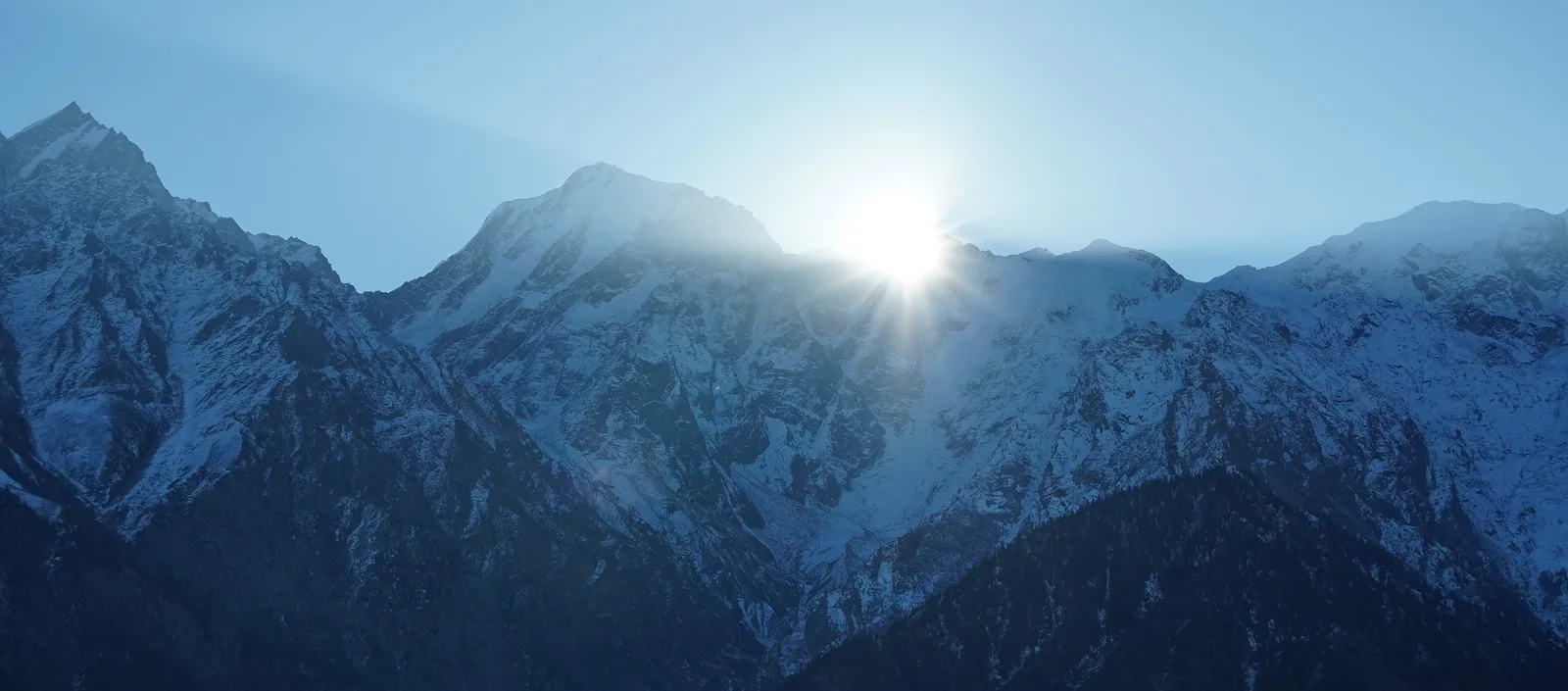
Manali rewards the traveller who reads the small print: a temple the state tourism department dates to the 16th century, a meadow 13 km away that changes from adventure ground to ski arena with the seasons, a 9.02 km tunnel that keeps Lahaul open all year, and a pass that admits only 1,200 tourist vehicles a day — by online permit, under rules the district administration publishes itself.
Manali sits near the head of the Beas valley, 45 km from Kullu. In town: the Mall Road for strolling, shopping and eating, and the Hidimba Devi Temple — a four-tier pagoda-style wood-and-stone temple the tourism department dates to the 16th century, 2.5 km from the centre. Solang Valley, 13 km away, is the activity ground in summer and a ski arena in winter. The Atal Tunnel (9.02 km) runs from a south portal 25 km from Manali to Sissu in Lahaul and works all year. Rohtang Pass, 51 km away, is different: tourist vehicles need an online permit — daily quota 800 petrol + 400 diesel, permit fee ₹500 plus a ₹50 congestion charge for a car — and heavy snow closes the pass from about late November to May.
SECTION 01Manali Itself: The Beas Valley, the Mall and Old Manali
Himachal Tourism introduces Manali as a township nestled in the Beas River valley — cool climate, snow-capped mountains, a place travellers converge on in two broad seasons: in summer from April to July, and in autumn to early winter from October to December. The district administration adds the geography that shapes every itinerary: Manali stands near the end of the valley, 45 km from Kullu, at the start of the old route over the Rohtang and Baralacha passes towards Lahaul and Ladakh, with a divergent road to Spiti. The town is both destination and mountain gateway, which is why its day trips split into "valley sights" and "high road" days.
The town's name carries its oldest story. The district's account records the legend that Manu, after the great deluge, first stepped onto the earth here, and that Manali is the changed form of "Manu-Alaya", the abode of Manu; the temple dedicated to Manu still stands in the old village — the quarter across the river now called Old Manali, whose lanes and traditional houses contrast with the commercial centre. Himachal Tourism counts the Manu and Hidimba temples at the top of the town's spiritual sights.
The centre itself is the Mall. Himachal Tourism describes it as the place for a leisurely stroll, shopping and eateries and cafes, with Himachali handloom and handicraft among the goods on sale — the town's social strip, where the day naturally ends. Plan the town on foot: the Mall, the Manu temple in Old Manali and the Hidimba temple (Section 02) all sit within the town's walking web, and the department's distance table ladders the near sights — Vashisht temple 2 km, Hidimba Devi Temple 2.5 km. One official warning governs packing: the department cautions that the weather here can change very abruptly, and that thunderstorms and sudden snowfalls cause a sharp drop in temperature.
SECTION 02Hidimba Devi Temple: The Pagoda in the Deodars
Manali's presiding deity has the town's most recognisable building. Himachal Tourism's account — the one this guide follows — calls it the Dhungri Temple, standing close to the town centre and the Mall Road (the department's table: 2.5 km). It is built on a strong stone foundation, and its shikhara rises as high as the deodar trees surrounding it, in a four-tier pagoda-style structure of wood and stone. Inside is a cave shrine believed to carry the foot imprints of Hidimba Devi, and the department records the fact that frames the visit: Manali is perhaps the only place in India where she is worshipped as a goddess.
On dating, this guide prints only what the official text supports: the tourism department dates the temple to the 16th century. The precise year and royal builder named on almost every unofficial page appear in no official text read, so they are not asserted here (flagged again in the references section). The official record needs no help: a 16th-century wooden pagoda temple, still the town's presiding shrine, in a deodar grove near the Mall.
Practical shape of the visit: go on foot from the Mall side, and combine the temple with the Manu temple in Old Manali — the town's two great shrines in one unhurried half-day. This guide prints no opening hours or entry fee for the temple: none is published in the official material read.
SECTION 03Solang Valley: One Meadow, Two Seasons
Thirteen kilometres from Manali, the road towards Rohtang opens into the valley's activity ground. Himachal Tourism describes Solang Nullah as an open meadow running along a slope, surrounded by deodar-rich forest in the midst of high peaks — one of the most beautiful spots on the outskirts of the township — and states that it bustles with tourism activity in both summer and winter.
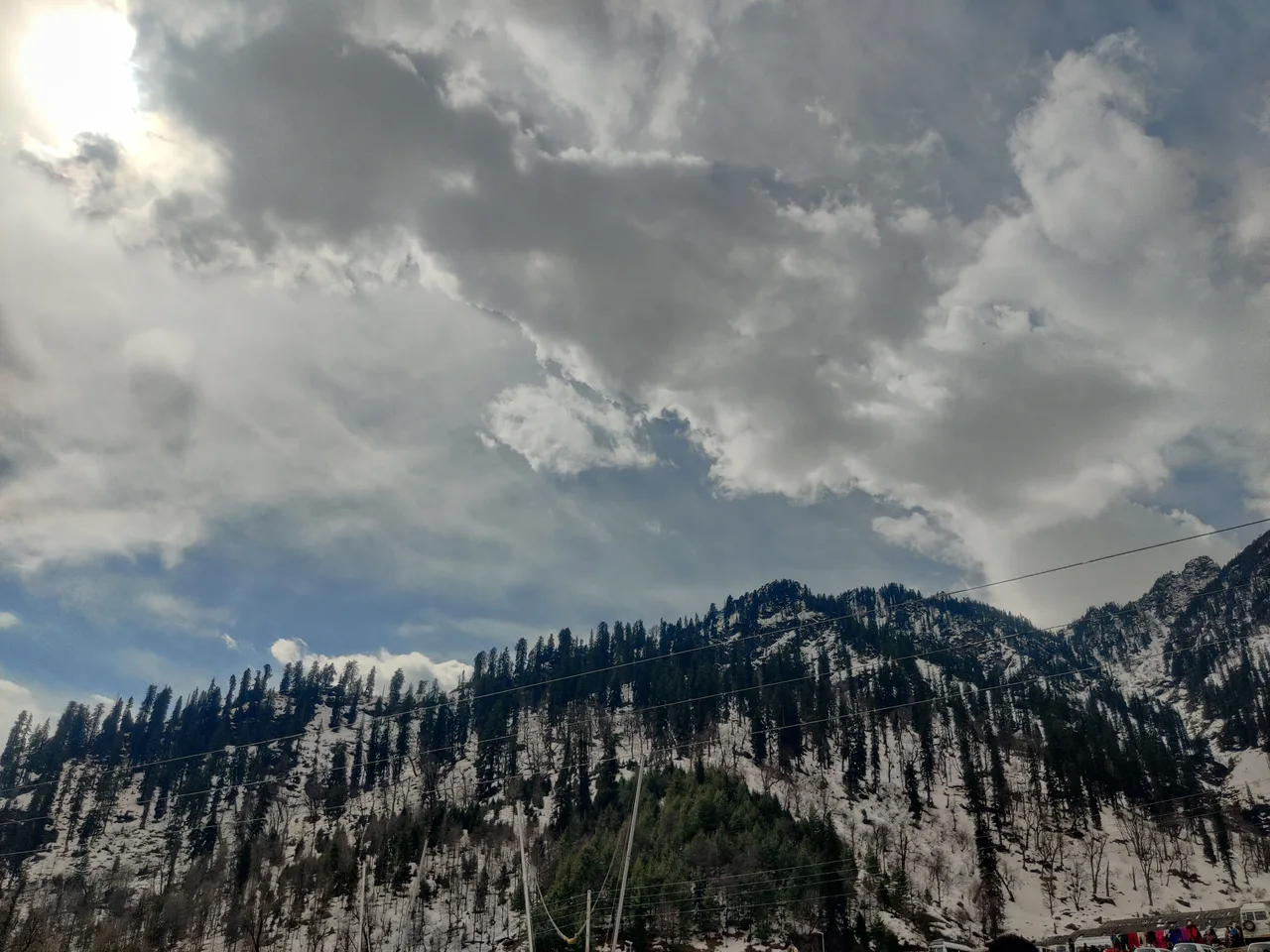
The department's own list of what happens here is long: quad-bike rides, zorbing, paragliding and a gondola (ropeway) ride, rock climbing, ballooning, camping and mountaineering. Then the season turns: in winter, the snow-packed slopes become a winter sports arena for skiing, where even state and national level ski championships are regularly conducted. Solang also serves as a base camp for mountaineering expeditions to Anjani Mahadev, Hanuman Tibba and the Patalsu peak — working mountain country, not a theme park.
On prices, the guide's rule bites. The activities and ropeway are run by operators on the ground; no official tariff for any Solang activity could be read for this guide, and unofficial prices vary widely and date quickly. So no activity price is printed here — agree the price for each activity before you start it. What is fixed is the geography: Solang lies on the Rohtang road, 13 km out, and pairs naturally with the Atal Tunnel's south portal further up the same road (Section 04) — but not with Rohtang itself on a permit-less day (Section 05).
SECTION 04The Atal Tunnel: Nine Kilometres to a Different Valley
Above Solang, the road divides into two Manali futures. The newer one runs straight through the mountain. The Border Roads Organisation, which built it, states the essentials: the Atal Tunnel is 9.02 km long — the longest tunnel above 10,000 feet (3,048 m) in the world — a single-tube, two-lane, horseshoe-shaped tunnel driven under the Rohtang Pass, inaugurated on 3 October 2020. The South Portal stands 25 km from Manali at 3,060 m; the North Portal is near the village of Teling, at Sissu in the Lahaul Valley, at 3,071 m — against the pass's own 3,978 m.
What the tunnel changes is Lahaul's calendar. The BRO records that it provides all-year connectivity between Manali and the Lahaul and Spiti valley, and reduces the distance between Manali and Leh by 46 km. Where the pass road sleeps under snow for roughly half the year, the tunnel keeps Sissu within a day trip's reach in every month, weather at the portals permitting — Manali's winter day out: the same departure, a different valley.
Two clarifications, because the two roads are constantly confused. First, the Rohtang permit system (Section 05) governs the pass road for tourism; the tunnel route does not cross the pass, and driving to Sissu through the tunnel is a separate journey from a permitted Rohtang trip. Second, "all-year" is the BRO's description of the connection, not a promise about any given day: heavy snowfall can still restrict the approach roads and portals temporarily, and winter movement runs on the district administration's current orders. Check conditions before a winter tunnel trip.
SECTION 05Rohtang Pass: The Permit Rules, Read from the Portal
The older road is still the famous one. Himachal Tourism puts Rohtang Pass 51 km from Manali and describes what it is for: it gives summer access to the land of Lahaul and Spiti. The same page states the season without romance: heavy snow closes the pass in late November, and after much effort it is opened again six months later, by May.
The mechanism, as Himachal Tourism states it: a special permit for petrol and diesel vehicles, issued by the designated authority at Manali, is required to visit Rohtang Pass for tourism purposes, applied for online on the District Administration Kullu's portal — rohtangpermits.nic.in, the address the department itself publishes. The portal's instructions fill in the operating rules. The tourism permit is valid for one day only (to and fro), issued against a daily quota set by the National Green Tribunal and the district administration: 800 petrol and 400 diesel vehicles, released in two windows — 10:00 hrs (400 petrol and 200 diesel) and 16:00 hrs (200 diesel and 400 petrol). In any week, Tuesday to Monday, only 3 permits can be obtained for each vehicle. A printout is compulsory, and if your details do not match your proofs at the barrier, you will not be allowed to cross.
The documents and the money, both from the portal. Applying requires a valid ID proof, a valid Pollution Under Check (PUC) certificate, and the vehicle's registration date — the vehicle must not be more than 10 years old. The fee table reads: cars and jeeps — permit fee ₹500, congestion charge ₹50; MUVs — ₹500 and ₹50; buses and heavy vehicles — ₹500 and ₹100. The congestion charge applies to all vehicles crossing Gulaba Bridge, for one day (to and fro) — including vehicles only passing beyond Rohtang, which pay it alone (₹50 light vehicles, ₹100 goods vehicles; at most 2 per vehicle per week). Self-drivers have a narrower channel: the special permit is issued once to one vehicle in the entire season, with only 60 petrol and 40 diesel vehicles permitted daily. And one day is simply closed: no vehicles are allowed on Tuesdays, the maintenance day.
Read those numbers as a planning discipline: the release windows empty fast in peak season, the 10-year rule disqualifies older taxis, and the Tuesday closure breaks itineraries built by travellers who never saw it. Book the permit before you finalise the day's plan, carry the printout and the same ID and PUC you applied with, and hold a Solang-and-tunnel day (Sections 03–04) as the alternative if the quota beats you. If any detail here disagrees with the portal on the day you apply, the portal wins.
SECTION 06Vashisht and Jogini Falls: The Near Bank of the Beas
Not every Manali sight needs a vehicle or a permit. Across the Beas from the town centre — Himachal Tourism's table gives the Vashisht temple as 2 km from Manali — stands the sacred village the department describes, easily reached by a paved path from the Manali market side. Its temple is dedicated to the sage Vashisht, and the village holds the feature travellers have soaked in for generations: a hot water spring, with a bath — the department's plain description of the sulphur spring that still draws a daily crowd.
From Vashisht, the path continues uphill to Jogini Falls, where the village stream drops over the rock above the Beas — the standard onward walk from the temple, and the natural second half of a Vashisht morning. An honesty note: the falls are described here without distances or timings, because no official page read for this guide publishes figures for the Jogini path, and unofficial numbers are not consistent enough to print. Temple and hot springs first, the climb while the day is young, and the paved path back down by afternoon: the gentlest full morning Manali offers.
SECTION 07Getting There, and When to Come
Three routes converge on Manali, and the district administration states each plainly. By air, the nearest airport is Kullu–Manali Airport at Bhuntar, 50 km from Manali, with flights to and from Delhi, Chandigarh and Jubbarhatti (Shimla); from Delhi the flight takes about an hour and a half, and taxis and buses wait at Bhuntar for the valley road up. By rail, there is no station at Manali: the nearest is Joginder Nagar, 160 km away on a narrow-gauge track, with Kiratpur at 240 km the other railhead the district names — why almost everyone arrives by road. By road, Manali is well connected with Delhi, Chandigarh, Dehradun, Haridwar, Shimla, Dharamshala and Chamba (Himachal Tourism), with deluxe, semi-deluxe, AC and Volvo buses plying regularly; distances are 300 km from Chandigarh and 530 km from Delhi.
HRTC's published booking rules are worth attention, because the overnight bus from Delhi or Chandigarh is Manali's real arrival gate: tickets can be booked online, through its apps or at counters up to 60 days in advance; registration is not mandatory, as guest booking is allowed; e-tickets carry a 1.5% service charge, non-refundable on cancellation, while counter bookings carry no service charge; children under 5 travel free without a seat and children aged 5 to 12 at half fare.
When to come is two questions wearing one coat. For the town and Solang's green season, Himachal Tourism's convergence windows — April to July, and October to December — are the department's own summary. For Rohtang, the window is narrower: the pass is a late-spring-to-late-autumn road, closed by heavy snow from about late November until reopened by May, and its exact opening and closing each year are events, announced as snow clearance and district orders settle them — never a date to book around months ahead. For snow in the town itself: snowfall is weather, not a timetable. Winter also brings an order-by-order road regime — in deep winter, movement beyond the valley's checkpoints runs on current district orders (4×4 windows and set timings have been ordered in past Decembers) — so a winter trip is planned around the administration's word that week.
FAQFrequently Asked Questions
How do I get a Rohtang Pass permit, and what does it cost?
Apply online on the District Administration Kullu's portal — rohtangpermits.nic.in, the address Himachal Tourism publishes. The tourism permit is valid for one day only (to and fro), against a daily quota of 800 petrol and 400 diesel vehicles, released at 10:00 hrs and 16:00 hrs. Fees: permit fee ₹500 for every vehicle class, plus congestion of ₹50 for cars, jeeps and MUVs, or ₹100 for buses and heavy vehicles. You need a valid ID proof, a valid PUC certificate, and a vehicle no more than 10 years old; at most 3 permits per vehicle per week (Tuesday–Monday); a printout is compulsory; and no vehicles are allowed on Tuesdays. If the portal's terms on the day you apply differ from anything here, follow the portal.
Do I need a Rohtang permit to drive through the Atal Tunnel to Sissu?
The permit system described in this guide governs tourist vehicles visiting Rohtang Pass on the pass road — the permit is, in Himachal Tourism's words, required "to visit Rohtang Pass for tourism purposes". The Atal Tunnel is a different road: it runs under the pass from its South Portal 25 km from Manali to Sissu in Lahaul, and the BRO describes it as providing all-year connectivity to the Lahaul and Spiti valley. A Sissu day trip is therefore a separate journey from a permitted Rohtang trip — though winter conditions can still restrict the tunnel's approach roads, so check the district's current position in the snow season.
When is Rohtang Pass open, and will I see snow there?
Himachal Tourism's summary: heavy snow closes the pass in late November, and after much effort it is opened again six months later, by May — so the working season is roughly late spring to late autumn, with exact dates set each year by snow clearance and district order. Inside the season, the high country holds snowfields long after the road opens; but treat any specific promise — an opening date months ahead, guaranteed snow at a given spot — as unofficial unless the district administration or the BRO has stated it. The Tuesday closure and the daily quota apply throughout.
What is the best way to reach Manali from Delhi or Chandigarh?
For most travellers, the road: Himachal Tourism lists Manali as well connected with Delhi (530 km) and Chandigarh (300 km), with deluxe, semi-deluxe, AC and Volvo buses plying regularly; HRTC lets you book up to 60 days ahead, as a guest, with a 1.5% e-ticket service charge and no charge at counters. The air shortcut lands you only part-way: Bhuntar airport is 50 km from Manali, with flights from Delhi, Chandigarh and Jubbarhatti (Shimla) per the district administration, and a taxi or bus ride up the valley completes the trip. Rail is the slow option — Joginder Nagar (160 km), narrow-gauge; Kiratpur at 240 km.
Why are there no prices here for Solang Valley's ropeway and adventure activities?
Because no official tariff could be read. Himachal Tourism lists what Solang offers — quad-bike rides, zorbing, paragliding, the gondola ropeway, rock climbing, ballooning, camping and mountaineering, and skiing in winter — but the activities are sold by operators on the ground, and unofficial prices differ and date quickly. Rather than print a figure that may be wrong by the time you stand in the meadow, this guide prints none.
Official references and checking status
Checked on 3 November 2026 against the official sources listed below; the accompanying sources file maps each claim to its page. Four limits are flagged honestly. First, the Hidimba Temple is dated only as the tourism department dates it — to the 16th century; the exact year and royal builder repeated across unofficial pages appear in no official text read and are not asserted. Second, no Solang activity or ropeway price is printed: the activities are operator-sold, Himachal Tourism publishes no tariff, and unofficial figures conflict and date quickly. Third, the permit portal's own text has stated different advance-application windows in different seasons (two days in one published version, six in another), so no window is asserted. Fourth, winter movement on the high roads runs on the district administration's current orders; no standing winter timetable is asserted, and the claim that the permit portal has moved to a new address could not be confirmed on official text — the address printed is the one Himachal Tourism itself publishes. Confirm current prices, permit terms and road status on the official sites before you travel.
- Himachal Tourism (official) — Manali: the Mall, Hidimba temple, Solang Nullah, Rohtang, distances, access and seasons
- District Administration Kullu (official) — Manali: the Manu legend, and how to reach by air, rail and road
- District Administration Kullu (official) — Rohtang Pass permit portal: instructions, quotas, mandatory documents and fee table
- Border Roads Organisation (official) — Atal Tunnel: length, portals, altitudes and all-year connectivity
- HRTC (official) — booking FAQ: the 60-day window, guest booking, charges and child fares
Photos: Sunrise breaking over the snow peaks above Manali, by Muhammed Jazeel, via the WordPress Photo Directory, released under CC0; snow-covered slopes above Solang Valley, by Helly Patel, via the WordPress Photo Directory, released under CC0. Both photographs were released into the public domain by their makers; the credits are given as a courtesy.
General information only. This guide is based on official sources publicly available and checked on the date shown on this page. Visa rules change, and consular and USCIS officers decide every case on its own facts — nothing here is a confirmation or a guarantee for your individual case, and this is not legal advice. Always confirm the current requirement on the official page linked in this guide before you act, and consider a qualified immigration attorney for your specific situation.