
Researched & checked — 30 Oct 2026
Srinagar and Dal Lake: The Shikara Rate System, Mughal Gardens and the Houseboat Decision
NEW Published 30 October 2026
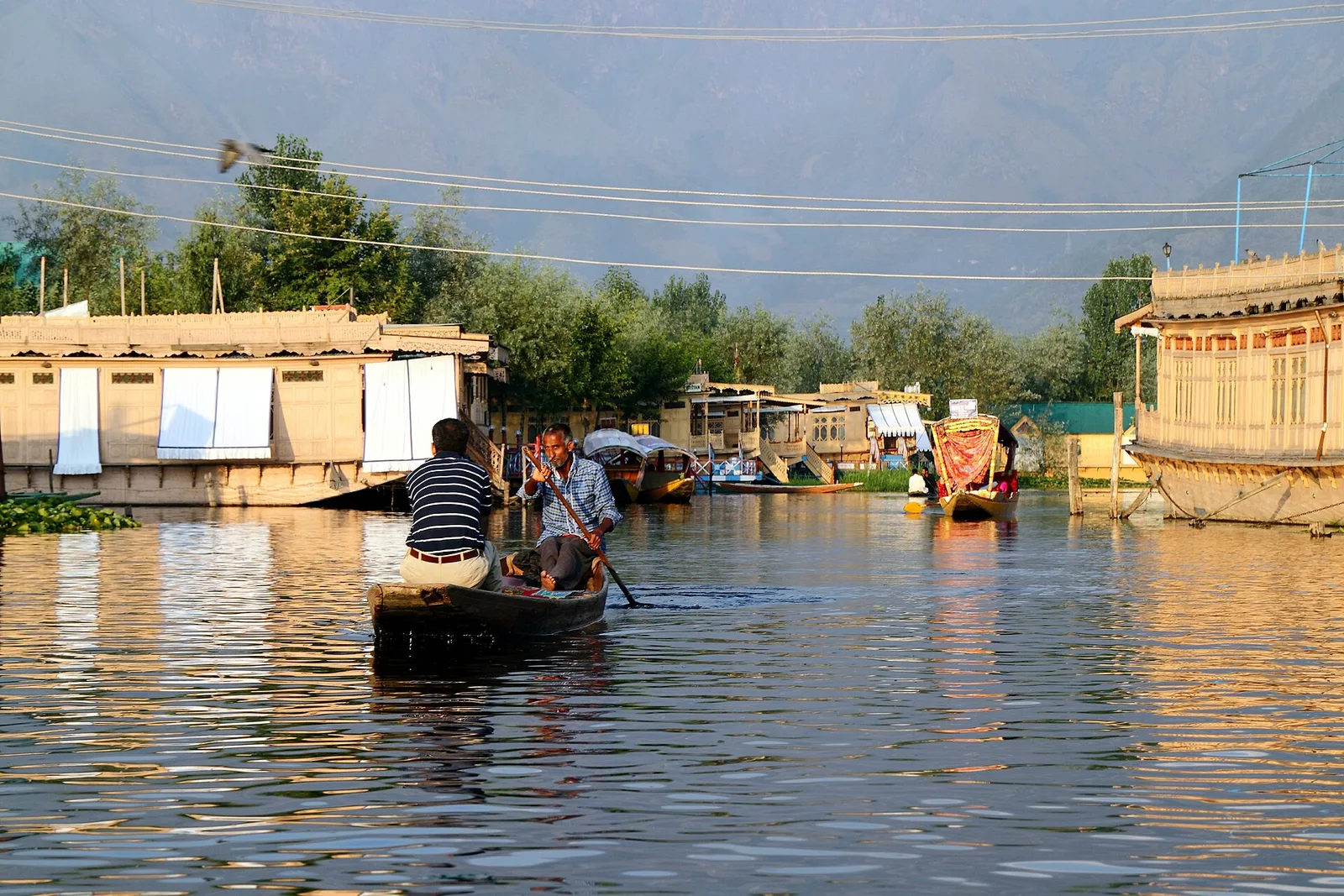
How Srinagar's three set-pieces work in practice: the government-notified shikara rate card and how to use it at the ghat, the Mughal gardens ticketed at the gate, the tulip garden's short spring season, and how to choose a houseboat by its official category rather than its sales pitch.
Shikara fares on Dal and Nigeen lakes are government-notified by the J&K Tourism Department — priced per boat, not per person, with hourly rates and fixed fares for named points. Ask to see the current rate card at the ghat before you board and agree the hours and points against it; the card is revised from time to time, and this guide prints no figures because the current card could not be read on an official page when checked. The Mughal gardens — Nishat Bagh, Shalimar Bagh and Chashme Shahi — are each ticketed at the gate by the Department of Floriculture. Houseboats are registered with the Tourism Department and graded Deluxe, A, B, C and D; there is no official tariff for a night's stay, so choose on category, lake and what is included.
SECTION 01Start With the Lake: How a Srinagar Stay Is Shaped
Srinagar's sights arrange themselves around Dal Lake. Along Boulevard Road, on the lake's western and southern shore, the numbered ghats are the city's boat stations — where shikaras wait and houseboat guests are ferried out. The houseboats are moored on Dal Lake itself, on the smaller, calmer Nigeen Lake to the north-west, and along the Jhelum River in the old city. The Mughal gardens climb the eastern shore, where the Zabarwan hills come down to the water. Almost everything in this guide is reached from that shoreline, and much of it by boat.
The shikara is the lake's taxi, tour boat and delivery run in one: a long, low wooden boat with a canopied seat for passengers, rowed from the stern. It carries up to four passengers, and rides are sold by the boat — by time, and by the points you ask the boatman to cover. The classic circuit links the houseboat lanes, the floating gardens — the lake's vegetable plots buoyed on the water — Char Chinar island and Nehru Park. Either ride is best understood before you step in, because the fare system — explained next — rewards a visitor who knows it exists.
SECTION 02Shikara Rates: The Notified Card, and How to Use It
Here is the fact that changes the negotiation: shikara fares on Dal Lake are not supposed to be a free bargain. The J&K Tourism Department notifies official rates for shikara rides — the legal basis sits in the J&K Registration of Tourist Trade Act, under which the government registers tourist-trade operators and fixes their rates. The notified card works in two parts: an hourly rate for the boat (the same card applies to Dal and Nigeen lakes), and fixed point-to-point fares for standard runs between the ghats and named points. Rates are for the whole boat, not per passenger.
So why does this guide not print the card? Because honesty about the number matters more than the number. The department revises its rates from time to time, the cards circulating on operator websites disagree with each other — successive revisions have been reported at different figures — and the current card could not be read on an official page when checked on 30 October 2026. Printing one of those figures as "the rate" would risk sending you to the ghat with a superseded card. The rate that governs your ride is the one on the current notified card, displayed at the ghat and held at the Tourist Reception Centre — the system is designed for you to ask for it.
Use it this way. Before you board, ask for the rate card and agree three things against it: the hours, the points, and the total fare for the boat. If a boatman quotes well above the card, the card is your answer — that is what it is for. Keep the ride you agreed: the classic disputes are not about the first hour but about extensions, added points and shopping stops that stretch one hour into three. Vendors will approach selling flowers, fruit, kahwa and handicrafts; a polite no is a complete sentence. Finally, sightseeing here is a rowed-boat experience: in late October 2026 the J&K High Court directed that no fuel-powered motorboat or jet ski operate on Dal Lake until further orders — the order does not touch the rowed shikaras, but do not expect motorboat tours to be running.
SECTION 03Taking the Ride Well: Routes, Markets and Houseboat Lanes
With the fare settled, choose the ride by the light. The dawn ride is for the floating market: growers trade vegetables and flowers between boats in the backwaters in the first light — a working market, not a show — and the water is at its calmest. The daytime circuit is the sightseeing standard — through the houseboat lanes, past the floating gardens to Char Chinar and Nehru Park; two hours covers it without hurry. The sunset ride trades sights for atmosphere. Agree the points before you push off (Section 02): "one hour" buys very different rides on different routes.
Two practical notes. The shikara is also your ferry: if you are staying on a houseboat, the transfer between the ghat and your boat is part of the arrangement — confirm when you book whether it is included and how late it runs. And dress for sitting still on water: the lake is cooler than the shore in every season. Life jackets exist on the lake's boats; ask for one, particularly for children.
SECTION 04The Mughal Gardens: Nishat, Shalimar and Chashme Shahi
The gardens are the shore-side half of the Dal Lake day, and they follow one grammar: terraces climbing from the lake road towards the Zabarwan slope, a central water channel running down through fountains and pools, chinar trees over lawns, and the lake below as the framed view. They are maintained by the J&K Department of Floriculture, Gardens & Parks, and each is entered on a ticket bought at the garden gate. Walk them in the order the road gives you: Chashme Shahi, Nishat Bagh, then Shalimar Bagh.
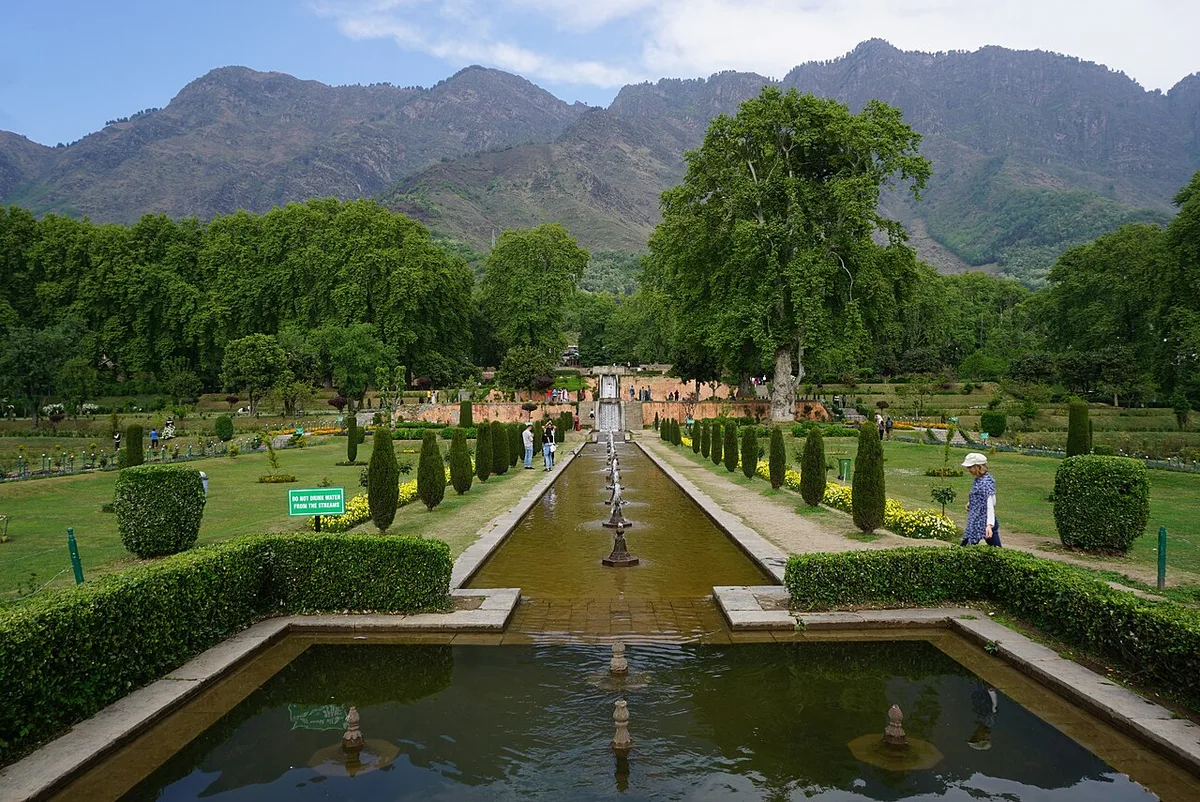
Chashme Shahi, the "royal spring", is the smallest — a compact terraced garden built in 1632 around a natural spring, and the quickest visit of the three. Nishat Bagh, the "garden of bliss", is the grandest: twelve terraces, laid out in the 1630s by Asaf Khan, elder brother of the empress Nur Jahan, each a step down the slope with the water channel running through all of them and the lake opening wider at every level. Give it the longest share of your garden time. Shalimar Bagh, the "garden of love", built by Jahangir for Nur Jahan in 1619, is the most palace-like — pavilions along the water axis in a garden that was a royal residence as much as a pleasure ground — and the furthest along the shore road.
On entry fees, this guide follows the same rule as the shikara card. Each garden charges a small ticket set by the Floriculture Department, which has been moving garden ticketing towards online sale as well as the gate. But the department's current rate could not be read from an official page when checked — the figures on travel sites disagree by wide margins, the signature of an old rate copied forward. So no figure is printed here: check the rate board at the gate, and treat any website quoting an exact garden fee with suspicion proportionate to its confidence.
SECTION 05The Tulip Garden: A Short Season, Announced Each Year
For a few weeks each spring, Srinagar's biggest garden draw is none of the Mughal three. The Indira Gandhi Memorial Tulip Garden sits, in JKTDC's description, "at the foothills of the Zabarwan Mountains which are present on the banks of the Dal Lake" — terraces of tulips planted from September, flowering in a single concentrated bloom. JKTDC calls it the most spacious of Srinagar's gardens, and at full bloom the sight is, in its words, "heavenly... with all shades of the rainbow scattered on the fields of this garden."
The planning consequence: the tulip garden is a season, not a sight. It opens only for the bloom — a few weeks in spring, shifting with the weather — on dates the Floriculture Department announces each year. If tulips are your reason for coming, build the trip around the announced dates rather than a fixed week, expect the season's largest crowds, and treat the ticket as in Section 04. In bloom weeks it combines naturally with Chashme Shahi and Nishat Bagh, on the same shore.
SECTION 06The Houseboat Decision: Categories First, Prices Last
A Srinagar houseboat is not a boat in the travelling sense: it is a carved cedar-wood house that happens to float, permanently moored in rows on Dal Lake, Nigeen Lake or the Jhelum, reached by shikara and left by shikara. What you are choosing is a floating hotel room with a veranda over the water, a host family at the back of the boat, and meals on board.
The framework is registration and grading. Houseboats operating for tourists are registered with the J&K Tourism Department — registration of boats, houseboats included, sits in the same Tourist Trade Act framework as the shikara rates — and the department classifies houseboats into five categories: Deluxe, A, B, C and D, corresponding broadly to hotels at descending levels. A Deluxe boat offers fine furniture and modern bathrooms; a D-category boat is simply furnished, like a budget hotel. Two consequences. First, a boat advertised with stars is using marketing language — the official scale is Deluxe to D, so ask for the registered category. Second, ask for the exact boat's name: boats trade in groups under one brand, and the name painted on the boat you board should be the name on your booking.
What the framework does not give you is a price. There is no notified tariff a visitor can consult for a night's stay that this guide could verify, and it prints none — rates are quoted per boat and move with what determines them: the category, the lake (Dal famous and busiest; Nigeen quieter; the Jhelum boats in the old city), the season, heating — a real consideration in a Kashmiri winter — and what is folded into the quote: meals, shikara transfers, taxes. Compare like with like, in writing, before a large advance; attend to the meal plan, since a moored boat's dining room is, practically, your restaurant. Stay a night even if your trip is hotel-based — dawn over the water is the houseboat's whole argument.
SECTION 07Before You Go: The Srinagar Checklist
- ☐ Put the rate card in the plan. At the ghat, ask to see the current notified shikara card before boarding; agree hours, points and the total boat fare against it.
- ☐ Choose the ride by the light. Dawn for the floating market, two unhurried hours for the Char Chinar circuit, sunset for the houseboat lanes.
- ☐ Carry small money for gardens. Each Mughal garden and the tulip garden (in season) is ticketed at the gate at the Floriculture Department's current rate; check the board rather than a website.
- ☐ Book the houseboat by its papers. Registered name, official category (Deluxe to D), lake, meal plan and shikara transfers — in writing, before a large advance.
- ☐ Time the tulips by the announcement. The tulip garden opens only for the spring bloom, on dates announced each year.
- ☐ Consider Gulmarg as a day trip. Srinagar is also the base for Gulmarg — a full day out by road, covered in its own guide in this series; plan it separately.
- ☐ Dress for the water. A layer for the shikara in every season; in winter, proper cold-weather clothing.
FAQFrequently Asked Questions
How much does a shikara ride on Dal Lake cost?
Shikara fares are government-notified by the J&K Tourism Department — an hourly rate for the whole boat (not per person), plus fixed fares for named point-to-point runs, on one card covering Dal and Nigeen lakes. This guide deliberately prints no figure: the department revises the card, the versions on travel sites conflict, and the current card could not be read on an official page when checked on 30 October 2026. Ask to see the current card at the ghat or the Tourist Reception Centre, and agree your hours, points and total against it before you board.
What is the entry fee for Nishat Bagh, Shalimar Bagh and Chashme Shahi?
Each garden charges a small entry ticket set by the J&K Department of Floriculture, Gardens & Parks, bought at the gate (the department has also been introducing online garden ticketing). This guide prints no amount, because the department's current rate could not be read from an official page in this check and the figures on travel sites disagree widely — a sign they are copied from old rates. Check the rate board at the gate.
Should I stay on Dal Lake or Nigeen Lake?
Both are registered houseboat moorings; the difference is atmosphere. Dal Lake is the classic, busy address — houseboat rows near the Boulevard ghats, market and gardens within easy shikara reach. Nigeen Lake, joined to Dal, is smaller, quieter and more residential — better for still mornings, worse for stepping ashore at will. The Jhelum boats are the third option, in the old city. Decide by the boat's registered category (Deluxe, A, B, C or D) and what the quote includes, not by the lake alone.
Do houseboats move or cruise on Dal Lake?
No. A Srinagar houseboat is permanently moored — a floating house, not a cruising vessel. You sleep, eat and take the view from one spot, and all movement is by shikara, including the transfers between your boat and the ghat. Those transfers are part of the arrangement with your boat, so confirm when you book that they are included.
When does the Tulip Garden open, and how do I time it?
Only for the spring tulip bloom — a few weeks whose dates shift with the year's weather. The garden is run by the Floriculture Department, which announces the opening each year; the tulips are planted from September for that single flowering. Build a tulip trip around the announcement rather than a fixed week, and buy the entry ticket on the day at the current rate.
Official references and checking status
The changeable facts in this guide were checked on 30 October 2026 against the official pages listed below, and the accompanying sources file records which source supports which claim. Two honest limits: the current shikara rate card and the current garden entry rates could not be read as figures on official pages in this pass, and unofficial figures in circulation conflict — so this guide explains both systems and prints no numbers for either. Confirm current rates on the displayed card at the ghat and the board at the gate before you pay.
- J&K Tourism Development Corporation (official) — Dal Lake
- J&K Tourism Development Corporation (official) — Tulip Garden, Srinagar
- J&K Tourism (official) — Department of Tourism, Jammu & Kashmir: houseboats, registration and tourist trade
- Department of Floriculture, Gardens & Parks, J&K (official) — the gardens' department and its ticketing portal
Photos: a shikara among the houseboats of Dal Lake at sunset, by Fulvio Spada, via Wikimedia Commons, licensed under CC BY-SA 2.0; the terraced channel garden of Nishat Bagh, by Deepank Ranka, via Wikimedia Commons, licensed under CC BY-SA 4.0. Photographers keep their copyright; the licences require this credit.
General information only. This guide is based on official sources publicly available and checked on the date shown on this page. Visa rules change, and consular and USCIS officers decide every case on its own facts — nothing here is a confirmation or a guarantee for your individual case, and this is not legal advice. Always confirm the current requirement on the official page linked in this guide before you act, and consider a qualified immigration attorney for your specific situation.