
Researched & checked — 31 Oct 2026
Lucknow: The Imambaras, the Residency and What Entry Really Costs
NEW Published 31 October 2026
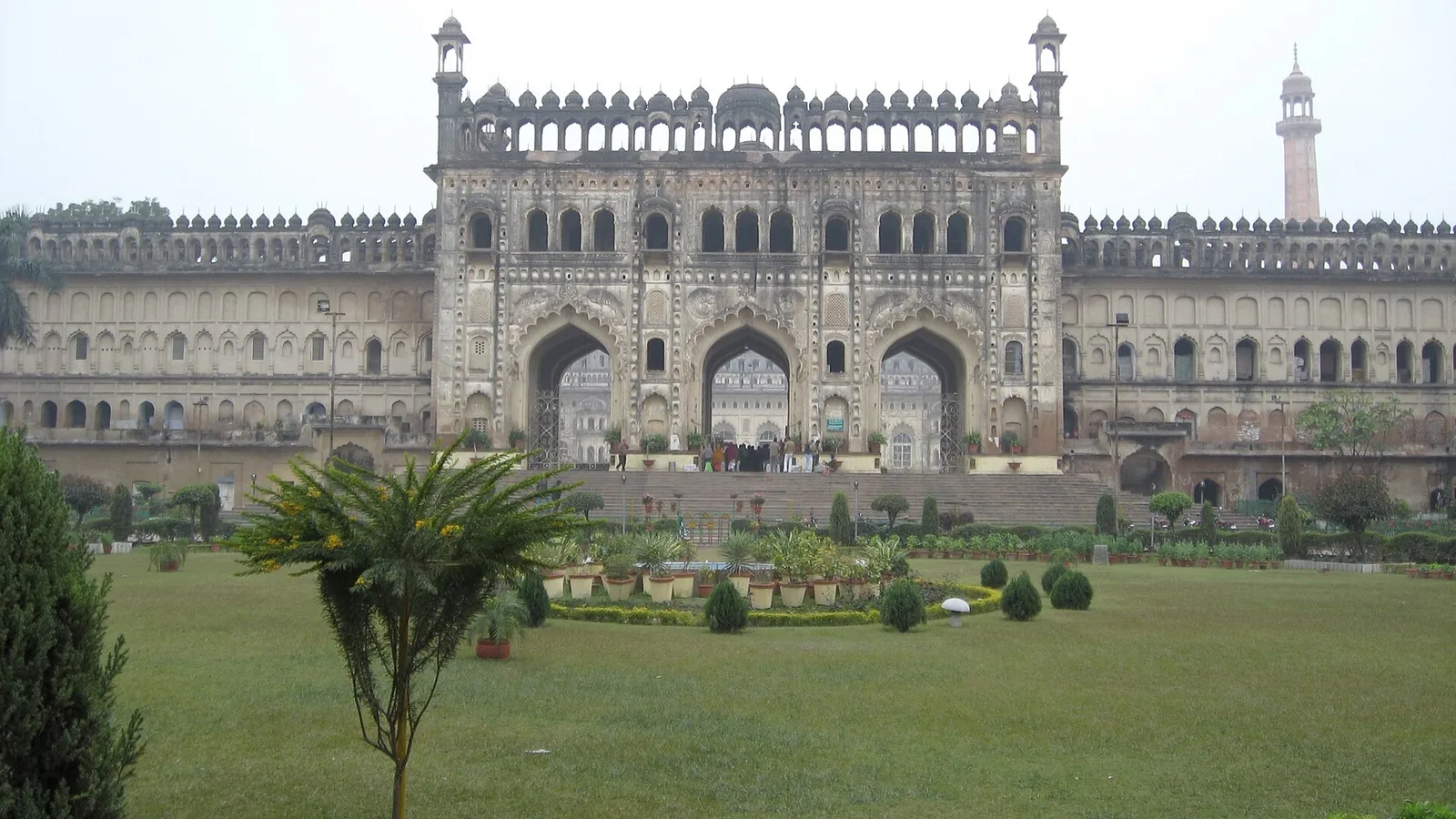
Lucknow's Nawabi monuments are run by a trust founded in 1839 that publishes its own pass table — one combined ticket covers the great Imambara, its labyrinth, the smaller Imambara and the picture gallery. This guide prints that table from the Husainabad & Allied Trust's official site, explains the one Friday closure window that catches visitors out, and is honest about the one famous site whose fee cannot be quoted from an official page: the Residency.
The Trust's combined pass — Bara Imambara, Chota Imambara, Satkhanda and the Picture Gallery — costs ₹60 for an Indian adult and ₹600 for a foreign adult (children up to 12: ₹30 and ₹300). Bought separately, the Bara Imambara alone, with the Bhool Bhulaiya labyrinth and the Bauli, is ₹50 / ₹500. The monuments run 6 am to 6 pm, and the Bara Imambara closes on Fridays from 10 am to 3 pm. The Residency is an ASI monument on a separate ticket bought at its gate or through the ASI's booking portal; this guide deliberately prints no figure for it, for reasons Section 04 explains. The metro's currently listed fares run from ₹10 to ₹60 by stations travelled.
SECTION 01One Pass, Four Monuments: The Trust's Table
Start with the institution, because it explains the ticketing. The Husainabad & Allied Trust was established in 1839 by King Muhammad Ali Shah of Awadh to manage and fund Lucknow's Nawabi-era monuments, and it still runs them: the Bara and Chhota Imambaras, the Picture Gallery, Satkhanda, the Husainabad Clock Tower and the tombs around them. On its official website the Trust publishes a single pass table — timings 6 am to 6 pm, with children above 12 years of age charged an adult pass — and the whole of Lucknow's monument budgeting follows from it:
- Combined Pass (Bara Imambara + Chhota Imambara + Satkhanda + Picture Gallery): ₹60 Indian adult / ₹30 child; ₹600 foreign adult / ₹300 child
- Bara Imambara (including Bhool Bhulaiya and the Bauli): ₹50 / ₹25 Indian; ₹500 / ₹250 foreign
- Chhota Imambara: ₹20 / ₹10 Indian; ₹200 / ₹100 foreign
- Picture Gallery: ₹20 / ₹10 Indian; ₹200 / ₹100 foreign
- Satkhanda: ₹20 / ₹10 Indian; ₹200 / ₹100 foreign
- Maqbara Saadat Ali Khan: ₹10 (the table lists a single figure, with no separate categories)
The arithmetic argues for itself. The four covered monuments bought individually would cost an Indian adult ₹110 and a foreign adult ₹1,100; the combined pass charges ₹60 and ₹600 — barely more than the Bara Imambara alone. Unless you will see only the great hall, the combined pass is the ticket to buy — online through the Trust's website, or at the pass windows at both gates, as the Trust itself describes. Keep it through the day; the same pass is checked at each monument.
SECTION 02The Bara Imambara and the Labyrinth in Its Roof
The Bara Imambara — the Asafi Imambara, raised by Nawab Asaf-ud-Daula in 1784 as famine-relief work — is built around one of the largest vaulted halls in the world, a vast column-free chamber whose roof carries the complex's second attraction. Above and inside the structure runs the Bhool Bhulaiya, a three-dimensional maze of passages, stairs and balconies. The labyrinth is not a separate monument: the Trust states plainly that "Bhool Bhulaiya is a part of Bara Imambara", and the pass table prices them together, with the Bauli — the stepped well-house in the grounds — included in the same ticket. The day to plan around is Friday: the Trust's visiting information states that the Bara Imambara is closed on Fridays from 10 am to 3 pm, while the city's other monuments keep the normal 6 am to 6 pm day. A Friday visit is therefore not impossible — it is a morning-before-ten or afternoon-after-three visit, with the Residency and the Chhota Imambara filling the middle of the day.
Pace the visit the way the building asks. The great hall wants an unhurried half hour; the labyrinth wants longer, and repays going slowly — its balconies and the whispering-gallery acoustics are the point, not an obstacle course to be raced. Guides offer their services in and around the complex; agree what you are paying before you set off, and treat the maze as the one place in Lucknow where a guide genuinely earns the fee. The Trust's own visiting advice is to come early: it notes that visitors prefer sunrise, when the morning light and the small crowds flatter the building, and that the best season is October to March. In the grounds, look for the Asafi Masjid beside the hall and the Bauli's cool arcade — both are inside the same pass.
SECTION 03Chhota Imambara, Satkhanda and the Free Gateway
A short walk west along Husainabad Road, the Chhota Imambara is Muhammad Ali Shah's own mausoleum complex — smaller, denser and more jewelled than its elder: a gilt-domed hall holding the Nawab's crown and taziyas, flanked by a treasury, a mosque and an incomplete watchtower of its own. On the Trust's table it is the cheapest of the set — ₹20 Indian / ₹200 foreign bought alone, and in practice seen on the combined pass. Beside it, the Picture Gallery holds the portraits of the Nawabs of Awadh, and Satkhanda, the seven-storeyed tower begun as a viewing platform, was left at four storeys when its builder died; both are ₹20 / ₹200 individually and both are inside the combined pass. The standalone Maqbara Saadat Ali Khan, the tomb near the Residency side of the old city, is the table's simplest line: ₹10 flat.
Between the two Imambaras stands the monument you will photograph most and pay nothing for. The Rumi Darwaza, the great Awadhi gateway modelled on a Sublime Porte, stands directly over the public road — traffic and pedestrians pass beneath it all day, and no pass is sold for it: it appears in no row of the Trust's table. The district administration's record adds its formal status — the gateway was designated a centrally protected monument in December 1920 — which is a conservation fact, not a ticket. Walk through it slowly and look back: the gateway is famously two-sided, its rear face entirely different from its front.
SECTION 04The Residency: 1857 in Ruins, and an Honest Word About Its Ticket
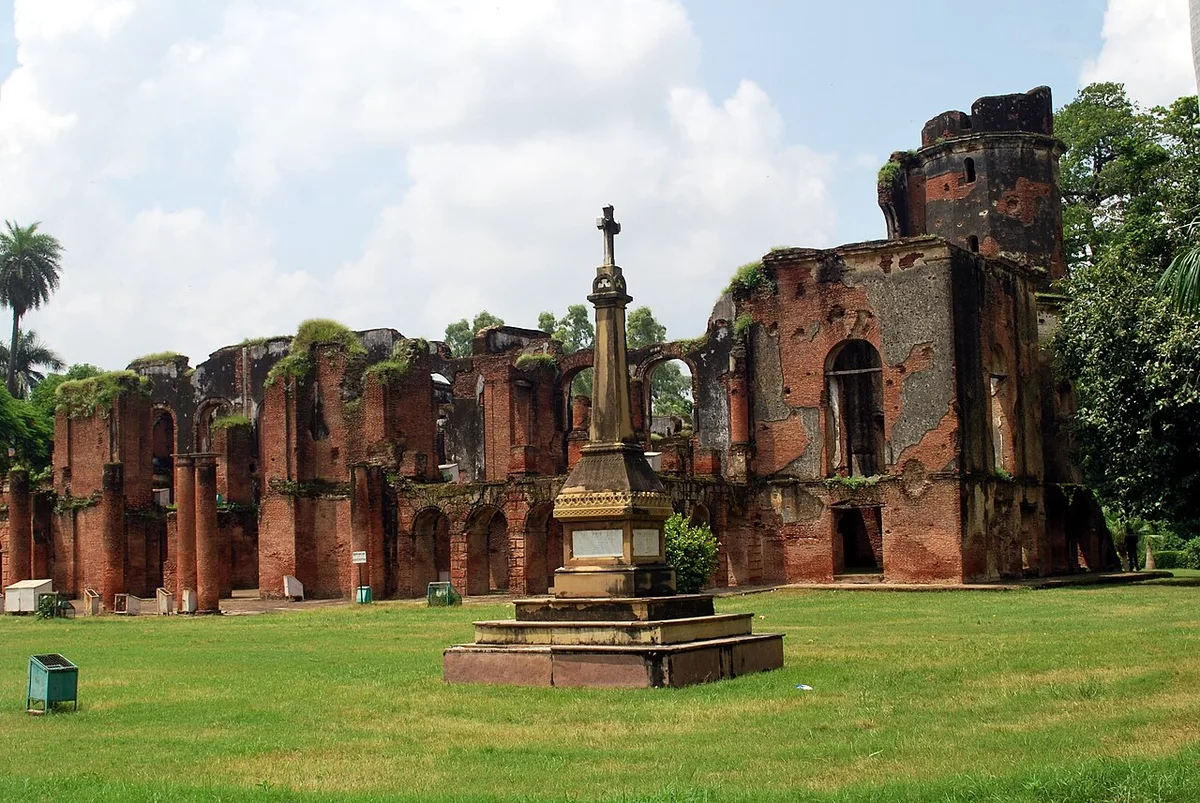
The Residency is Lucknow's second essential visit and its emotional opposite. Where the Imambaras are Awadh at its most splendid, the Residency is the enclave where the British Resident's household and garrison held out through the siege of 1857 — and it has been kept, deliberately, as it was left: roofless walls, cannon-marked brick, a cemetery, and lawns of an almost English quiet, with the ASI's 1857 Memorial Museum set in the main building to tell the story in photographs, arms and a model of the compound. Allow an hour and a half; the power of the place is cumulative.
About its ticket, this guide takes the unusual step of printing no price — and owes you the reason. The Residency is an Archaeological Survey of India ticketed monument, and the ASI sells its tickets at the monument gate and through its official online booking portal (linked from asi.nic.in). But the ASI publishes its prices inside that booking system rather than in a table this guide could read and quote: the portal's price service sits behind a web-application firewall that returns no readable figures, and the numbers circulating elsewhere disagree with one another by era — older and newer reports put the two tiers at different levels, so some of them are simply out of date. Rather than guess, the practical advice is firm: expect a modest two-tier ASI ticket — an Indian rate (the ASI's Indian-rate category also covers SAARC and BIMSTEC nationals) and a higher rate for other foreign visitors — and read the live figure on the ASI booking portal or at the gate before you budget the day. The Imambara pass does not cover the Residency; the two halves of Lucknow are paid for separately, to different authorities.
SECTION 05Getting Around: The Metro, and the Free Streets
Lucknow's metro is one clean line used well. The Red Line of the Uttar Pradesh Metro Rail Corporation runs from Chaudhary Charan Singh Airport to Munshipulia, 21 stations across the city through Charbagh — the main railway station — and the central stations serving Hazratganj and the secretariat area. The old-city monuments lie a short auto-rickshaw ride west of those central stations — a last leg that is part of the city's texture rather than a problem to solve. Fares are charged by the number of stations travelled. The corporation's own site presents its fare information inside an app that does not render a readable table, so the figures here are the corporation's fare structure as it is currently listed, and should be confirmed on the station chart: ₹10 for one station, ₹15 for two, ₹20 for three to six stations, ₹30 for seven to nine, ₹40 for ten to thirteen, ₹50 for fourteen to seventeen, and ₹60 for eighteen or more — with a GoSmart card taking a tenth off each fare, and children under 90 cm in height travelling free with an adult. A ride from the airport end to the centre costs less than the auto from the station to the Imambara.
Save the walking for where it pays. Hazratganj, the colonial-era shopping avenue a few minutes east of the Residency, and Aminabad, the older bazaar quarter west of it, are ordinary public streets — no ticket, no gate, at their best in the evening when the food streets around Aminabad come fully alive. The city's celebrated eating — kebabs, biryani, chaat — is a street-level economy of famous individual shops; prices are those of the shops themselves, quoted on their own boards, and need no guide's tariff table.
SECTION 06Putting the Day Together
The natural Lucknow day runs west to east and old to older. Start at the Husainabad complex at the 6 am opening, when the light is kind and the labyrinth is empty: combined pass bought online or at the gate window, the Bara Imambara first, then the Chhota Imambara, the Picture Gallery and Satkhanda, walking back under the Rumi Darwaza. Take the middle of the day slowly — Lucknow's heat argues for it even in winter — and give the Residency the later afternoon, when its lawns shade and the siege story lands in a quieter place; if it is a Friday, that order also solves the Bara Imambara's 10-to-3 closure without thinking about it. Finish in Hazratganj or Aminabad as the stalls light up. The Trust gives the season plainly — October to March is the best time to visit — and outside it, the 6 am start stops being a preference and becomes the plan itself.
One practical comfort: Lucknow is an easy city to reach and to leave. The metro ties the airport to Charbagh directly, the monument quarter is a single short ride from the station, and nothing in this guide needs booking days ahead. Lucknow has no Taj-style night spectacle to schedule around; its evenings belong to its food streets, which keep their own hours and ask only that you arrive hungry.
FAQFrequently Asked Questions
What does the Lucknow combined monument pass cost, and what does it cover?
On the Husainabad & Allied Trust's official pass table, checked 31 October 2026: the combined pass covers the Bara Imambara (with the Bhool Bhulaiya labyrinth and the Bauli), the Chhota Imambara, Satkhanda and the Picture Gallery, and costs ₹60 for an Indian adult and ₹600 for a foreign adult; children up to 12 pay ₹30 and ₹300 respectively — above 12, the Trust charges an adult pass. The monuments' day runs 6 am to 6 pm, and the pass is sold online on the Trust's site and at the pass windows at both gates.
Is the Bara Imambara closed on Fridays?
Partly. The Trust states that the Bara Imambara is closed on Fridays from 10 am to 3 pm; it is open before and after that window, and Lucknow's other monuments keep the normal 6 am to 6 pm hours on Fridays. A Friday plan that does the Imambaras early or late and the Residency in the middle of the day loses nothing.
Why does this guide not print the Residency's entry fee?
Because no figure for it could be read from an official page when checked. The Residency is an ASI ticketed monument; the ASI sells tickets at the gate and through its official booking portal (linked from asi.nic.in), but publishes its prices inside that booking system, whose price service returned no readable figures — and the figures published elsewhere conflict across eras. Expect a modest two-tier ASI charge (an Indian rate covering Indian, SAARC and BIMSTEC visitors, and a higher rate for other foreign visitors) and confirm the live amount on the ASI portal or at the gate.
Is the Bhool Bhulaiya a separate ticket from the Bara Imambara?
No. The Husainabad & Allied Trust states that the Bhool Bhulaiya is a part of the Bara Imambara, and its pass table prices them as one item — "Bara Imambara (Bhool Bhulaiya + Bauli)" — at ₹50 Indian adult / ₹500 foreign adult bought separately, or inside the ₹60 / ₹600 combined pass. Guides inside the complex charge separately; agree the amount before you start.
How much is the Lucknow Metro, and does it reach the Imambaras?
Fares are charged by stations travelled and currently listed as ₹10 for one station rising through ₹20 for three to six stations to ₹60 for eighteen or more; the GoSmart card takes 10% off, and children under 90 cm ride free with an adult — confirm on the station chart, as the corporation publishes its table inside its app. The Red Line runs from the airport to Munshipulia via Charbagh and the central stations; the Imambara quarter is a short auto-rickshaw ride west of those stations.
Official references and checking status
Every changeable fact in this guide was checked on 31 October 2026 against the official sources below, and the accompanying sources file records which page supports which claim. The Trust's pass prices, timings and Friday window are quoted from the Trust's own published table and visiting information. Two honest limits: the ASI publishes the Residency's price only within its booking system, which returned no readable figures in this pass (the portal's price service is firewall-blocked), so no Residency figure is printed; and the metro corporation's fare page renders inside an app, so its fares appear as the structure currently listed, flagged for confirmation at the station. Confirm current prices and timings before you travel.
- Husainabad & Allied Trust (official) — pass prices for the combined pass and each monument, timings, and visiting information including the Friday closure window
- Lucknow district administration (official) — Rumi Darwaza: centrally protected monument status
- Archaeological Survey of India (official) — the Residency's authority; online ticket booking is linked from the ASI site
- ASI official ticket booking portal — live prices for ASI ticketed monuments, including the Residency
- Uttar Pradesh Metro Rail Corporation (official) — Lucknow Metro fare information
Photos: the Bara Imambara's great façade across its lawns, by Slyronit, via Wikimedia Commons, licensed under CC BY-SA 4.0; the ruined main building of the Residency with its memorial cross, by Khalid Ahmed, via Wikimedia Commons, licensed under CC BY-SA 3.0. Photographers keep their copyright; the licences require this credit.
General information only. This guide is based on official sources publicly available and checked on the date shown on this page. Visa rules change, and consular and USCIS officers decide every case on its own facts — nothing here is a confirmation or a guarantee for your individual case, and this is not legal advice. Always confirm the current requirement on the official page linked in this guide before you act, and consider a qualified immigration attorney for your specific situation.