
Researched & checked — 30 Oct 2026
Washington DC in 2 Days: The Mall, the Smithsonians and the Monuments, In Walking Order
NEW Published 30 October 2026
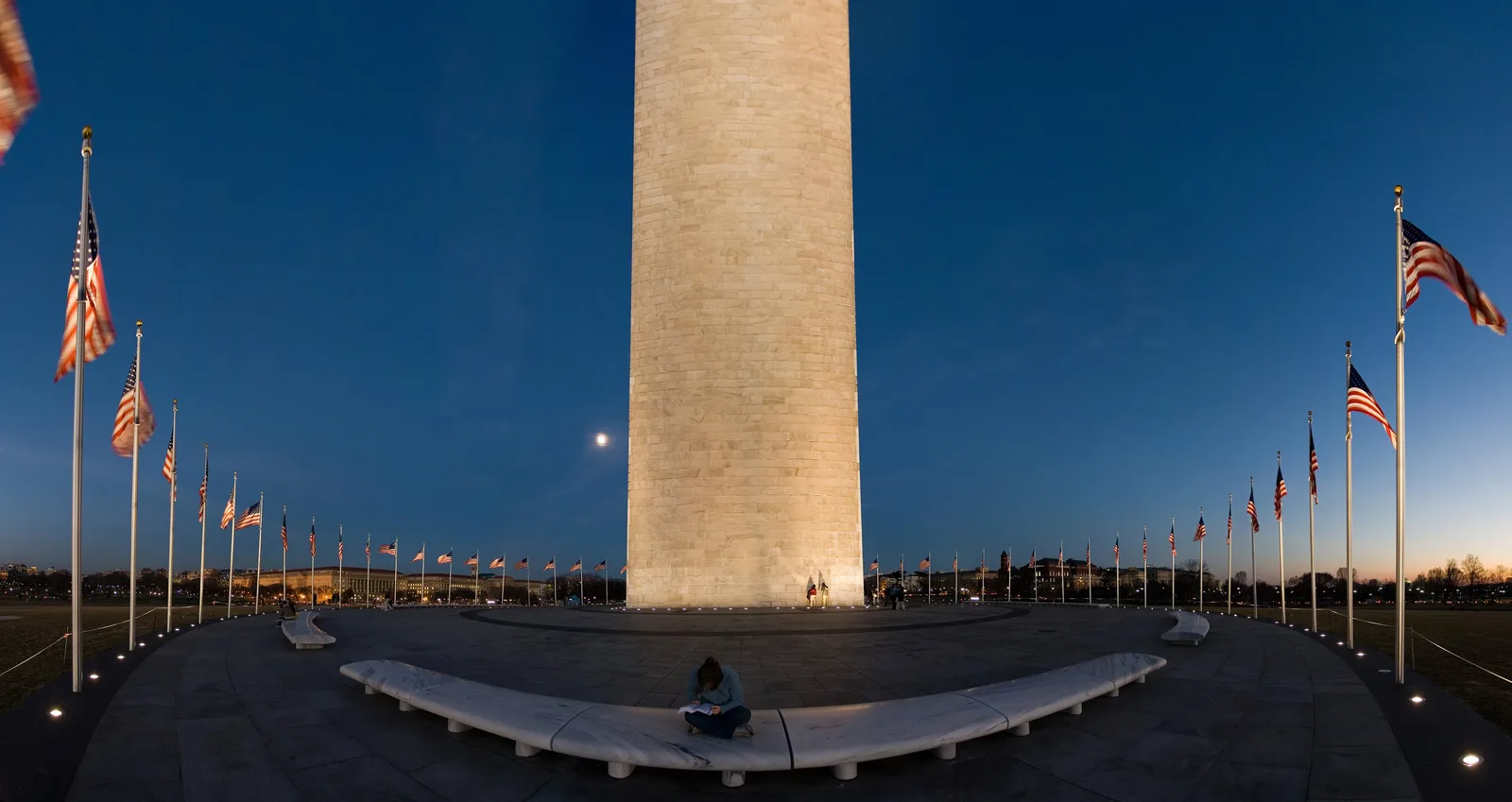
Two days on foot along the National Mall — the Library of Congress and Capitol end first, the Lincoln Memorial last — with every timed-pass rule checked against the institutions' own visitor pages.
Washington, DC is the rare capital where the headline sights are free. The Smithsonian states it plainly in its own fact sheet: admission to all Smithsonian museums in Washington is free. The catch is not price but paperwork — a handful of popular sights ration entry with free timed passes that disappear weeks ahead, and the Washington Monument's lift tickets carry a small reservation fee and sell out within minutes of release. This itinerary is built around that reality: it walks the Mall in one direction each day so you never backtrack, and tells you which passes to book before you fly and which sights you can simply walk into.
Day 1 covers the east — Library of Congress, Capitol grounds, National Archives, museum row, Air and Space. Day 2 covers the western half — the African American History Museum, the Washington Monument, the war memorials, the Lincoln Memorial — ending with the White House seen from outside.
Book ahead: timed-entry passes for the National Air and Space Museum (required for every visitor) and the National Museum of African American History and Culture (released up to 30 days ahead; same-day passes online at 8:15 a.m.), timed tickets for the Library of Congress (30 days ahead; same-day at 9 a.m.), and Washington Monument lift tickets on recreation.gov — free entry, $1 non-refundable reservation fee per ticket, released at 10 a.m. 30 days out. Everything else here — the National Archives, the National Gallery of Art, the memorials — is free with no pass. Metro fares run $2.25 to $6.75 by distance on a SmarTrip card. White House tours cannot be booked by walk-up visitors: requests go through a Member of Congress or, for citizens of other countries, their embassy — up to three months ahead, no less than 21 days ahead.
SECTION 01How do the two days fit together?
Day 1 — the east end and museum row. Start at the Library of Congress, cross to the Capitol's west front for the classic view down the Mall, then walk west: the National Archives, the National Gallery of Art, one Smithsonian history museum, and the Air and Space Museum to finish. You walk toward the Washington Monument all day without ever doubling back.
Day 2 — the monuments. Start at the National Museum of African American History and Culture near the Monument, ride the lift up the Washington Monument, then follow the Reflecting Pool west through the World War II, Vietnam Veterans and Korean War Veterans memorials to the Lincoln Memorial. Finish at the White House from Lafayette Square; Arlington's Changing of the Guard is the optional extension.
Two practical foundations. First, distances: the Mall runs about two miles from the Capitol steps to the Lincoln Memorial, and the museums are large enough that two per day is a realistic ceiling — this plan picks a route, not a checklist. Second, transport: you barely need it. Metrorail fares are distance- and time-based — WMATA lists one-way rail fares from $2.25 to $6.75 and local buses at a flat $2.25 — paid with a SmarTrip card, which itself costs $2. The stations that matter: Capitol South and Federal Center SW (east end), Smithsonian and Federal Triangle (middle), Arlington Cemetery (west). Most visitors walk far more than they ride.
One closure to note: most Smithsonian museums close on December 25, as do the Air and Space Museum and the Archives. The memorials are outdoor sights, open day and night — the Lincoln Memorial at dawn or after dark is among the city's best free experiences.
SECTION 02Day 1: the Library of Congress, the Archives and museum row, in order
Start: Library of Congress, Thomas Jefferson Building. The most beautiful interior in Washington is a library. The Jefferson Building's Great Hall — marble staircases, murals and the domed reading room — requires a free timed-entry ticket for every visitor, released up to 30 days in advance, with same-day tickets online at 9 a.m. The building opens Tuesday through Saturday, 10 a.m. to 5 p.m., last entry 30 minutes before closing. Book the first slot.
Then: the Capitol grounds. The Capitol stands directly across the street. This itinerary treats it as an exterior sight — walk the grounds, take the west-front view down the Mall, and save your energy for what follows. (Interior tours exist; if one is the centrepiece of your trip, organise it well ahead and build the day around its slot.)
Walk west: National Archives Museum. A short walk brings you to the Archives Building on Constitution Avenue, where the Rotunda displays the original Declaration of Independence, Constitution and Bill of Rights — the Charters of Freedom. Admission is always free, the museum opens daily 10 a.m. to 5:30 p.m. except Thanksgiving Day and Christmas Day, and no reservation is required — just join the line. An optional advance reservation exists for a $1 non-refundable per-ticket fee, worth it at peak season; walk-up entry is free either way.
Afternoon: pick your museums. From the Archives you are in the middle of museum row. The National Gallery of Art — not Smithsonian, but also free — holds the city's great art collection. The Smithsonian's Natural History and American History museums face each other across the Mall a few blocks west; neither needs a pass. Choose two at most. Then finish at the National Air and Space Museum, or swap it into the morning if its pass times suit better: entry is free, but free timed-entry passes are currently required for all visitors regardless of age, released in blocks on the museum's site, with entry through the Jefferson Drive doors. It is open 10 a.m. to 5:30 p.m. daily except December 25, and partly closed while a long renovation finishes — check which galleries are open before promising anyone a specific aircraft.
SECTION 03Day 2: the Monument, the memorials and the Lincoln Memorial, in order
Start: National Museum of African American History and Culture. The bronze-coloured museum at 14th Street and Constitution Avenue is the Smithsonian's most in-demand ticket. Entry is free, but free timed-entry passes are required for all visitors: advance passes are released up to 30 days ahead on a rolling basis, and a limited number of same-day passes go online at 8:15 a.m. Take the earliest slot you can get; the museum rewards a full morning.
Then: up the Washington Monument. The obelisk is next door. Going up requires a ticket: there is no admission fee, but advance reservations on recreation.gov carry a $1 non-refundable service charge per ticket; tickets are released at 10 a.m. 30 days in advance and often sell out immediately, with a further release the day before. The no-cost fallback is the Washington Monument Lodge on 15th Street, which hands out free same-day tickets from 8:45 a.m., first come first served. The grounds are free to everyone, ticket or not.
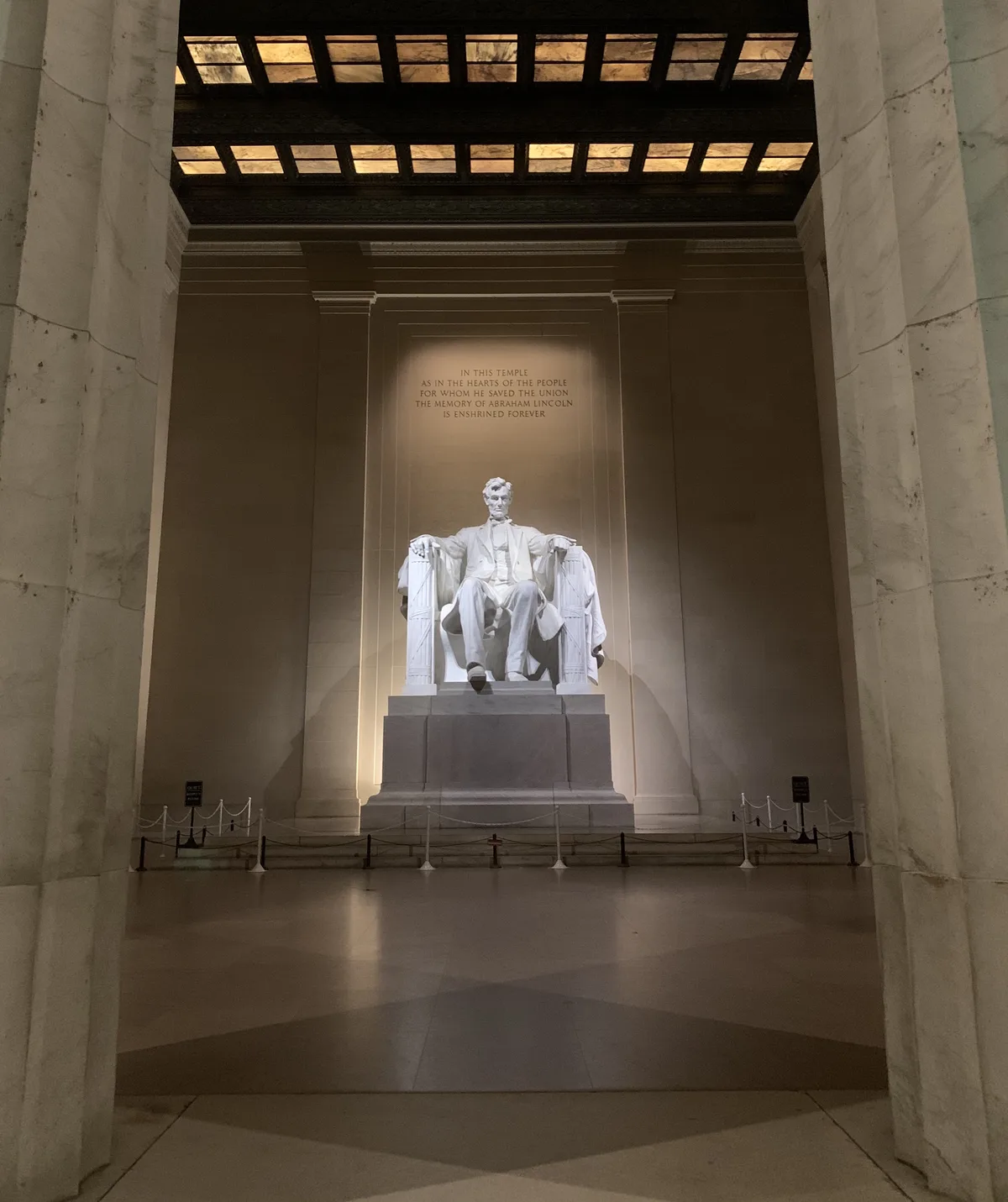
Walk west: the memorials. From the Monument the route runs itself. The World War II Memorial sits at the head of the Reflecting Pool; the Vietnam Veterans and Korean War Veterans memorials lie just beyond its far end; and the walk ends at the Lincoln Memorial, where the seated Lincoln faces back down the Mall toward the Capitol. These are outdoor sights with no tickets and no queues — go early or late and you may have the Lincoln chamber nearly to yourself.
Finish: the White House, from outside. Walk north to Lafayette Square for the classic north-front view, or stand on the Ellipse for the south lawn. An interior tour is a different matter (Section 04 sets out the honest position): tours are free but cannot be arranged on arrival by anyone. If your trip is months away and you have the right channel — a Member of Congress, or your country's embassy — request one. If not, the exterior is the visit, and it is plenty.
Optional extension: Arlington National Cemetery. Across the Potomac in Virginia, a short Blue Line Metro ride away, the Changing of the Guard at the Tomb of the Unknown Soldier runs on a published rhythm: every hour on the hour from October 1 through March 31, and every half hour from April 1 through September 30. Memorial Bridge connects it to the Lincoln Memorial.
SECTION 04Which sights need passes, and when do you book them?
Book as soon as your dates are fixed. Two sights release about a month out. Washington Monument tickets: released at 10 a.m. Eastern, 30 days in advance, on recreation.gov, $1 reservation fee per ticket, with an extra release the day before each date. NMAAHC passes: free, released up to 30 days ahead on a rolling basis — set a reminder for the day your date opens.
Book in the same window, less pressure. Library of Congress tickets are free, released up to 30 days in advance, with same-day tickets online at 9 a.m.; the Jefferson Building is closed Sundays and Mondays. Air and Space passes are free and required for everyone; the museum releases them in blocks covering several weeks, so check its visit page for the current release date — one person can reserve for a group of up to nine.
The same-day safety nets. Missed the advance window? NMAAHC releases same-day passes online at 8:15 a.m.; the Library of Congress at 9 a.m.; and the Monument Lodge hands out free same-day tickets in person from 8:45 a.m. All are first come first served — treat them as backups, not plans.
The one that is not a booking at all. White House tours are arranged only by request: U.S. citizens apply through their Member of Congress, citizens of other countries through their embassy in Washington, DC. Requests open up to three months in advance and close 21 days before; the self-guided tours run Tuesday through Saturday, are free, and can be cancelled at short notice. The National Park Service states plainly that it does not schedule White House tours or provide tickets — any website offering to sell you one is not selling the real thing.
And what needs nothing. The National Archives Museum (free walk-up entry; an optional $1 advance reservation exists), the National Gallery of Art, the Smithsonian museums other than Air and Space and NMAAHC, and every memorial on the Mall. In the most museum-dense square mile in America, the default is free entry.
SECTION 05What do two days in Washington DC actually cost?
Admission: effectively nothing. The Smithsonian's own fact sheet confirms admission to all its Washington museums is free; the National Archives, the National Gallery of Art and the memorials are free; and the only admission-adjacent charges here are reservation fees — $1 per Washington Monument ticket booked in advance, and $1 per person if you choose the Archives' optional timed reservation instead of the free walk-up line. Two people doing everything in this plan pay a few dollars in fees, total.
Transport: a handful of Metro rides. WMATA's fares are distance- and time-based: one-way rail fares run from $2.25 to $6.75, local buses are $2.25, and you pay with a SmarTrip card that costs $2 itself. Most visitors stay within walking distance of the Mall and spend under $15 per person on transit across two days — often much less.
So the real budget is food, lodging and your time. Spend the money you did not spend on tickets on one good dinner in Penn Quarter or Georgetown instead.
SECTION 06What mistakes do first-time visitors to DC make?
Assuming "Smithsonian" means "walk in". Most Smithsonian museums are free and pass-free — but the two most popular, Air and Space and African American History and Culture, require free timed passes that run out. The failure mode is arriving pass-less on the one day you had. Book the passes; walk into everything else.
Leaving the Washington Monument to chance. Advance tickets routinely sell out the morning they release. Be on recreation.gov at 10 a.m. Eastern 30 days out; if you miss out, use the day-before release, then the Lodge's 8:45 a.m. same-day line, in that order.
Expecting to tour the White House on a normal trip. There is no ticket window, no official resale and no walk-up route, and the 21-day minimum request window rules out most trips decided a fortnight ahead. Visitors from other countries must go through their embassy, not a tour company. Plan for the exterior view.
Underestimating the Mall. Two miles end to end sounds trivial; with museum interiors, Day 1 alone easily becomes 20,000 steps. The walking order exists so the steps accumulate in one direction — do not zigzag between the two ends in one day.
Forgetting the calendar quirks. December 25 closes the Smithsonian museums and the Archives. The Library of Congress closes Sundays and Mondays. Part of the Air and Space Museum remains closed for renovation. None of these ruins a trip — unless you discover them at a locked door.
Are the Smithsonian museums really free?
Yes — the Smithsonian's own fact sheet states that admission to all Smithsonian museums in Washington is free. Two of them, Air and Space and African American History and Culture, require free timed-entry passes (the National Zoo uses them too). The passes ration timing, not price.
Which Washington DC sights need advance passes or tickets?
Four: Air and Space Museum passes; NMAAHC passes (30 days ahead; same-day online at 8:15 a.m.); Library of Congress timed tickets (30 days ahead; same-day at 9 a.m.); and Washington Monument lift tickets ($1 per ticket on recreation.gov, released 10 a.m. 30 days out; free same-day tickets at the Monument Lodge from 8:45 a.m.). Everything else here is walk-up and free.
How can a visitor from another country tour the White House?
Only by request, made well ahead: citizens of foreign countries contact their embassy in Washington, DC, per the National Park Service. Requests open up to three months ahead and close 21 days before; tours are free, self-guided, Tuesday to Saturday, subject to cancellation. There is no way to arrange one after you arrive.
Washington Monument tickets are sold out — what can I do?
Three fallbacks, in order: check recreation.gov again the day before your date, when additional tickets are released; be on the site at 10 a.m. for any later date in your trip; or queue at the Washington Monument Lodge on 15th Street for free same-day tickets from 8:45 a.m. The grounds need no ticket.
How much is the Metro, and how do I pay?
Metrorail fares are based on distance and time of day: WMATA lists one-way rail fares from $2.25 to $6.75, and local buses at $2.25. You pay with a SmarTrip card — the card itself costs $2 — tapped at the fare gates.
Official references and checking status
Every admission rule, pass window, fare and schedule here was checked against the institution's own page on 30 October 2026 — the Smithsonian, each museum, the National Park Service, the Library of Congress, WMATA and Arlington National Cemetery. Two honest limits: the Air and Space Museum is mid-renovation, so open galleries can change — its visit page is the live source; and the Archives' optional $1 reservation is sold through a booking page its own materials do not name consistently, so this guide prints the fee but not a booking site.
- Smithsonian — visiting the museums (free admission): si.edu
- National Air and Space Museum — visiting (free timed-entry passes): airandspace.si.edu/visit
- National Museum of African American History and Culture — plan your visit: nmaahc.si.edu/visit/plan-your-visit
- National Park Service — Washington Monument fees and tickets: nps.gov/wamo
- National Park Service — the White House tour: nps.gov/whho
- Library of Congress — visiting (free timed-entry tickets): loc.gov/visit
- National Archives Museum — visiting: visit.archives.gov
- WMATA — Metro fares and SmarTrip: wmata.com
- Arlington National Cemetery — Changing of the Guard: arlingtoncemetery.mil
Photos in this guide: the Washington Monument and its flag circle at dusk by Diliff / Wikimedia Commons (CC BY-SA 3.0); the Lincoln Memorial statue by APK / Wikimedia Commons (CC BY-SA 4.0). Both resized and converted for this page.
General information only. This guide is based on official sources publicly available and checked on the date shown on this page. Visa rules change, and consular and USCIS officers decide every case on its own facts — nothing here is a confirmation or a guarantee for your individual case, and this is not legal advice. Always confirm the current requirement on the official page linked in this guide before you act, and consider a qualified immigration attorney for your specific situation.